Showing posts with label Metro Codes. Show all posts

Thursday, May 23, 2013

Council Member Gilmore says she opposes Metro Water's placement of toxic landfill in the North End

In the wake of the bad news that Metro Water, Codes and TDEC approved of a new landfill for banned chemicals near Salemtown, I wrote my council member early this morning:

CM Gilmore:

I am deeply troubled by news of Metro Nashville's unannounced, nontransparent plan to bury old water treatment building debris, laced with PCBs, lead and arsenic, down the street from my house (http://goo.gl/cm186) and 300 yards from the Cumberland River, which in 2010 backed up through and underneath the water treatment plant and into my neighborhood before receding. Metro Water and Codes officials try to put the most publicly appealing face on this penny-pinching chemical dump. However, they admit that they intend to put a "protective cap" over the carcinogens, which seems to me to be an acknowledgment that we need protection from what they are filling the old basement with. And make no mistake: they are siting a new landfill next to Salemtown, even as they tell television reporters that they are trying to avoid siting new landfills.

I am also upset that I had to discover this information secondhand from a TV journalist instead of from Metro government, which should have been more honest and forthcoming about the extent of the contamination at the water treatment plant. As a taxpayer, as a parent, as an active, responsible neighbor, I believe that I have a right to know what kind of risk a municipal agency is posing to my community before reporters force it to be accountable.

Likewise, I am of the opinion that our council members are supposed to protect constituents from Metro departments that make decisions based more on their narrow interests in saving money and cutting corners at the expense of broader public health and welfare. In [this] spirit I would ask you, please, do whatever you can to leverage change of Metro Water's plans to create a new North Nashville landfill to bury banned toxins and carcinogens so close to my family's house and so near the Cumberland River. Please resist Metro government's historical habit of treating North Nashville as a dumping ground for the rest of the city's wastes.

At the very least, next year's budget should include a provision to pay for moving all contaminated debris from the old water plant site to an approved, regulated landfill. Metro should abide by the same rules it applies to anyone else who demolishes old buildings. The current water treatment site needs to be reclaimed and renovated for the sake of our local community and of those who rely on the Cumberland watershed. Please do what you can to make sure that revisions to the Mayor's budget include such a provision and the necessary revenues to pay for it.

Regards,
Mike Byrd

Within hours Erica Gilmore replied to my email saying that she is also "very concerned" and that she "will never" support the opening of a landfill in North Nashville. She writes that she will "have monies placed in next year's budget". Good to hear that my council member is on the right side of this issue.

I hope that each of you will consider writing a letter to Metro Council, the Mayor's Office, and/or Metro Water protesting the location of a landfill next to the Cumberland River in North Nashville. Even if you do not live near my neighborhood you still would be affected by the storage of chemicals by Nashville's major water source.

Tuesday, May 21, 2013

Metro and the state moving to create a landfill of toxins next door to Salemtown and Germantown

Channel 4's I-Team investigators discovered that Metro is about to start a new landfill of debris contaminated with heavy metals, carcinogens and toxins right on our doorstep:


In an email to Demetria Kalodimos, a Metro Water Services spokesperson defended the new North Nashville landfill with some flawed logic. Here are examples (inserted also are my replies, which are bolded):

  1. "The construction debris could have been sent to a demolition landfill but that would involve significant truck traffic and fuel consumption and would unnecessarily add material to landfills leading to the unpleasant need to site future landfills."

    And how is Metro not siting a future landfill between Salemtown and the Cumberland River by planning to bury toxic water treatment debris on the site of the old water treatment plant? I do not have to read too strongly between the lines to see exactly what this decision is about: Mayor Karl Dean is holding his budget cutting blades over most departments heads, and public health in historically less affluent parts of Nashville is collateral damage. But make no mistake: Metro is siting a new landfill in North Nashville, practically in Salemtown's lap.


  2. "the analyzed PCB concentration results were all below 10 PPM. This concentration, at an industrial site with one foot of cover, does not require off-site disposal nor approval for on-site disposal. The basement would essentially be a concrete tomb for the debris capped by a layer of soil containing clay to provide a protective cap on the site."

    The analysis of the test results done for Metro Nashville that MWS provided for WSMV is long, detailed and certain in its opinions that the concentration of banned carcinogenic chemicals still in the debris is safe for all of us to live around. (And I have not even started on what could happen in a future catastrophic flood of the Cumberland). Metro Nashville and our red state's department of environment and conservation insist that generating a new landfill several blocks from my house is safe for me and my family. But if these chemicals are perfectly safe in an old basement, why do government officials need to provide "a protective cap"? Who exactly would they need to protect if the chemicals are so safe that we are at a greater health risk buying bricks from Home Depot than in cavorting around contaminated debris? It sounds to me like they are protecting themselves.

Note that at the end of Channel 4's story we find out that no Metro Water or Metro Codes officials are willing to go on camera to talk about this matter. They obviously prefer to stay as quiet about it as they have been all along. In the interview Ms. Kalodimos asked me if I knew about this plan before she told me about it. I told her that no one had been transparent about it with me, an affected neighbor. Not Metro Water, not Codes, not my council member, not the Mayor. So, I am not surprised at all that the bureaucrats prefer to draw as little attention to potentially damaging news as possible.

The question is: are the area neighborhoods and the latest influx of developers going to get up in arms about this and keep it on the public radar to leverage positive change?

One last thing. Be sure you don't pass too quickly over Channel 4's last observation:

Yet the contractor being asked to do this burial work wanted a piece of paper on city letterhead saying this course of action was OK. That company has yet to get the directive in writing.

Why are Metro Water and Codes afraid to put their plan in writing even to the contractor burying the debris? (By the way, the package of emails and reports that MWS uses to justify their hushed-up plan comes replete with warnings that transmitting any of the correspondence between MWS and their private contractors is prohibited. Public interest be damned. Nothing to see here. Move on. What you don't know can't hurt you).

Wednesday, September 26, 2012

The project to preserve the historic Fehr School building passes Metro Council's first reading

Longtime readers of this blog know that preserving Fehr school for public, educational purposes has been a goal of mine for years now, one that I have consistently advocated over and over again.

I'm pleased to report that Metro Council approved CM Erica Gilmore's bill that would protect the endangered building from demolition or radical alteration of the building without approval of the Historic Zoning Commission based on recognized preservation standards, with one exception. Here is the meat of the ordinance:

Title 17 of the Code of The Metropolitan Government of Nashville and Davidson County, is hereby amended by changing the Official Zoning Map...as follows:

By applying a Historic Landmark Overlay to the Fehr Elementary School property located at 1622 Fifth Avenue North (2.21 acres), and the Warner House property located at 1612 Fourth Avenue North (0.2 acres) being Property Parcel Nos. 060 and105 as designated on Map 082-05 of the Official Property Identification Maps of The Metropolitan Government of Nashville and Davidson County, all of which is described by lines, words and figures on the attached sketch, which is attached to and made a part of this ordinance as though copied herein.

An exception is being granted to allow the Metro Action Commission, which has dug in its heels against this preservation of this Civil Rights era jewel for months, insisting that it be allowed to make any changes to the building that the federal government might require, even though there were no examples ever given to the neighborhood of what those requirements might be. And given what I was told during a phone call last spring from CM Gilmore, the Metro Action Director seems to have flip-flopped after dropping the exemption requirement. Section 2 of the bill contains now includes their exemption:

Be it further enacted, that any restrictions on the alteration of structures created by the designation of the Fehr Elementary School and Warner House as Historic Landmarks shall not prevent the Metropolitan Action Commission from making necessary alterations required by the federal government to the structures located on the properties identified in this legislation or require the Metropolitan Action Commission to seek the approval of the Historic Zoning Commission for such alterations
.
As long as the term "necessary" is not defined loosely or broadly, then MAC's exception might not present problems. Although, MAC is also exempted from any public process where their plans would be made transparent in the approval process before the HZC. In principle, I do not believe that exempting a Metro department from a rigorous public process is a wise practice. This will force concerned citizens to stay on top of capital budget requests from MAC and to contact our elected officials in Washington about reviewing any federal requirements MAC claims it has to radically alter this living museum.

It's not a perfect bill (few are), but I suppose it is the best we can get given the preferential option Metro Action leaders seem to be reserving for themselves to the point of halting Salemtown's long-held goals of preserving Fehr. I strongly recommend supporting Erica Gilmore as she does what she can with this ordinance to preserve Fehr based on landmark status standards. Given that Metro Action got exactly what it wanted, there should be no more obstacles to quick and painless passage.

Monday, June 11, 2012

After 3 months of ignoring 12South neighborhood voices, developers hold PR meeting to trot out talking points

H.G. Hill Realty and Southeast Venture say nothing to reassure 12South residents in this video that they will not be strangled with car traffic. Their reference to Hillsboro Village fails on the question of traffic and parking.


12 South - June 4, 2012 - An Installment of the Nashville Docujournal from The Moving Picture Boys on Vimeo.


The problem really is Metro's permissive codes, but it is also the influtential, financial relationships between developers and Metro Council members and the dominance of developers on the Planning Commission. Ordinary people have regular jobs that don't include the planning and zoning process. Developers make more money by spending more time and dropping campaign donations into the local political process. You can thank developers for the permissiveness of codes. Their jobs are to stay one step ahead of neighbors to protect their competitive edge.

Sunday, May 27, 2012

Update on problems Velocity homeowners are having with adjacent businesses

A couple of months ago I blogged on the problems that the Velocity Homeowners group was having with noise from Bar Louie Nashville construction and the potential for the first-floor establishment (whose late night hours run through 2am) to keep homeowners up because of the placement of music speakers. Bar Louie opened last week so I checked in with their online community to see how things have been going.

Despite assurances they received from Bar Louie brass, the construction noise reportedly continued to intrude on the quality of life of members of the Velocity community. A couple of owners reported that construction set off fire alarms for long periods of time during the day. One owner felt the need to pull the alarm in his condo out of the wall. Another owner reported that construction noise in late April repeatedly started at 6:40am, and she encouraged the group to call Bar Louie's Director of Communications, Chad Apap. There was also a report that Bar Louie's invitation-only "soft opening" resulted in noise coming through some condo floors and walls. However, the business did not generate the noise expected at its official "hard" opening on May 21. So, perhaps things are beginning to look up at Velocity.

Meanwhile, a separate business, Kocktails and Kouture [sic], violated Velocity rules by hanging a banner from the balcony of a resident living above it. The resident reported that crews secured the banner ropes to her property with rusted metal anchors, which have already defaced her balcony. While she admits she does not see the problem as huge, she also is concerned that the boutique's owners did not ask her permission. Moreover, she expressed opposition to the idea that businesses in the mixed-use development may be held to laxer standards than residents are held to. One member of the Velocity group replied to her concerns by suggesting that she charge Kocktails and Kouture 20 bucks a day to rent her property as advertising space. That is a stroke of genius.

Friday, February 03, 2012

Owner seeking redevelopment keeps his corner property unkempt

The developer requesting rezoning for the two adjacent properties at southeast corner of 6th and Garfield meets with concerned and interested neighbors this afternoon at 4:30.

Whenever developers try to sell our community on how their product will enhance the quality of life of Salemtown, I've learned to weigh the merits of those claims based on how they maintained their lots and structures before they pursued rezoning. I did so back in 2008 before the "Concept G" development went in at the same 6th and Garfield intersection.

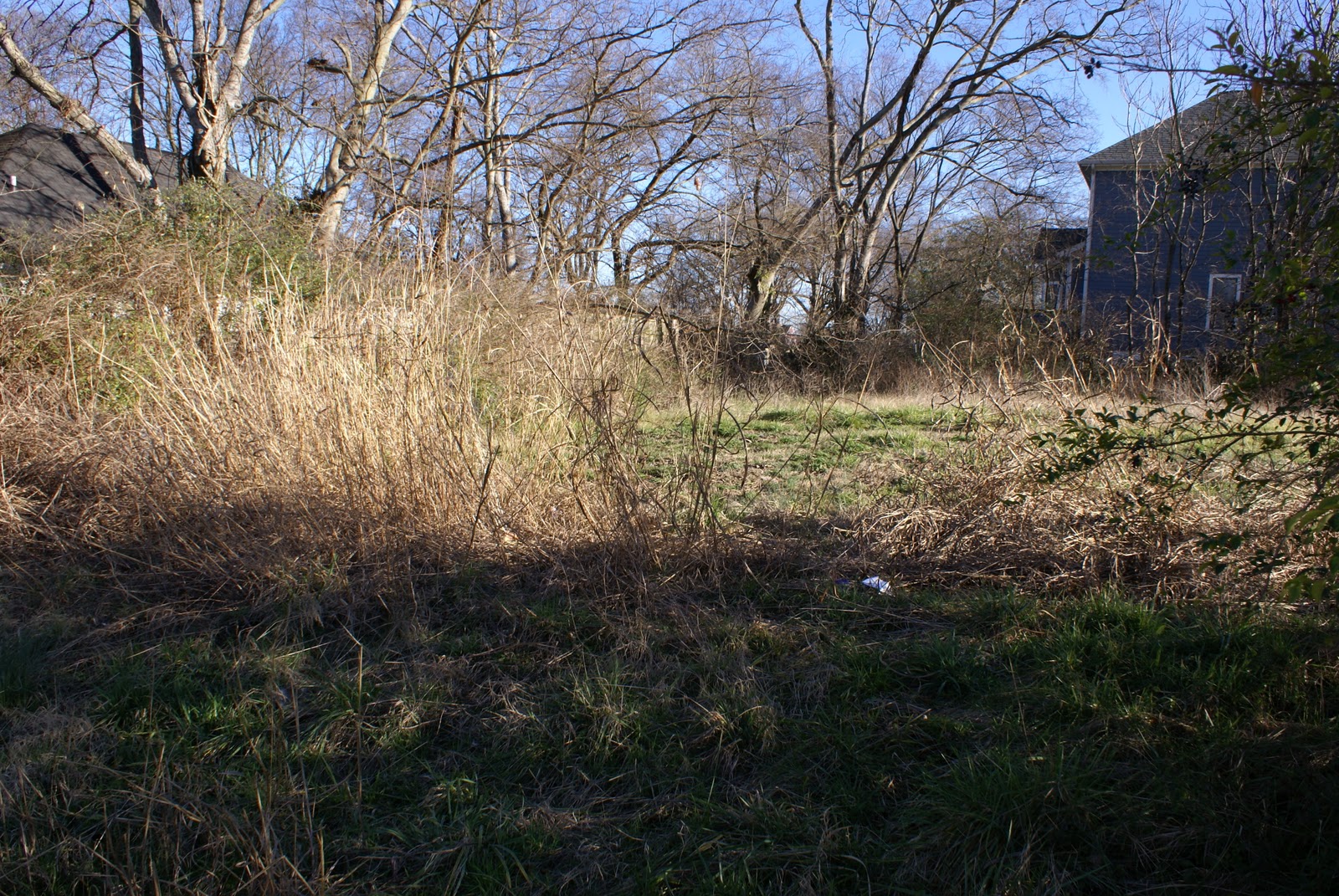
Keeping with my past practice, I went over to take pictures of the overgrown and trashy properties at 1628 and 1630 6th Av N. It was definitely not the worst condition I've seen the properties in, given that it is winter and the plant growth is minimal this time of year, but the tallest growth is still well past the allowed 12 inches.

And it is just as littered with garbage as I've ever seen it (I walk our dog by the properties on a regular basis). The current property owner has been in charge of the land for over 4 years, according to Metro Planning maps. To my knowledge, they have always been neglected and poorly maintained, with grass and weeds typically too high, as in, "growing past the limits of municipal codes".


In my opinion, how an owner manages the condition of his property, how she maintains the quality of life in her personal space before any development takes place is a predictor of how he or she will build to the benefit of the rest of the community. No sales pitch a developer can make about future designs will be as reliable an indicator of quality as how the owner manages and cleans the space before buildings are built, groomed, and staged for sale.

I will be evaluating this rezoning request not just on the plan proposed, but on how the property owner has maintained the quality of life (or not) since 2007.


UPDATE: The grass and weeds on these lots reached as high as 5 feet last summer.

Monday, September 20, 2010

MDHA neglect of Section 8 property mars Salemtown streetscape

A perennial recurrence in Salemtown since I moved here 6 years ago is the failure of Metropolitan Development and Housing Agency to properly care for its Section 8 housing properties. Once again this year MDHA, which manages Housing and Urban Development-subsidized housing, is allowing some of the grass on its properties to rise to a codes-violating height.

The irony in this instance is that the offending 7th Avenue North and Garfield Street property adjoins streetscape elements--crosswalks, period street ID signs, traffic bulb flora, lamppost--that were funded by a HUD block grant. The construction of those elements, which are intended to enhance rather than obstruct neighborhood quality of life, were also managed by MDHA. What QOL MDHA might giveth it also taketh.

Yesterday a band of us went around weeding and cleaning up the traffic bulbs, which in some cases are overwhelmed by the curb-side thickets on 7th Avenue. Today I reported MDHA to Metro Codes for keeping tall grass and the garbage that gets caught there. If you would like to report MDHA for violating Metro Codes, you can do so online after the jump.


Monday, August 09, 2010

The Metro business owner who wants Metro property in order to stop dumping continues to permit dumping himself

CM Buddy Baker has been trying to convince constituents in The Nations community for some time that he intends to hand campaign donor Ron Hunter a Metro alley in order to stop dumping. Mr Hunter's lawyer and Board of Zoning Appeals member David Ewing has joined Mr. Baker, insisting that Metro's "failure" to stop dumping and not Mr. Hunter's plan to rezone residential properties he owns across the alley is the real reason for the alley grab.

But what if Ron Hunter himself allows dumping on his property? Mike Peden sent an e-mail to Metro Council over the weekend with photographic recon that probably makes both Mr. Hunter's lawyer and his council member wince:
----- Original Message -----
From: Mike Peden
To: councilmembers@nashville.gov
Sent: Saturday, August 07, 2010 6:43 PM
Subject: Emailing: P1017960

CM Baker - can you please advise your friend Mr. Hunter that his property is not zoned as an open dump site.

I have attached a photo of his property taken this morning.

The new no dumping signs have been installed in the alley, and the rules apply to Mr. Hunter as well.

Also, the grass needs cutting on his vacant lots. I have notified Codes and Public Works.

I am sure you are as interested as I am in keeping the neigborhood clean and free of illegal dumping.

Thank you
Mike Peden
During a recent community meeting over this controversial alley closure CM Baker replied smugly to a local who told him that The Nations had formed a dump watch, "Well, 'bout time y'all done something!" Given this embarrassing turn of events, perhaps the council member was wishing the neighborhood had not started monitoring and reporting dumping.

Alley closure opponents have insisted that the alley gets trashed in part because Mr. Hunter allows dumping and blight around his business. It appears that the business owner cannot straighten up and fly right long enough for CM Baker to slip the closure proposal, which is currently indefinitely deferred, under the community radar.

Many believe that closing the alley is merely the antecedent to commercial expansion in The Nations community. But let's play the fools that lawyer and council member take the neighborhood for and play along with the charade: now how would handing the alley in question to Mr. Hunter discourage dumping when Mr. Hunter seems to permit dumping himself?

Monday, January 25, 2010

Neighborhood leaders organized to fight LEDs in residential areas on Thursday

An invitation sent out to the Nashville Neighborhoods Google group:
Nashville’s neighborhoods said "No" to [attempts to allow LED signs in neighborhoods] in June. Over 200 letters and email messages were sent to the Planning Commissioners and 30 people spoke at a public hearing against a bill that would have allowed LED signs in residential neighborhoods. The loud public outcry was heard. The original bill was disapproved.

Now a new bill allowing LED signs to shine in our residential neighborhood is on the table. This is named ESOD Version 1 (One). An alternate bill by the Planning Department bans LED signs from residential neighborhoods. This favored bill is named ESOD Version 2 (Two).

How can we protect our neighborhoods from commercial-type LED signs?
  1. Send email to Planning Commissioners: (planning.commissioners@nashville.gov) and say you Oppose ESOD Version 1 (One) but Support ESOD Version 2 (Two).
  2. Come to the Public Hearing on Thursday, January 28th at 4 pm and say a few words or sit with the opponents. The hearing will be near the airport in the “Metro Southeast” meeting room. This is near the corner of Murfreesboro and McGavock Pikes (officially at 1417 Murfreesboro Pike) but down between the Genesco building and the Johnston & Murphy (shoe) Store.

Why do we want to support ESOD Version 2 (Two)?
Because it is a fair, sound proposal that will protect the quality of life and property values in residential areas and limit electronic (LED) commercial-type signs to commercial and mixed-use areas.

Neighborhoods volunteers have been working with the Planning Department and Council members since October on the "No LED Signs in Residential Areas" bill. The planning staff listened to the neighborhood concerns and will recommend disapproval of ESOD Version 1 (One) and approval of ESOD Version 2 (Two).

Version 1 will allow LED signs in residential neighborhoods. Disapprove.
Version 2 will allow LED signs only in commercial and industrial areas. Approve.

Only 5 days left to protect our neighborhoods. Send your email now.

Sunday, November 01, 2009

"Huge bullies" like Lamar Advertising

Southern Beale is not pleased with the appearance of a LED billboard in her Green Hills community:
when it first appeared (in place of an old-fashioned non-electronic kind) it raised a huge outcry among neighborhood folks who don’t like the increasing prevalence of these electronic thingamajigs. They are quite controversial irrespective of their advertising content, mainly because they are too bright, too loud, and too obnoxious for anyplace not Times Square ....

This one shows us the weather report and sports headlines in addition to advertisements. Personally, if I want to know the weather forecast I'm not looking at a freaking billboard. Thank you for turning what is a quiet retail/residential area into something that resembles downtown Tokyo. How sensitive to the neighborhood. Not.

This particular one, as I recall, doesn’t meet the existing code for where electronic billboards can be located. It was snuck in under the dead of night under the outdoor advertising industry’s favorite “let’s do what we want now and deal with the consequences later” ploy. Outdoor advertising companies like Lamar are huge bullies, in my opinion.

As I recall, Councilman Sean McGuire was supposedly working to get it removed, though that was a few months ago and I never heard any more about it.

Wednesday, October 21, 2009

Shilling on Metro's dollar

One of the Tennessean blogs reports that Metro Codes Administrators has taken up some of the PR slack for the convention center proponents by shilling for the Convention and Visitors Bureau in their latest newsletter:
Nashville has both the need and the demand for a new convention center.

If Nashville wants to take advantage of an attractive downtown to draw visitors who bring tax revenue to our city. Nashville operates on two main sources of tax revenues property taxes and sales taxes. By growing the convention business, Nashville can expand the sales tax revenue from visitors and thus depend less on property taxes from citizens.

According to the Convention and Visitors Bureau, Nashville must turn away business. With the 115th largest convention center in the country, Nashville can compete for only about one-fourth of the convention market. The CVB believes that with unique Music City U.S.A. brand, Nashville should be competing for as much as three-fourths of the convention market.
Shouldn't Metro Codes be spending time and money citing codes violators rather than promoting the most expensive capital project in the history of Nashville? Or has the Mayor ordered all hands on deck to push the convention center through?

Friday, October 09, 2009

CM Megan Barry resurfaces after running silent on the LED issue

Megan Barry's campaign manager Elizabeth M-K Sullivan announced to the Nashville Neighborhoods e-list this morning that CM-at-Large Barry not only opposed Charlie Tygard's failing light-emitting-diode-sign bill, but that she is "working on this issue right now." Call me a cynic if you like, but this strikes me as freighthopping mid-passage in order to add "keeping LED signs out of residential neighborhoods" to her bulleted list of accomplishments in the next campaign.

We can fact-check that spin. After coming out of the gate strongly opposed on this issue, she convinced me of the rightness of the cause, but then she voted for the task force allowance of LED signs in neighborhoods and equivocated on the question:
Fellow at-large Councilwoman Megan Barry reiterated her concerns about sign ordinance enforcement by the Codes Department, although she voted in favor of the task force’s recommendations.

“I think it gives the Council some opportunity to have some discussion about what they want to see go forward,” Barry said. “I do agree that… we may have created a bat to kill a gnat and that’s a concern. It’s definitely a concern for all the neighborhoods because they don’t want to see these things in their neighborhoods. The reality may be that they’re not going to see them, I don’t know. We need to have a good discussion on Council.”

Now she seems to be walking back a harder stance given the community-leveraged road blocks to the LED sign proposal. It's not right, but it's okay, because I don't reject any CM's help on this important issue, but Ms. Barry has miles to go to convince me that she is not trying to get back into the party now that band has finally arrived.

Thursday, October 08, 2009

Community Leaders Respond to Planners' Recommendations on LED Signs

Below is a sampling of the Nashville Neighborhoods e-list reactions to news that Metro Planning disapproves of CM Charlie Tygard's proposal to place commercial-style LED signs in residential neighborhoods and that they are offering an alternative, as-yet unsponsored ordinance called "Electronic Sign Overlay District." Planners will make their recommendations to the Planning Commission later today.

Trish Bolian:
actually, I find it one of the WORST things they have ever proposed....creating constant monitoring by every neighborhood in this city well into the future...and granting of permission on an individual basis with neighborhoods having little ground to stand on to prevent these signs. Also, it does not restrict LED's to those who have currently lit signs. My worst fear is that anyone would step forward to sponsor it. I see it as a nightmare. I am among those who will meet with planning this afternoon to go over all of this but I see their proposal as a disaster.

Charlotte Cooper:
I don't like the alternate bill, but it may have a better chance of getting approved than the Tygard bill; therefore, I was merely trying to mitigate the consequences by suggesting the addition of language that would prohibit application for ESOD unless the applicant property is surrounded by commercial zoning. I think this would eliminate the possibility of LED signs in residential neighborhoods - ALL residential neighborhoods, without neighborhoods having to oppose applications. Perhaps there is a flaw in my suggestion, but having an ordinance that prohibits LED signs for civic use property zoned R in a residential neighborhood might be a good thing. In addition, the alternate ordinance also prohibits the use of SP zoning in Section 4 by amending 17.40.105 of the Metropolitan Code to read "The Specific Plan district shall not be used for the purpose of approving an electronic display sign."

Adrianne Marianelli:
To me, the ESO would be another name for SP sign zoning for certain landowners, including Metro .... In my opinion, the alternative ordinance should be disapproved. It is even less restrictive in residential districts than the original request. If the residential districts are removed from the original request, then I believe most of the opposition will end. The codes department already does not have enough employees to ensure any new LED sign compliance in residential districts.

CM Emily Evans (not an e-list member, but her message was forwarded per her request by a member in response to a direct query):
The staff has recommended disapproval. The staff alternative is just an idea and I do not think anyone has gotten behind it and plans to move it forward. I know that MPC will not be voting on any text amendments related to it. There is a draft circulating and some comments are that are very much in order.

A Metro Planner (not an e-list member, but her message was forwarded by members who met with her to discuss community reaction):
The public hearing on the Sign Task Force bill is closed and the Planning Commission will deliberate on that. Staff is recommending that discussion on the Alternative Electronic Sign Overlay District be deferred indefinitely.

Monday, October 05, 2009

LED Proposal Re-emerges on Thursday Planning Commission Agenda

Metro planners have placed an attempt to allow commercial-style light emitting diode signs in residential neighborhoods on the Planning Commission's Thursday agenda for reconsideration. However, unlike last June, planners are now recommending disapproval of CM Charlie Tygard's proposal based on two reasons. In the first place:
From a land use policy perspective, staff would argue that these electronic display signs are not appropriate in all residentially- and agriculturally-zoned areas. While there may be some areas zoned for residential or agricultural use where an electronic display sign could be appropriate, staff finds that the process outlined in this bill does not adequately allow for consideration of the context of the site and the potential impact on surrounding properties. Rather than a one-size-fits-all list of criteria for the BZA to consider, the decision on the appropriateness of an electronic display sign should be based upon analysis of the context of the area.
So, it appears that planners have now adopted arguments by LED opponents that a one-size-fits-all-neighborhoods approach to allowing commercial-style signs is impractical and heavy-handed. This looks like progress to me.

In the second place:
from a practical point of view, the bill, as written, will not prevent future requests for Specific Plan or other inappropriate commercial zoning districts to accommodate the signs in residential districts. The process and standards recommended in this bill will limit the community education facilities, cultural centers, recreation centers, and religious institutions that are eligible to apply for, and receive permission to have, an electronic display sign. This is unlikely, however, to reduce the demand for these signs. As a result, these institutions will continue to seek electronic display signs by requesting rezoning to Specific Plan or other commercial zoning districts.
Essentially, not only will residential neighborhoods have to brook bright LED advertisements with approval of Tygard's bill, but they will continue to face increased developer demand for Specific Plans in order to get around the zoning. Tygard's bill means more money for the sign industry and more trouble for residential neighborhoods.

On Thursday, planners are offering their own alternative proposal free for any CM to pick up and sponsor. Their proposed ordinance would create an "Electronic Sign Overlay District" as "a means by which land uses situated within areas of the community where zoning does not permit electronic display signs by right, may have a process to obtain an electronic display sign if the sign is found to be compatible with the existing and proposed development pattern as outlined in the principles, policies and objectives of the general plan." Control over recommending the ESO would not go to Board of Zoning Appeals, but would stay with the Planning Commission before going to Metro Council.

According to the Nashville Neighborhoods e-list, one leader followed up with questions about the alternative and a planner responded:
We are trying to come up with the most forthright way to deal with electronic sign applications and give the public the most information as was requested by the Planning Commission. Short of a complete prohibition on electronic signs, this is the best way to make the public aware of a proposed LED sign. If we don't do this, there will still be SP and CS rezoning requests. We don't see that there is an interest on Council's behalf in a prohibition ....

Yes, there will be a public hearing for the commission to take input on the proposed ordinance.

P.S. I want to be clear about something - the purpose on Thursday's meeting is to vote on the Sign Task Force Bill and our recommendation is to disapprove.

The proposed ESO is not a bill, doesn't have a sponsor, it is our recommendation of a better way to do what the Sign Task Force Bill set out to do. We have no idea if it will go anywhere.
It seems clear to me that Planning has changed their action to advocating disapproval of Tygard's LED bill, which would mean it would require a supermajority (27 instead of 21) to pass it in Metro Council. I find curious the claim that there is no Council interest in a prohibition on LEDs in residential areas. Have industry lobbyists so influenced the legislative process that the choice is either to pass Tygard's bill or to take no action to reform and update regulations on commercial advertising in and around our dwellings? It seemed ominous when self-proclaimed reformer Megan Barry flip-flopped from wanting to beat Tygard's LED bill to disappearing entirely from the debate. Was it an indication that the planner was right about the council mood on this issue? I find that prospect disturbing.

After reading the description of the planner's proposal (p. 52), anyone have any insight on its merits?

Thursday, August 13, 2009

Planning Commission Discusses LED Proposal, Defers Decision For a Second Work Session

Hillsboro-West End neighborhood leader and LED task force member Burkley Allen attended the Planning Commission's "working session" earlier this afternoon. She reports to the Nashville Neighborhoods e-list that they listened to planners compare Charley Tygard's proposed LED ordinance to those of 8 other peer cities. The Planning Commission discussed recommending amendments that would bring Tygard's sign ordinance in line with the stricter regulations of Nashville's peers. They deferred their vote until after they hold a second working session to discuss the matter again.

Wednesday, August 12, 2009

Metro Planning Announces "Work Session" on Tygard's LED Billboard Proposal

From the Nashville Neighborhoods e-list:
LED signs set for deferral

The Planning Commission will hold a work session immediately before the August 13 regular meeting to discuss LED signs and development in the Rural Hill/Moss Road area. The August 13 Planning Commission agenda will include a staff recommendation that the LED sign bill be deferred to September 10.
NOTE: this session is scheduled for 2:30 in the afternoon on August 13, and it will NOT be televised on Metro 3.

Tuesday, July 21, 2009

BREAKING: Planning Moves Thursday's LED Workshop to August 13

From LED Task Force member Burkley Allen at the Nashville Neighborhoods e-list:
I just got word that the Planning Commission has moved the special
workshop about the LED sign bill to August 13 before their regularly
scheduled meeting.

I'm not sure why, but I'll keep you posted on further developments.
Did Commissioners feel that having to do this alongside Bells Bend and the West Nashville Community Plan would make them too tired?

Sunday, June 07, 2009

Vested Interests & LED Billboards

An anonymous Enclave reader observes and opines:
Tygard has his LED bill back to invade neighborhoods. Notice the bill has a new staff reviewer. Jennifer Regen has been replaced by Kathyrn Withers. We can only wonder why this is. On the staff report under Staff Recommendation there is only one sentence "Staff recommends approval." [p. 58] There is no reason why. The last staff report of this same bill stated that " the staff recommended disapproval of the bill as drafted because electronic signs would be permitted without adequately safeguarding neighborhoods.." Is the BZA now the safeguard? The citizens will once again have to attend a meeting during working hours to safeguard their neighborhoods and if Bell Newton's comments are correct great numbers of neighbors will make no difference in their decision. However, it did make a difference when neighbors and Bobby Joslin didn't want the bus station near their neighborhoods.

Has anyone questioned why neighbors and neighborhood organizations were not represented on the LED Task Force? Was Burkley Allen the only neighborhood representative that had ever really voiced her opinion before the task force was formed? Who else supposedly represented the resident citizen? Who picked them? Did neighborhood groups get to appoint a representative?

Those that Tygard did claim sit on the task force to represent neighborhoods, didn't they really have a vested interest in the signs for their employer? What about Mrs. Shepherd? Doesn't she work for the Catholic archdiocese? Don't the Catholic archdiocese have schools and churches in neighborhoods that might want a sign? Wasn't Burkley Allen the only person on the task force to vote no? Wasn't this task force set up by Tygard to rubber stamp his bill?

How does this bill really differ from the last one? If this bill passes doesn't it become harder for the average citizen to fight? Can Nashville Publc Schools afford these signs? Is this bill being passed for private schools and churches, and of course Bobby Joslin?

Ever see the sign at the church in Joslin's commercial? It was recently cited by Codes for being in violation of the law. So was the Donelson YMCA that recently gained approval for their sign through the BZA.

If you read the Planning Commission report you will find that Sam Coleman has a bill that would allow cell towers in neighborhoods. Now we can be cooked with radiation while we watch the LED sign messages change at night.

Tuesday, June 02, 2009

Woodlawn Area NA President Petitions Planning Commission to Deny Charlie Tygard His Neighborhood LED Billboards on June 11

In a letter to the Planning Commission and several other Metro leaders, WANA President Bell Lowe Newton makes some strong arguments:
The fact that [the neighborhood light emitting diode billboard] ordinance will open up of every zoning district in Nashville to the possibility of LED signs is shocking and appalling to me. In reading Section 17.16.140 [of the Metropolitan Zoning Ordinance], which describes the general conditions that all special exceptions have to fulfill, I now know that I would have to refer to these conditions to show the BZA how an LED sign negatively affects my home, property and neighborhood. These include not adversely affecting other property to the extent that it will impair reasonable long-term use, and protecting persons and property from erosion, flooding, fire, noise, glare, or similar hazards. I am further disturbed to learn that although the BZA has the latitude to determine that an LED sign could be detrimental to a neighborhood, the fact that the majority of a neighborhood opposes such a sign would not be the determining factor in whether a sign of this nature is erected.

Of even greater alarm is that I feel you are so out of touch as to how the majority of taxpaying citizens feel about this extremely important issue. While Mr. Tygard “sees nothing objectionable for a church or school to use a changeable message panel to convey the good deeds and events going on within those buildings, especially since there is less power & less light produced than the current floodlit signs,” my neighbors and I do.

Excuse me, but it appears that some government officials are not voting the voice of their constituents and I urge you to disapprove this bill.

The overwhelming majorities of many of our neighborhood associations believe that the city should be LED free, but, if you insist on having them, please resign these gaudy, atrocious signs into the remaining commercial, office, and shopping areas and allow agricultural and residential need to stay LED FREE.

I oppose LED signs in neighborhoods even with the protections described in the draft ordinance.

And, please know that I clearly understand the difference between these signs with all their protections and video signs. I know that Councilman Tygard is not trying to put moving video screens on every street. I feel that even if a monument type sign that would be generally similar to what the proposed ordinance would allow isn't as gaudy as the sign on I-65, it is still inappropriate in a neighborhood and even the less commercial areas around town.

I don't think a monument type LED sign with amber letters is appropriate for a neighborhood even if it does turn off at 10 PM, and I am concerned about enforcement since there are over 50 signs that have been determined to be out of compliance with the existing ordinance.
Putting LEDs in a "monument-type sign" is merely dressing up and putting female warpaint on a porker.

President Newton's insight on the likelihood that CM Tygard is taking control of quality of life decisions away from neighborhoods should be sobering to all of us who are concerned with the erosion of local autonomy. What is even more frightening is that the control is being handed to the Board of Zoning Appeals, a Metro bureaucracy that does not have an uncontroversial reputation. Last year, Mayor Karl Dean appointed and the Metro Council unanimously approved anti-neighborhood Belle Meadean Chris Whitson, who asserted that he would "interpret and apply" existing laws rather than creating new ones. Whitson won't have to make a new law toxic to local communities; CM Tygard is handing him one that he can merely "interpret and apply" against neighborhoods in the LED billboard legislation.