Showing posts with label Elections. Show all posts

Monday, January 19, 2015

What kind of revolution did Dr. King claim? One of community projects or one of social justice?

Our only hope today lies in our ability to recapture the revolutionary spirit and go out into a sometimes hostile world declaring eternal hostility to poverty, racism, and militarism. With this powerful commitment we shall boldly challenge the status quo and unjust mores and thereby speed the day when every valley shall be exalted, and every mountain and hill shall be made low, and the crooked shall be made straight and the rough places plain.
-- Dr. Martin Luther King, Jr. (1967)

In college I was a supporter of the law that made Dr. Martin Luther King, Jr.'s birthday a national holiday. Even then, I understood that there would be a price to pay. Governments and corporations tend to co-opt popular observances for their own self-serving ends.

I continue to be an avid observant of MLK Day, but I am constantly reminded of how its institutionalization has muted and snuffed out most of the radicalism of Dr. King's message. "I Have a Dream" often replaces the nightmare Dr. King said that he found in the nation's slums. Some want to focus strictly on integration (which Dr. King called "a struggle to get rid of extremist behavior") while they ignore what Dr. King called "genuine equality" which involves "hard economic and social issues" and "survival of a world within which to be integrated."

Jeremy Kane volunteers for MLKDay
We continue to see the muffling of Dr. King's message in 2015 in Nashville, especially from candidates running for office. Metro Council candidates are promoting the national day of service, even though voluntarism has little to do with MLK's self-identity: "if you want to say that I was a drum major, say that I was a drum major for justice." Mayoral candidates are joining in volunteer activities without talking about what they would do if elected to curb the excesses of income inequality that lead to what Dr. King called "spiritual death."

Emphasizing a day of service gives politicos and corporations a shelter free of the undue risk of "genuine equality" and the weightier matters of social justice. Public-private partnerships are perfect vehicles for softening the sharp edges of MLK's message while seizing on the glow of his mass popularity. However, they are of no help in joining Dr. King to go out into a hostile world and boldly challenge the status quo. Public-private partnerships are the status quo. By not taking bold stands they have the air of safe neutrality. However, in the same sermon where Dr. King spoke of going into hostile world, he observed with Dante that the hottest places in hell are reserved for those who in a period of moral crisis maintain their neutrality.

Ultimately, the co-opting and switch of the MLK brand from economic justice to community service is ironic. Dr. King died in Memphis while supporting sanitation workers striking for wage increases and better working conditions. Not only do community service days do nothing to advance the cause of better pay and safer work for employees, but some clean-up and trash-pick-up volunteer efforts create more work for sanitation employees who haul it off to landfills generally located in poorer communities. Projects can be more of an obstacle to survival in a world within which to be integrated.

I participate in community projects and I encourage others to do the same at any point in the calendar. But let us not confuse and water down Dr. King's revolutionary message with the idea that community service projects authentically commemorate his work.


UPDATE:  I'm not the only one thinking this way. In Philadelphia today 6,000 organized in "a more assertive, confrontational vision of King's legacy" intentionally departing from the national day of service:
"While we recognize the importance of service, Dr. King was not assassinated because of his charity work. He was assassinated because he challenged the status quo," said the Rev. Mark Tyler of Mother Bethel A.M.E. Church, a leader of the new MLK D.A.R.E. coalition. "We only do honor to his memory if we continue to fight the same fight."

Friday, January 16, 2015

Not good for neighborhoods: a case of false equivalence as reported in the Tennessean

I was not present at the mayoral candidates debate this week, but Tennessean reporter Joey Garrison, who was there, reported thusly:

Phil Bredesen built an NFL football stadium and a downtown arena. Bill Purcell stuck to sidewalks and community centers. Karl Dean built a new convention center and a minor league baseball stadium.

Legacies of Nashville's last three mayors were presented that way at a mayoral candidates forum Wednesday. Those vying to be the next mayor then answered a simple question: "What will you build as mayor?"

But rather than reeling off big-ticket projects, a few of the contenders on hand turned their attention more to neighborhoods.


Garrison somewhat framed the focus of the debate around future construction projects. Framing is an interpretative, not an objective move. Nonetheless, he seems to say that the moderator, news corporation president Chris Ferrell, cited the three preceding mayors as all building along the identical lines of "big-ticket projects." Giving Garrison the benefit of the doubt, I would argue that Ferrell's own framing is not just subjective, but it skews the facts into a fallacy of false equivalence.

Neither Garrison nor Ferrell (reportedly) mentioned the singular glaring difference between the three mayors as framed: Bill Purcell's projects were Metro infrastructure projects that primarily and directly benefited the people who paid for them and used them. Sidewalks and community centers benefit all Nashvillians, not just the business class. They are neither limited to those who pay admission fees nor excluded to visitors from out of town. They address common goods of the local citizenry.

Both Bredesen and Dean have been primarily subsidizers of the business class. Stadiums, arenas and convention centers primarily benefit the corporations, industries and professional groups in entertainment and tourism. They benefit those industries while Metro mitigates the risk of private investment by committing public taxes to private-use facilities.

Bredesen and Dean at least acknowledged in their more honest moments that the goods to the larger Nashville community in their "big-ticket projects" were secondary. Many would add that they provide only trickle-down scraps to the Metro taxpayers, who are on the hook for all of these venues if they fail to live up to projections. In some cases they obligate Nashvillians even if they succeed: the NFL football stadium transfuses millions of tax dollars every year from public infrastructure services (Metro Water) per the contract signed by former Mayor Bredesen (the contract runs through 2026).

Framing the different capital spending priorities of the various mayors on the flat is not just incorrect, it invites the new crop of mayoral candidates to level all such spending as the same. That is potentially hazardous for the neighborhoods that these candidates claim they will attend to. There is a qualitative difference between a community center and an arena. Both of these news men should acknowledge that difference and hold the candidates accountable for doing so.

Wednesday, January 14, 2015

David Fox and Megan Barry say they would be powerless to stop business as usual

During coverage of today's mayoral candidates debate local reporter Steven Hale tweeted points Mr. Fox and CM Barry made about Metro's sweetheart subsidies for corporations and developers, and I could not let the moment pass without reference to the obvious:


Wednesday, November 19, 2014

The gang of three and their weak tea

The last time we saw the 3 mayoral candidates--Charles Robert Bone, Jeremy Kane and Megan Barry--together in North Nashville it was 3 months ago for the town hall meeting held in the wake of the shooting of Michael Brown in Ferguson, MO. In August and then in September I pointed out that none of three had said anything meaningful about how to deal with either the militarization of police or the problem of police brutality in predominantly African American neighborhoods.

I'm not aware of any promises or policy proposals that any of these candidates made on the subject in October. Now, after 100 days, on the eve of a grand jury decision on the shooting, with Missouri in a declared state of emergency and protests planned around the nation (including Chattanooga), these candidates made a second appearance in North Nashville this week. Nothing has changed. They still offer scant insight regarding what they are willing to do to deter a Ferguson from happening in Nashville.

Not only did they fail to address the question again, but their solutions for equality of prosperity leave something to be desired:

Bone, who spoke first, said investment and attention on downtown Nashville isn’t being felt in all neighborhoods, even just five miles from the city’s core, where the forum took place.

“In many respects, we sit 50 miles away,” said Bone, an attorney. “As a city, I think we should have the obligation to keep our foot on the gas, but at the same time to be very intentional about taking the investment and that prosperity that some of us are seeing and pushing it out to communities like Bordeaux and North Nashville.”

Barry...was unequivocal about the state of the city: “There’s a lot of work still to do.” She briefly spoke about economic investment, education, social justice and transit.

“Neighborhoods are what knit all of this together,” Barry said. “I will make sure the neighborhoods we cherish exist even though all that economic development is coming.”

Taking only a slightly different approach, LEAD Academy charter school founder Kane used his time on the microphone to recount his family’s involvement in underserved neighborhoods.

He said that while the candidates agreed on Nashville’s needs, the difference would be the solutions they pursue. He said he has the track record in the school he founded and in his community service.

He said he wants to make sure the city’s reputation for nonprofit giving, entrepreneurship and strong faith improves all places.


What each of these candidates is offering North Nashville is not bold. It is weak tea for our edification. The vision for governing our communities must be larger than the trickle down strategies of Mr. Bone. The next mayor has to do more than merely make sure that neighborhoods "exist" amidst exclusive prosperity, as CM Barry suggests. Mr. Kane's claims that philanthropy and entrepreneurship are answers to preventing the destructive side of economic growth seem short-sighted, paternalistic and unsound.

These are all just the extension of Mayor Karl Dean's policies and practices, which have not been good for North Nashville. No less significantly, they still do not offer anything to address police militarization and brutality, which are issues that continue to be important and unresolved to North Nashville residents. Do these candidates really understand their audience when they come into our community? They all seem more at home in West Nashville.

The gang of three minimize the disjuncture of Metro Nashville's financial investments in big business downtown and the shrinking resources for services to neighborhoods outside of the Courthouse sphere of opulence. Many of our communities are dislocated from the rising wealth focused on the tourism, hospitality and entertainment industries. Unchecked economic growth, leveraged by self-serving developers, tends to cause untrammeled gentrification of North Nashville neighborhoods, driving folks of more modest income out while dismantling diversity.

With that kind of dislocation, police may be more prone to mobilize to protect the movers and shakers if movements appear to protest the injustices. With whom will Metro Police identify in neighborhoods bypassed by subsidized wealth? What kind of patience and forbearance will cops show for people who orbit far and away from the inner bands of Music City influence?

We can be sure that Metro Nashville will protect its huge investments in Nashville's wealthiest private enterprises. Local government cannot afford to lose its corporate welfare wager. Will the police follow suit? How they will treat the 99% as well as dissenters remains open to question. But let us be crystal clear: they have the firepower to suppress popular dissent, especially non-violent civil disobedience, if they choose to; they have a militarized arsenal suited for urban warfare if necessary.

And Ferguson showed that when cops march against protesters a good number of innocent bystanders and local neighborhoods are dealt the unjust collateral damage.

For Nashville's mayoral candidates to continue to fail to address the capacity of Metro Police to exercise different standards in North Nashville neighborhoods than they do elsewhere indicates to me that none of them is truly serious about being mayor of all of Nashville.

Ferguson will stay on our radar. When will it appear on theirs?

Thursday, November 06, 2014

Another boring postmortem on this election past

I used to care more about electoral politics than I do now. I still go to the polls and vote as I did the day before yesterday. But the power of the two parties, the influence of campaign finance to predetermine elections, the blame segments of rightfully uninspired voters get for not casting a ballot and the shoving aside of everyday politics have all soured me of any enthusiasm for what is cynically called "participating in democracy".

I go to the polls, but I do not begrudge otherwise well-meaning folk who do not. I may still go to the church, but I, like many of you, have lost the religion.

Nonetheless, there is something instructive about the drubbing the Republicans handed the Democrats in Tuesday's mid-term elections. It is instructive for what it can tell the little blue island of Nashville, which is afloat in an even more deeply red state: progressives have got to curb their triangulation with the right and start taking bold stands on economic issues that affect people's everyday lives.

Prominent Nashville Democrats clearly set themselves apart on social progressive issues like immigration, reproductive rights and gay/lesbian equality. But on the economic questions that hit blue-collar working people the hardest in an environment where the wealthy are the only segment to have bounced back from the recession nicely, these Democrats either are no where to be found or have consistently acted to undercut economic equity.

And Tuesday was a cautionary tale. Democrats with few exceptions were soundly defeated by the GOP. Why? Because running primarily on social progressive issues like reproductive rights may not get them all the way to the finish line with voters, and there are indications that support Democrats have enjoyed among women in the past eroded in this election cycle.

When Democrats dealt with economic questions they did not connect with voter concerns:

At the root of these concerns...are stagnating wages and the failure of the recovery’s gains to achieve wider, more equitable distribution. Democrats campaigned on a range of economic issues — the minimum wage, pay equity, student loan affordability, expanded pre-kindergarten education — but these didn’t cut through people’s economic anxieties, because they didn’t believe government can successfully address them.

“People are deeply suspicious that government can deliver on these problems,” Mellman says, in a reference to the voter groups that continue to elude Democrats. “And they are not wrong. We’ve been promising that government can be a tool to improve people’s economic situation for decades, and by and large, it hasn’t happened.”


Some Democrats may talk the talk of fair economic distribution, but many walk away from reforming power structures that make it impossible. Talking up what government can do and then walking away when the time is ripe makes disbelievers out of all of us. I frankly wonder whether Democrats collectively care about the cynicism they engender.

Furthermore, incremental campaigning proved to be a loser altogether on Tuesday. Democrats fall back on incrementally progressive initiatives like the minimum wage (which is not a livable wage) hikes; then guess what? The Republicans tactically soften on the issue and peel off votes the Democrats must have to win.

So, beating the Republicans and energizing voters requires boldness both on the campaign trail and in the halls of government.

Last year I pointed out that mayoral candidate Megan Barry (who has curiously been branded by some in the news media a "super progressive") has not done herself any favors with Nashville's king-maker class by being an incremental progressive on social issues while consistently voting in council to support business special interests while placing greater burdens on working men and women in Davidson County.

CM Barry's split-minded progressivism is emblematic of what is wrong with the Democrats. They are so busy triangulating to shore up their social progressive wing (against the Tea Party) while pandering to the pro-growth, pro-business lobby that they leave themselves open to Republicans. Even if Ms. Barry becomes mayor, she will govern much like Karl Dean has, and Mayor Dean has governed like a Log Cabin Republican. Ms. Barry will be forced to compromise with state Republicans who will be in no mood to broker deals for a blue atoll dwarfed by red-state upwellings.

Neither of those prospects are good for Nashville progressives as much as we may feel lucky to cling desperately to whatever is cast off from the wreckage. We should settle for nothing short of boldness.

Thursday, September 25, 2014

Council candidate Jeff Syracuse seemed defensive about fair questions

We all say things we regret. Some of us try live up to the folly. Others try and scrub their public comments from sight, so they don't have to stand by their words. It is especially bad when people seeking public office choose not to stand by their words.

Hip Syracuse
Take Jeff Syracuse, who is running for a council seat to represent "Hip Donelson." A few years ago I received an email pondering how Mr. Syracuse could move in a matter of weeks from someone seeking advice on how to organize a neighborhood association to someone who could be invited to a personal meeting with the Mayor as a neighborhood leader.

My initial thought on that email was, "Well, it is an election campaign year and for the first time in 4 years Karl Dean considers neighborhoods important to engage." In fact, in April 2011, Hizzoner launched a series of neighborhood "gatherings" and "steering committees" that often carried a veneer of paternalistic openness to change and philanthropic volunteerism, but that constituted campaign stops orchestrated by the Mayor's Office of Neighborhoods. Those meetings ended after Karl Dean was re-elected.

Excuse my jadedness, but Karl Dean's interest in neighborhoods in 2011 seemed opportunistic. The questions I asked Mr. Syracuse are fair ones given the benefits that could accrue to those neighborhood leaders with whom the Mayor's Office identified to network. Mr. Syracuse was reportedly one of those leaders, and now he has moved from private citizen to public figure. No reasonable questions are unfair at this point for a public figure.

So, I raised the issue with him tonight on Twitter. He responded. Then he scrubbed his Twitter stream of his responses. Knowing what I know of the sensitivity of politicos to their public image, I took the liberty of screenshotting some of the exchange (now scrubbed):


Before scrubbing, he conceded that he indeed did inquire about how to form a neighborhood association and that he was invited and did attend one of Karl Dean's campaign luncheons for neighborhood leaders in April 2011. I asked him how then I was "full of baloney" given that he conceded that the facts I tweeted were right, at which point he stopped responding to me altogether.

Point of fact, Mr. Syracuse sent a message to other neighborhood leaders on April 12, 2011 with these comments:

I had a great lunch with Mayor Dean, Billy Fields, and four others who represented their neighborhoods around Nashville.  We met in the Mayor's Office.  Each neighborhood representative spoke about the issues they are dealing with and it was enlightening to recognize the common issues we all face .... It was a pleasure & a privledge to have a seat at this table.  I hope to do it again in the future. [sic]

I don't understand why Mr. Syracuse would now say I was wrong or why he would scrub his Twitter stream of our exchange, other than he himself is now in campaign mode and cannot entertain questions that veer off his campaign's talking points.

His relentless and unapologetic campaigning is a reason I quit an online neighborhoods e-list earlier this year. But at least one very Deanesque mayoral candidate and champion of charter schools endorsed Jeff Syracuse's campaign kick-off event, even if he cannot himself vote for Mr. Syracuse.


UPDATE: the hits just keep coming for Jeff Syracuse. The Mayor's Office of Neighborhoods announces that they have selected him to serve on a panel to train neighborhood leaders. He's got friends in high places.

Monday, July 07, 2014

When it comes to council members, what is the "ideal number for proper governance"?

Belle Meade CM Emily Evans has taken to the Tennessean touting a phone poll that she says proves that she knows the "ideal number" of CMs needed to properly govern Nashville/Davidson County and that a majority of you out there agree with her that you should have less representation in Metro government in order to have the best representation.

If that's the case, good luck with that. I know less representation will please council members and their wealthy patrons. But if most of you registered voters really believe we can shrink representation to get some ideal number, it is a sad season for local democracy in Nashville.

Please help me understand what the ideal number of CMs is and what exactly makes that number "ideal" (which is like calling it "perfect"). The argument offered by supporters is that few other cities have such large legislative bodies. So, the justifying belief of most Nashvillians is that being like other cities would make us ideal? That is supposed to convince me to abdicate the already minuscule influence I have to scrape up responses from council members on matters that concern me?


UPDATE: while we wait for someone from the "majority" to demonstrate that small legislative bodies act in the broadest interest of constituents better than large legislative bodies do, I've posted a copy of a script of the phone poll CM Evans used (no, she did not send it to me herself when I asked for it) to conclude that a majority of you desire less representation:

https://docs.google.com/document/d/1uT069Wxzdq4nhqHglxui5wnGQrk8hrthdutj3lTs6T4/edit

Wednesday, October 31, 2012

I was an Obama voter in 2008. Why I will not be voting for him again this time

My daughter has gone with me to vote since I toted her as an infant to the polls. She is now 8, and she looks forward to going with me. Barack Obama is her favorite for president, and she looked on last time when I voted for him. She will be going with me again this week to vote, and it will be hard because I will have to let her down gently and explain to her why I will not be voting for President Obama for re-election.

When I think of the choices determined for me in this election I feel a fatigue very close to that I hear in the voice of this 4-year-old, whom I met this morning on YouTube:


I'm tired of them, too, Abby. Indeed, they are tired choices. And yet, the politically-plugged-in adults chat up Obama's race with GOP challenger Mitt Romney as if they are so far apart on so many issues that this is a clear, black-white moral decision. The reality is that regardless of which two of these privileged men take the White House, little will change.

I believe that because I see that little changed from George W. Bush to Obama. It was not like I was unaware of this risk in 2008, but I put my concerns aside and enthusiastically voted for Obama anyway. Risk realized.

No bankers went to jail for the 2008 economic melt down. In fact, the banks are bailed out and bigger than ever. Obama did nothing to make them smaller and to shelter us from Too-Big-To-Fail Syndrome. Obama has not even reformed his own economic policy, continuing the Bush practice of hiring advisers from the finance sector, some of whom dismantled the regulations under Clinton that paved the way for our economic crisis and malaise. Obama's is a conservative economic policy. He did not spend as much on economic recovery when he had the clout to act boldly as great presidents have, choosing instead the failed path of trying to entice resistant Republicans to join him. I consider any chance he had to be a great president gone.

Given where we've been
where else could he go?
Bush's human rights abuses are not only still in play with GITMO detainment, but Obama doubled down by signing a defense appropriation bill that gives him and any president who follows the power to arrest any American without recourse to their constitutional and universal right to a trial. Likewise, Obama has out-Bushed Bush on the use of drones: the Democratic president does not share Dubya's relatively thoughtful concerns that using drones opens us up to grim political consequences in the future. So how wrong I was 4 years ago when I bought the logic that Obama was less likely than John McCain to use unmanned drones on Muslim targets and manufacture more terrorists in the process. And Democrats in general have been a lot more negligent in counting Obama's drone kills than they were in tallying Bush's Iraq War causalities, which smells like cynicism to me. In his three bipartisan debates with Romney, Obama refused to address his use of the "flying robots of death", but Romney said he supported Obama's droning practices, even though it has caused civilian casualties. That endorsement tells me all I care to know on the abuses of this president's foreign policy.

On the domestic front, Obama did pass healthcare legislation, although it was modeled after healthcare legislation that Romney passed when he was governor of Massachusetts. And Obama has departed from the Bushian ineptness of disaster response, choosing instead the Clintonian realism of generating political capital by quick and decisive aid and relief. Given the side that Romney's bread is buttered on as well as his recent red-meat tirades on FEMA, I suspect a Romney White House would return to crass indifference in disaster relief. Obama is funding charter schools and privatizing public education around the country at a clip that must only dissatisfy Republicans insofar as it does not include the next logical step: vouchers for private schools. Outside of his foreign and justice policies, Obama's education policy is the biggest failure of them all and disconcerting to me as a public school parent. His commitment to charter schools is an abdication of progressive principals on education open to all. Stylish and in-fashion business models of innovation do not guarantee equal access to education for all and behind them lays the Republican will-to-kill public schools.

Hence, I am tired of this choice. I want to be able to say to my daughter, "We have a game-changer, someone who will shake up the board, not just shake up the etch-a-sketch." I long for a choice whom I believe will follow up on progressive campaign promises rather than governing toward the fence-straddle, and hence, toward the Republicans, like Obama has. There is no chance I'll ever vote Republican, and President Obama is not the viable option for me that he was in 2008 because his GOP-lite approach is realized. The last (but not only) straw for me was Obama signing away our civil liberties.

Try to convince me that a vote on a third option is a vote for Romney and a vote for things to get worse than they have the past four years. That is no less an attempt at voter suppression than is requiring a picture ID. If enough people are persuaded by your argument then they won't vote for more progressive candidates and liberals stand less of a chance of winning and influencing the political process. Hence, we keep our status quo. That is not change we can believe in.

Some of the same Obama supporters who claim that things would get worse under Romney claim that Mitt is a flip flopper. But they can't have it both ways: either he is an dangerous extremist who will use more fully Obama's fleet of flying robots of death or he is a equivocator who, like George Bush the Elder, is opportunistic and willing to sacrifice his scruples on the altar of expediency. I tend to think that Romney is more of the latter, and I think we would see a retread of patrician Bush I with the same sort of Bush II we have seen with Obama. Outside of disaster relief and vouchers, I just do not see the vast difference between Obama and the Republicans that Democrats project, and part of that is Obama's fault for stubbornly striving to embrace rather than to fight the GOP even when he had numbers on them in Congress.

I intend to vote for someone. Most likely it will be Green Party candidate Dr. Jill Stein, who is saying what I want to hear from a presidential candidate on ending the drone wars, resurrecting habeas corpus, human rights and social justice, correcting and regulating Big Finance, guaranteeing healthcare for everyone, and pursuing diplomatic solutions first in foreign policy. Rocky Anderson, of the Justice Party, emphasizes many of the same course changes as Dr. Stein, plus he was a two-term Mayor of a major American city, so he will likely be keen to the affects of federal policy on metropolitan issues. Those are the two I've narrowed down to. Those are the two I endorse in 2012, and if I vote for either one my vote will not be wasted because it will be cast for change I can believe in, change hoped for in 2008 and change that can be achieved.

The hard part will be trying to explain the complexity of my vote to my daughter somehow when she has been influenced already by the false dichotomy of this two-party system.


UPDATE: Well, I voted for Dr. Jill Stein, who was arrested on Tuesday for trying to take food to protesters in a sit-in protest against Big Oil's Keystone XL pipeline in Texas. Dr. Stein, again a bona fide presidential candidate, was arrested previously for trying to attend the presidential debates. Third parties may get no respect in our flawed system, but at least one of them got my vote for the first time.

Tuesday, October 30, 2012

Mayor Dean insists that we look on the bright side of personal tragedy

Homicides in Davidson County this year have surpassed the total number of 2011 homicides. Karl Dean, who has showcased two election campaigns with the promise of lowering crime, attempts to draw our attention to his silver lining:

[In a prepared statement Karl Dean told the Tennessean, "]Last year's homicide total was the city's lowest in 45 years, and the number of homicides this year remains below the city's trend for the past 10 years[."]

Hizzoner is adept at side stepping accountability for lack of follow through. If he wants credit when the crime rate is down, he should be willing to accept the responsibility when the crime rate goes up instead of shaking the stats until his own talking points drop out.

Monday, October 08, 2012

Hizzoner casts his lot with the state: not exactly a profile in courage

Apparently, Mayor Karl Dean could not put aside his own personal fondness for the Great Hearts charter school company in order to lead a Metro agency out of a mess the State of Tennessee engendered. A Tennessean reporter tweeted Hizzoner's response to state action in September:

Mayor Dean said in interview that loss of state funds [due to declining one application for one charter school] is [Metro school's] problem. "They created it, and they need to figure it out."

Gadzooks. For the sake of argument, let's assume that the school board made a mistake. If you were the elected head of Metro government, the person who makes all of the budget decisions for all departments and agencies, is it the wisest course of action to cut loose an entire department or agency for a misstep? The alternative expression--"Regardless of what happens, we will find a way through this together. Let's pick up the pieces"--seems the proper course for those looking for a high road even when one has the opportunity to say, "I told you so."

Consider the fact that those adversely affected by the actions of the State of Tennessee are not powerful business interests who should be able to weather the lack of state funds, but the most vulnerable segment of the population: Nashville's public school children. Was it prudent for Hizzoner to take an adversarial posture with the state against a Metro agency when the latter had not violated anyone's civil rights and had not conducted themselves in an unethical manner? Was it wise to endorse the idea that the state should be spending less money on all Nashville children because a few middle class parents, who already have charter options, did not get the plum charter school they wanted close to their predominantly white neighborhoods?

How many times has this Mayor attempted to be our local Oprah with efforts like encouraging us to lose weight or to join his book club? He can weigh in touchy-feely over our personal lives, but he cannot have some compassion over the real risk to kids of red-state action?

And let's not forget one more thing: Karl Dean's campaign claims to fight tirelessly for full funding of Nashville's schools is fundamentally compromised by his stubborn willingness to side with the state and punish Nashville's school kids over a charter school application.

But let's end the dumb assumptions and let's get one thing straight: the school board made no mistake. For once, they did something right with a charter school application. And how much worse does Hizzoner's callous indifference appear in that light?

Wednesday, August 01, 2012

Money, influence, Will Pinkston, and Metro Public Schools

Want to see something interesting? Take a look at a spreadsheet that a source put together to help me illuminate some interesting things about the donors of District 7 school board candidate Will Pinkston, who was also one of former Governor Phil Bredesen's hired goons. For my part, I would draw several things out as voters go to the polls tomorrow:
  • Bredesen and the Bredesenistas have dumped nearly $10,000 into the campaign of a school board candidate (of all things) in what appears to me to be a naked attempt to prop up the former governor's influence across Nashville's power structures
  • 96% of Pinkston's obscene total amount of campaign donations ($52,750) came from outside of District 7, further reinforcing my opinion that the District 7 race is more of a power grab from the outside than a good faith effort to improve our kids' education
  • The teachers union and Michelle Rhee's PAC essentially cancel out each other's influence by each giving Pinkston $3,000. The history of union organizing is replete with ironies big and small, so there is no reason to overthink the self-defeating moves of the local teachers union except to point out that they put themselves in the same Pinkston boat with Michelle Rhee, who is consumed with eliminating teachers unions from the education equation 
  • The Nashville Chamber of Commerce, which is pro-charter schools and pro-privatization, is going all in on the Pinkston poker game, their PAC splurging with $7,100 and various CofC principals parlaying $3,000. If money is power, then the Nashville Chamber is the power broker here
  • An astroturf group with connections to Mayor Karl Dean is also linked to this donors list. Neighbors for Progress, a group designed to aid the Mayor's bid to flip the State Fairgrounds to private developers and to demolish its public facilities, donated $100 to Mr. Pinkston (who also worked for the Dean for Mayor re-election effort). NFP once provided an in-kind donation of over $3,000 on behalf of the council campaign of Bredesen pick Sarah Lodge Talley, for whom Mr. Pinkston provided black ops. Pinkston himself was an adviser to NFP and he donated $1,000 to them. Ms. Talley and her campaign treasurer have donated to Mr. Pinkston. The attorney representing NFP has also donated to Will Pinkston's campaign. Is all of this feeling a bit incestuous yet?
  • While Moving Nashville Forward, another astroturf group with Dean connections, has not donated to Will Pinkston's campaign, the lawyer who set them up has donated. MNF received $26,000 from Karl Dean to grease the wheels toward passage of his latest budget
  • Prominent state Democratic Party leaders put themselves knee-deep in the muck by donating to this hit man in a race in which they have no obvious investment. For instance, why should a Democrat running for Chattanooga Mayor care to try and help out a Nashville school board candidate?

There are enough lawyers and lobbyists donating to Will Pinkston to make my skin crawl; but much worse is the probability that the political connections of influence across this donors report reflect a concern not so much with the future of our kids as with the consolidation by the powers-that-be.

Anyway, that's my part. Go read the donors list yourself and let me know what you think. District 7 voters go to the polls tomorrow.

Tuesday, July 24, 2012

How I plan to vote in the District 1 School Board race

As a North Nashville parent, I am generally unenthused and unenergized by the campaigns in the District 1 School Board race. Ed Kindall has faced ethics questions in the past, including the cell phone drama of a few years ago. Sharon Gentry has struck me in the past as undiplomatic. She was a little too cavalier about and dismissive of parents' concerns at one community meeting in Hope Gardens for me to take her at her current promise that she will be a voice for "ALL parents" (emphasis hers) if we vote for her. At least one parent wrote me feeling ignored by Ms. Gentry after a personal appeal.

While both Kindall and Gentry did the right thing two years ago and voted against Jesse Register's plan to privatize Metro Schools service workers, the union representing those workers unambiguously endorses Mr. Kindall:

“He’s often the only one in the school board meetings who asks the tough questions and tries to hold Dr. Register accountable,” said Cordelia Howard, a school secretary, in the SEIU’s announcement.

Lately, Sharon Gentry has said and done nothing to change my sense of ambivalence about her, and she seems less willing to speak truth to power. In fact, she talks about public schools as if she is now one of those ideologues who believes the school district should be managed like a business, right down to reciting jargon about "portfolios":
What are your priorities for the Metro School system as a whole?

Fostering more proactive methods for including charter schools into the choice portfolio for MNPS that focuses on identify charter school programs that help address the needs within the district.
It is straight out of the Chamber's school reform playbook. Keep in mind that Ms. Gentry is also married to Howard Gentry, who has had close professional ties to the Nashville Chamber of Commerce. She received large campaign donations from Chamber big shots in the past. This all seems to beholden her to an organization which is setting up shop and hawking its products in Metro Nashville Public Schools.

The goal of maximizing private profits is not always commensurable with democratic values of public education. Financial and personal ties to the Chamber of Commerce suggest to me that a candidate will be more prone to cow to the special business interests who treat children as more a future compliant labor force than a potential democratic citizenry. In that vein, John Dewey knew what he was talking about 100 years ago in Democracy and Education:
Democracy cannot flourish where the chief influences in selecting subject matter of instruction are utilitarian ends narrowly conceived for the masses, and, for the higher education of the few, the traditions of a specialized cultivated class. The notion that the "essentials" of elementary education are ... mechanically treated, is based upon ignorance of the essentials needed for realization of democratic ideals. Unconsciously it assumes that these ideals are unrealizable; it assumes that in the future, as in the past, getting a livelihood, "making a living," must dignify for most men and women doing things which are not significant, freely chosen, and ennobling to those who do them; doing things which serve ends unrecognized by those engaged in them, carried on under the direction of others for the sake of pecuniary reward.
It is pecuniary reward (plainly put, "the big money score") that the Chamber of Commerce is committed to and the means by which it sells others on supporting its narrow goals.

I believe a school board candidate should strive toward a larger vision of public education than selling it to private charter school companies or reducing it to "Academies" for vocational training. Sharon Gentry strikes me as just a bit too zealous about charter schools and a lot too embedded with the Chamber's business class to exert herself toward the larger vision. I'm not saying that I believe fervently that Mr. Kindall will not resort to old-school political patronage or to supporting charter schools, but I do believe that the Chamber's influence begs to be checked and balanced, that Jesse Register ought to continue to be held accountable and that Mr. Kindall is more likely to do both than is Ms. Gentry.

Thursday, July 12, 2012

Blog chatter: are charter schools faux reform?

I've been frankly disappointed by the deafening silence among Tennessee Democrats on the question of privatizing public education by means of charter schools. As far as I can see very few are bucking the White House, which is firmly committed to "education reform" via charter schools. Instead, they seem more interested in the partisan game of slamming Republicans for vouchers rather than acknowledging that their own milquetoast party often offers nothing bolder than GOP-lite education policies.

So, I sit up and take notice when a Tennessee Democrat goes against the grain. Trace Sharp has honest questions based on her rural experience for her fellows who advocate charters and others:

  • Was collective bargaining for teachers dispatched out of the way to set charter schools in place? (In my opinion, the answer is absolutely yes.)
  • Why would a for-profit company be better for school children than public education?
  • How will data on the actual retention skills of information of students be measured? If charter schools don’t have to follow the regulations of public schools, what is their model and WHY is it better?
  • Once again, if a county only has one or two high schools, what determines which one will be a charter school, which one won’t and how will public funding be distributed? There are a lot of counties with only one or two high schools that go back back to the consolidation that occurred in the early ’90s where small, community schools closed and moved to larger-based schools.
  • Who will monitor the profits of the charter schools? Who will regulate the curriculum?

It is clear to me that privatization of public schools is the extension of Republican logic that business models are the solution to social problems and policy challenges. Democratic support of charter schools strikes me as a kinder and gentler form of rejection of government services, the utter resignation of the idea that public education is by definition guaranteed to all comers. They may use buzzwords like public-private partnerships, but privatization is more like leveraged buyout. They may shroud it with non-profit philanthropy, but it is remains private enterprise with all of its limitations. The Godfather of charter school philanthropy is Bill Gates:

[Bill] Gates' leveraged philanthropy model is a public-private partnership to improve the world, partly through targeted research support but principally through public advocacy and tax-free lobbying to influence government policy. The goal of these policies is often to explicitly support profitability for corporate investors, whose enterprises are seen by the Gates Foundation as advancing human good. However, maximum corporate profit and public good often clash when its projects are implemented.

(And I won't even go into the problem of the reactionary funders of school reform as Trace ably did; go read her post for that). Business models for education do not simply solve problems in public education.


As Molly Ivins used to say, business excels at creating wealth. That does not guarantee that it does everything else well (although it can buy enough public relations experts and political strategists to brand it a cure-all). Business models also invite new problems, like treating people strictly as either consumers or commodities, like reducing all good (classically a broader moral and social idea) to financial goods. Private companies and wealthy individuals buy greater influence while besieged and beleaguered communities, parents, teachers and students have only their own bodies with which to fight, assuming they have the time and energy to do so.


The private enterprise end of the private-public partnership naturally pushes the process to let entrepreneurs take control. As a result public education gets sold off to the highest bidders, who like Bill Gates, also wield political clout. Nashville lawyer Jamie Hollin underscores the problem:

No matter how nice candidates are, how long or how little they’ve lived in the community, whether their kids go to public school or not, whether they work for a company already receiving public tax dollars through contracts, how brilliant they may be, who they’ve worked for or with in the past, or who endorsed their candidacy, the ultimate goal of the monied-interests behind them is privatization. And, there’s lots of money to be made in privatization ....

I am not willing to completely dismantle the public school system in Nashville like the individuals and groups supporting these candidates are so hell-bent to achieve.

While Nashville abdicates to a kinder and gentler form of school reform, other cities like Philadelphia are moving with ruthless, heartless efficiency to privatize public schools. In a letter to Philly's school district "recovery" officer, a mother of children in district and charter schools calls education reform what it is, a conservative expression of the shock doctrine:

You’re not speaking to me with this brand of disaster capitalism that tries to shock a besieged public with unproven, untested, and drastic action couched as “solutions.” You’re not speaking to me when you invoke language like “achievement networks,” “portfolio management,” and “rightsizing” our schools – and say not a word about lower class sizes or increasing the presence of loving support personnel or enriching our curriculum.

You’re not speaking to me when you plan to close 25 percent of our schools before my son graduates high school. You’re not speaking to me when you equate closing down 64 schools – many of them community anchors – as “streamlining operations,” yet you’ll expand charter populations willy-nilly despite a national study showing two-thirds of Philly charters are no better or worse than District-managed schools.

You’re not talking to me when your promises of autonomy come minus any resources, and when the best you have to offer parents is “seat expansion” – which just means larger class sizes without extra funds.

You’re not talking to me when you say all schools are public schools. They are not.

We are indisputably facing a real crisis in education. As author Naomi Klein points out, crisis destabilizes communities, throws people off their guard, forces us to grasp desperately for answers, and in some cases, to panic, which gives wealthy, powerful and patient special interests the chance to rush in with sweeping "reforms" that tend to favor them more than the grasping masses. Likewise, conservative agendas rush in to fill the vacuum. School reform is no different. It is not a community-based, democratic or (regardless of what its adherents claim) progressive model of education, but a business-oriented, charity-bent, venture-philanthropy-funded model of keeping underserved populations compliant to the larger social structures that define their place in the first place.

Wednesday, March 07, 2012

Wake up and smell the coffee

The Pulitzer Prize-winning author, Annie Dillard, once described "high church" folk like herself as prone to "saunter through the liturgy like Mohawks along a strand of scaffolding who have long since forgotten the danger." Her point: folk falsely rely on an unwarranted, even false sense of security and unawareness that their comfortable assumptions could turn against them and devour them at any moment.

When I hear otherwise reasonable people get appalled at Rick Santorum winning the Tennessee GOP primary yesterday or responding with consternation to news that some GOP legislators, including former CM Jim Gotto, see a UN conspiracy to take over Tennessee cities through community planning, I ask myself, "How can someone stick their head in the sand to the point that they fail to predict the dangers inherent to a red state?"

I mean, come on. Santorum (if not Newt Gingrich) is the perfect magnet for conservative Tennessee voters, and they are legion. It is an undeniable fact, nearly self-evident, that Tennessee is conservative red-meat for Republicans. Surely, the small enclaves of progressives, who clutch together like refugees on rafts, see that. There is always the possibility of collective self-denial.

Moreover, anyone in Middle Tennessee who has watched Jim Gotto on council knows him as a partisan right-winger and Church of Christer: a volatile mix that makes one prone to see the world as black-and-white, as us-against-anyone-who-may-disagree, as take-no-prisoners. Mr. Gotto has been one of the most uncompromising and ruthless politicians I have ever seen. So, his recent flirtation with rolling back local autonomy over planning fits his MO. It also benefits a lot of potential wealthy donors; that point was made when the Nashville Chamber of Commerce supported Gotto's bill before furiously back-pedaling away from that support yesterday.

Maybe someone like Karl Dean or Diane Neighbors should have done more to upbraid him when he was spouting off in his tenure as council representative on the Planning Commission. And "progressive" Metro Council members should be grilled on how they let Gotto get away with running unopposed for the powerful position of Planning Chair in the first place. (Perhaps because he busted his butt for the same developers and developers' lawyers and developers' lobbyists that "progressives" rubbed elbows with?)

So, I'll not feign righteous indignation at yesterday's GOP primary results or at the antics of our red-state General Assembly. The worst mistake we can make is responding as if these are people who will listen to reason spoken down to them from atop pedestals of forgetfulness and false security. We live in a dangerous state. It is a Machiavellian state, a Hobbesian state-of-nature where battles for supremacy knock down the scaffolding pretension constructs.

The second worst mistake we can make is the favored strategy of the Democratic Party, which seeks compromise with partisans who are not interested in compromise and who do not have to compromise since the voters here have given them absolute control of the state and significant control of cities like Nashville. Taking the middle road and becoming half-way conservative will not satisfy right-wingers. They'll just shift the goal posts to prompt liberals to shift half-way again. Giving them too much credit is fatal. They swarm like a plague of locusts, and with indifference they will destroy everything around them in the name of redeeming it for a divine kingdom on earth.

I do not want to seem to too hard on progressive rationalists. In fairness, I'm a recovering Southern Baptist who watched the plagues of fundamentalists swoop in and mow down green fields of moderates' lives, leaving little but stubble and despair, even for those who hadn't a liberal bone in their body. I see the same pattern manifesting with wave after wave of Church of Christ CMs who come through the the Metro Council bent on making Nashville a cultural battleground safe for their constricted litmus of Christianity and for their tight band of politics.

But if some want to believe that moderation can happen here or that they can work with the current leadership to produce progressive results, I wish them luck. They're going to need it.


UPDATE: Jamie Hollin notes the hole the Nashville Chamber of Commerce dug for itself:

We should all take some measure of comfort in the fact the Chamber is incapable of getting bills through ....

equally beneficial to citizens, they left the sponsor, Rep. Jim Gotto and by extension–Red Tape Brigade–Lt. Gov. Ron Ramsey, high and dry. Leaving sponsors out to dry is a no-no in politics. I suspect they will be suffering from retribution or it will at least cost them in other ways.

Tuesday, March 06, 2012

So, this is election day

I plan to do my usual duty today and vote, but the older I get the more I realize that voting is to politics what picking a boat ramp is to a fishing trip. What matters most is what happens on the lake, and too many people get way to excited about boat ramps. In the end it really does not matter which ramp you take as long as you have a boat to steer.

I wish I could get as excited as some and encourage friends to go vote while extolling the virtues of the ballot. But I cannot. The choices seem slimmer than ever and the process seems devoid of enchantment. While winning candidates may not always be preselected and assured, the agenda and the policies are already won, and most of the time they are not predisposed to favor the common good.

Lord knows it's not that I do not appreciate the idea of free elections, but our elections seem to recede from the concept of freedom every year the cash cows of campaign finance get fatter. George Carlin judged our elections about as significant as choosing paper or plastic, and I don't believe his judgment was too harsh.

Elections can either be stolen rapid-fire by dictators, seized by shock-and-awe juntas, or they can be slowly tortured toward death by 1,000 slices. The US system seems to tilt toward the latter. Candidates are dragged down to the bottom by campaign finance and masses seem more attuned to voting for American Idol than for an American future.

So, perhaps we get the candidates we deserve, and I should not be so harsh on the candidates fielded. All I know is that I identify more with the large majority who do not go to the polls on days like this, and primarily I see through the eyes of those who conclude that their votes do not make a difference. Let the cheerleaders pronounce the slim margins in election results as evidence that elections do matter. As if your single vote for paper, sending plastic packing tilts the scales towards a balance of power.

The real question is not the margin of victory but whether there was a real difference in the governing philosophies of the candidates at all. Allow me case in point or two: the very slim margin between the due process/torture/detention policies of George W. Bush and those of Barack Obama; or how about a Metro Nashville School Board that seems to have become more conservative even after Republican home-schooling ideologue Kay Brooks was voted off (Brooks would have voted to privatize service jobs and she favors charter schools).

The real action of politics happens not on election day but out on the lake: it happens every other day between now and next election day. That's where we can make more of a difference as long as we stay politically attuned, active, and engaged. If you believe you should go vote, then vote, but I will not try to convince any wavering souls that there is come-to-Jesus power in the ballot.

Obviously, I am not a devout believer. If you are looking for motivation for today, sorry, but you will not find the daily devotional here. I simply go to vote like I mow my yard: because I should.


UPDATE: blogging former CM Jamie Hollin has a more nuanced take than mine on whether voting matters this Super Tuesday. Voting for president: doesn't matter. Voting locally: not a game changer; his one caveat: voting for judges today does matter as "the last remaining direct influence one can have in local matters of autonomy".

I have to acknowledge that Jamie Hollin's 2-vote win over Pam Murray for the District 5 council in 2009 may have been one of the few elections that I can remember where local voting made a difference in governance. Compare Hollin's council record to Murray's: the differences are stark, and we were all better off with Hollin than with Murray.

Tuesday, January 10, 2012

The "Keep Karl Dean in Office until 2016" Act

According to the Tennessee Leger Twitter feed the bill designed to extend Mayor Dean's last term of office (and use the higher visibility of the Courthouse as sweet leverage for higher office in 2016) was calendared today:


Notwithstanding any provision of law to the contrary, including any provision of a metropolitan charter to the contrary, the terms of the mayor, vice mayor and metropolitan council to be elected in August 2011 shall be extended to November 2016, or until their successors are duly elected and qualified in accordance with the provisions of this section. If any term limit would apply under a charter provision to a mayor, vice mayor or council member whose term is extended pursuant to this act, notwithstanding such provision, such official shall continue serving in such office as mayor, vice mayor or council member until a successor who is elected at the November 2016 regular election is duly elected and qualified. All candidates elected at the November 2016 regular election shall take office on December 1, 2016, and shall serve until their successors are elected and qualified.


Observers of Karl Dean's first bid for Mayor will recall that he was often marketed as the reluctant candidate who had to be talked into running. Ironically, the favorite attack tactic of unnamed sources in the Courthouse after his election was often to accuse his critics on Metro Council of aspiring to higher office.

I bet Hizzoner is not reluctant to be Mayor a little longer into the 2016 campaign season. The Courthouse will be his Middle Tennessee home-court advantage when he runs for Governor or US Senator.

Thursday, January 05, 2012

As things stand, there is no "occupy the voting booth" in the lexicon of Occupy dissenters

The blogger at Occupy Online's tumblr page maintains that the people who want us to participate in the rigged voting process are the very people that Occupy Wall Street is protesting:

I don’t want to vote…

and that doesn’t mean I should shut up. It means I refuse to participate in a rigged game. That means that I refuse to fall for the illusion of choice and stay silent and hopeful that some fallible, corruptible human will step into a position of power and remain faithful to his promises. I refuse to muddle my brain with campaign rhetoric and disappointing lies.

I know I am not alone. Try as they might to shame us into voting in their rigged game to feel like we are accomplishing anything, Obama proved to me once and for all that anyone who gets into power under our current regime is a puppet. Otherwise…why would they have ever been allowed to be in power?


Elections create the illusion of free choice. You and I are not the ones who select a president because the choices we have between 2 parties amount to the political equivalent of selecting paper or plastic (to paraphrase George Carlin). What I find remarkable about the Occupy movement is that it is focused on self-determination and reclaiming the democratic process. It is independent in the strongest sense of the word.

That reclamation project is why these folks hold their own General Assemblies, why they interrupt scripted government events with "mic checks," and why they take electoral politics with a grain of salt.

Wednesday, January 04, 2012

Flip the script

Despite the hype and drama with which the media builds up the primary election season, the gravity of electoral politics is countered by broader-based social movement politics. Matt Taibbi's analysis is on target:

It takes an awful lot to rob the presidential race of this elemental appeal. But this year’s race has lost that buzz. In fact, this 2012 race may be the most meaningless national election campaign we’ve ever had. If the presidential race normally captivates the public as a dramatic and angry ideological battle pitting one impassioned half of society against the other, this year’s race feels like something else entirely.

In the wake of the Tea Party, the Occupy movement, and a dozen or more episodes of real rebellion on the streets, in the legislatures of cities and towns, and in state and federal courthouses, this presidential race now feels like a banal bureaucratic sideshow to the real event – the real event being a looming confrontation between huge masses of disaffected citizens on both sides of the aisle, and a corrupt and increasingly ideologically bankrupt political establishment, represented in large part by the two parties dominating this race.

Word is that Barack Obama is trying to redeploy the community organizers around the country whom he relied on to win his first term. However, if they joined in the 2011 occupy uprisings are they going to settle for another GOTV effort that primarily benefits the 1%?

Monday, January 02, 2012

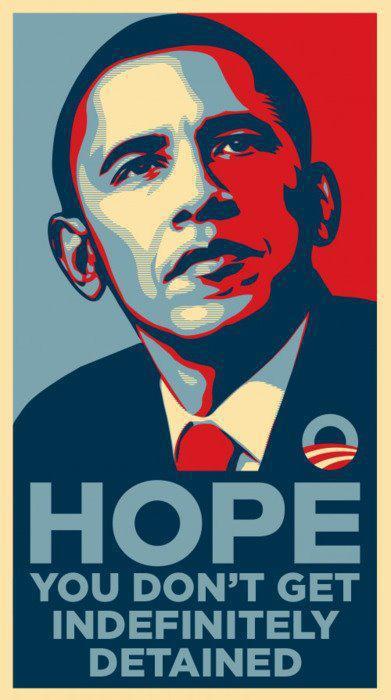
How Barack Obama lost my vote on New Year's, 2012

In 2008 I wrote here that the determining factor for choosing to cast my vote for Barack Obama in the Tennessee Democratic primary over Hillary Clinton was the extent to which he could shift away from repeating the conservative talking point that people were angry exclusively at politicians. All I needed was for him to acknowledge the populist point that corporations also deserved blame for the national anguish. I eventually voted for Obama in the primary (and then in the general election) because I heard him start to touch on the powers ordinary people were up against both inside and outside of government.

I knew he had his limitations. He still emphasized working with Republicans after America threw the bums out. His campaign contributions came from finance industry giants who dropped us into the recession. He wasn't the perfect candidate, and I did not expect him to be.

But 4 years ago I did not expect him to do what he did this weekend. In 2008 I never would have predicted that he would become more like George W. Bush on human rights than I had imagined he could. Jonathan Turley, a highly regarded constitutional legal scholar, sizes up the presidential damage:

President Barack Obama rang in the New Year by signing the [National Defense Authorization Act] ... with its provision allowing him to indefinitely detain citizens. It was a symbolic moment to say the least. With Americans distracted with drinking and celebrating, Obama signed one of the greatest rollbacks of civil liberties in the history of our country ....

Ironically, in addition to breaking his promise not to sign the law, Obama broke his promise on signing statements and attached a statement that he really does not want to detain citizens indefinitely.

Obama insisted that he signed the bill simply to keep funding for the troops. It was a continuation of the dishonest treatment of the issue by the White House since the law first came to light ....

You do not “support our troops” by denying the principles for which they are fighting. They are not fighting to consolidate authoritarian powers in the President. The “American way of life” is defined by our Constitution and specifically the Bill of Rights. Moreover, the insistence that you do not intend to use authoritarian powers does not alter the fact that you just signed an authoritarian measure.

In signing the NDAA, Obama crossed a line too far for me to consider voting for him again. I won't be voting Republican, but I won't be voting for Obama. Otherwise, I'm not sure what I'll do come the election, but I cannot ignore in the Obama Presidency what I could not tolerate about Dubya's. Obama chose Bush's Orwellian world over his constitutional obligation to defend our basic rights, to preserve the Bill of Rights. In the parlance of civil religion, NDAA is the unforgivable sin.

The irony here is that what I first responded so critically to--that Obama defined the national problem as exclusively that of the actions of politicians--is in 2012 the problem with the re-election of Barack Obama. It took a president to sign NDAA and fundamentally unravel our right not to be detained for speaking our minds, for nonviolent assembly, for social protest, for any reason at all. It took a president to make indefinite detainment without expectation of due process the law of the land. As he used to say in 2008, the politicians have become the problem. He is a self-fulfilling prophecy in 2012.

Thursday, December 29, 2011

Another year-end tribute from Tennessean reporter Michael Cass for Karl Dean

Cass ended 2010 with an homage to Karl Dean. His 2011 verse same as the first.

Last year he wrote the evocative tribute to the Mayor under the banner declaring Karl Dean "Tennessean of the Year." This year Michael Cass's retrospective on Metro politics is no less ingratiating. It places Mayor Dean at the center of the action, as vanquishing victor over any opponent, as well as the unqualified champion of several policy issues and one strictly personal one (you and me losing weight). Cass even minimizes the hits the Dean budget is set to take because of convention center land acquistion/construction overages that many have warned about.

Perhaps the most pandering and shameless homage to Karl the Conquerer is Cass's cast of the Mayor's Fairgrounds opponents as finally trampled in war despite an impressive series of populist battles won from 2010 to 2011:

[W]hen Dean didn’t lay out a specific plan for the property ... his proposal died at a Metro Council meeting that brought out thousands of people on Jan. 18 ....

While Dean lost that battle, he arguably won the war six months later, when Metro voters overwhelmingly supported his re-election bid on Aug. 4 and gave him another four years in office even as a large majority also voted for a Metro Charter amendment putting further restrictions on changes to the fairgrounds.

Cass's editorializing that Dean "lost the battle, but won the war", seems to assume that the only mission of Dean's Fairgrounds' opponents for the last half of 2010 into January 2011 was to beat Karl Dean in the August 2011 election. By any standard, let alone the journalistic standard, that assumption is a stretch. Many of us who opposed Dean's plan were clear about the victory in January. Few of us were looking for an alternative candidate to run against a wounded Mayor. So, where can Cass possibly get the idea that the Fairgrounds war was won by Dean in 2011?

In my estimation, Cass's reporting has tended to hedge against Dean opponents the longer this Mayor has pressed the Fairgrounds issue. First, he initially underestimated the turn-out of Dean's opponents at the Fairgrounds public hearing before conceding the actual high numbers that were being reported the night of the meeting.

Second after a 71%-29% landslide trouncing of the Mayor's demolition plan in August at the polls, Cass oddly reported that the Fairgrounds question divided Nashvillians while Karl Dean did not. Given the lopsided results, the Fairgrounds question was no more divisive than Karl Dean himself was. So, Cass is flat wrong about Dean winning the Fairgrounds war in August. He beat a handful of no-name candidates, one of whom was homeless (which hardly makes for a big campaign finance base to the obscene degree of Dean's). It is just as plausible to conclude that if the Fairgrounds question is the litmus test, Dean lost the battles of 2010-11 and the August war. And the community planning process that the council voted as the alternative to Dean's demolition is ongoing.

And readers should never let Cass live down that 2010 "Tennessean of the Year" homage. As much as it may have gained him friends inside the Courthouse, it should also be the context for whatever else he publishes on Hizzoner. It tarnishes his image.

The January victory of the Fairgrounds preservation group was almost a year ago. A long time ago. In my opinion, the Mayor's Office and the Dean supporters at the Tennessean are counting on the length of time passing and the shortness of public memory to bury the actual events leading to the defeat of the Mayor's demolition plans.

This history is contestable. Don't let them re-write it.