Showing posts with label Civil Rights. Show all posts

Monday, January 19, 2015

What kind of revolution did Dr. King claim? One of community projects or one of social justice?

Our only hope today lies in our ability to recapture the revolutionary spirit and go out into a sometimes hostile world declaring eternal hostility to poverty, racism, and militarism. With this powerful commitment we shall boldly challenge the status quo and unjust mores and thereby speed the day when every valley shall be exalted, and every mountain and hill shall be made low, and the crooked shall be made straight and the rough places plain.
-- Dr. Martin Luther King, Jr. (1967)

In college I was a supporter of the law that made Dr. Martin Luther King, Jr.'s birthday a national holiday. Even then, I understood that there would be a price to pay. Governments and corporations tend to co-opt popular observances for their own self-serving ends.

I continue to be an avid observant of MLK Day, but I am constantly reminded of how its institutionalization has muted and snuffed out most of the radicalism of Dr. King's message. "I Have a Dream" often replaces the nightmare Dr. King said that he found in the nation's slums. Some want to focus strictly on integration (which Dr. King called "a struggle to get rid of extremist behavior") while they ignore what Dr. King called "genuine equality" which involves "hard economic and social issues" and "survival of a world within which to be integrated."

Jeremy Kane volunteers for MLKDay
We continue to see the muffling of Dr. King's message in 2015 in Nashville, especially from candidates running for office. Metro Council candidates are promoting the national day of service, even though voluntarism has little to do with MLK's self-identity: "if you want to say that I was a drum major, say that I was a drum major for justice." Mayoral candidates are joining in volunteer activities without talking about what they would do if elected to curb the excesses of income inequality that lead to what Dr. King called "spiritual death."

Emphasizing a day of service gives politicos and corporations a shelter free of the undue risk of "genuine equality" and the weightier matters of social justice. Public-private partnerships are perfect vehicles for softening the sharp edges of MLK's message while seizing on the glow of his mass popularity. However, they are of no help in joining Dr. King to go out into a hostile world and boldly challenge the status quo. Public-private partnerships are the status quo. By not taking bold stands they have the air of safe neutrality. However, in the same sermon where Dr. King spoke of going into hostile world, he observed with Dante that the hottest places in hell are reserved for those who in a period of moral crisis maintain their neutrality.

Ultimately, the co-opting and switch of the MLK brand from economic justice to community service is ironic. Dr. King died in Memphis while supporting sanitation workers striking for wage increases and better working conditions. Not only do community service days do nothing to advance the cause of better pay and safer work for employees, but some clean-up and trash-pick-up volunteer efforts create more work for sanitation employees who haul it off to landfills generally located in poorer communities. Projects can be more of an obstacle to survival in a world within which to be integrated.

I participate in community projects and I encourage others to do the same at any point in the calendar. But let us not confuse and water down Dr. King's revolutionary message with the idea that community service projects authentically commemorate his work.


UPDATE:  I'm not the only one thinking this way. In Philadelphia today 6,000 organized in "a more assertive, confrontational vision of King's legacy" intentionally departing from the national day of service:
"While we recognize the importance of service, Dr. King was not assassinated because of his charity work. He was assassinated because he challenged the status quo," said the Rev. Mark Tyler of Mother Bethel A.M.E. Church, a leader of the new MLK D.A.R.E. coalition. "We only do honor to his memory if we continue to fight the same fight."

Tuesday, November 25, 2014

Bridgestone subsidiary hired an African warlord to "squeeze out" profits as Bridgestone lost money

Jim Cooper and Megan Barry at Karl Dean's Bridgestone announcement.

On top of all of his other government handouts to corporations, sports teams and TV shows, Mayor Karl Dean plans to give the Bridgestone company $50 million keep its headquarters in Nashville. There is no promise of new jobs, but only that 1,100 existing positions in Nashville and 600 in other states would be relocated downtown. In exchange, Bridgestone does not have to pay property taxes for 20 years (even though politicians are fond of saying that relocating business mean more property taxes to pay for Metro services).

Got it? There is no requirement that new jobs be created, although the Tennessean gushed that Bridgestone is "welcome" to create some.

Thanks to Mayor Dean (and Republican Governor Bill Haslam) the international auto parts manufacturer will be squeezing profits out of this Nashville deal (after the compliant Metro Council approves) for the next 20 years, obligation-free.

My concerns about how we're going to pay for vital infrastructure in the future while Hizzoner hands out free candy to corporations is strictly a first world problem; although it is a problem that falls disproportionately on working class people. Bridgestone also has a significant third world problem: the company does not have a clean past on the human rights front.

In the 1990s, their subsidiary Firestone had financial arrangements with rebel forces in Africa lead by Charles Taylor who would eventually be convicted for crimes and imprisoned for crimes against humanity. ProPublica has a podcast on the "secret history" of Firestone's dealings. Here is an exerpt:

During this time Bridgestone is purchasing Firestone in a big corporate merger back in the United States. It's a disaster by many accounts, and Bridgestone was losing money. So, they're trying to squeeze profits out of anywhere they can, and if you're the manager of the branch that holds Firestone, you're looking to save wherever you can. And so, Firestone is now this plantation ... making no money at all. Losing money. And so, you want to get it to become this profit-making enterprise again. And you have this connection ... with the people of Liberia that you don't want to break .... After months of negotiation they reach a deal in January of 1992 .... It's a memorandum of understanding between Firestone and Charles Taylor's government .... Firestone says, "We'll come back and we'll start paying taxes ... to Charles Taylor. In return, Charles Taylor will provide them with security. Now keep in mind that Charles Taylor is running a rebel army. This is not a state. So, essentially, Firestone is hiring a guerrilla army to protect their investments and they are paying money to a guerrilla army, which is trying to take over a country .... At the bottom line, money gets moved around, and Firestone was contributing to the war chest of Charles Taylor.

Late in the podcast, the ProPublica reporter talks about the long-term consequences of Firestone's financial arrangement with the African warlord:

One of the most shocking things about Liberia, is that there is not a single person who has ever been convicted of crimes against Liberians in a war that left 200,000 people dead [from 1989 to 1996]. Where there was thousands and thousands of child soldiers. Where there was cannibalism and people were eaten alive, burned, raped. An entire generation essentially erased, and no one has been held responsible for that .... You can't make a direct connection between what Firestone did in the 1990s and the Ebola crisis today. What is true is that the Liberian civil war ... led largely by Charles Taylor absolutely destroys the country. And afterwards, the people who helped in that destruction ... are never held accountable. So, now they're running the country. So, the very people who destroyed the country are no in charge of rebuilding it .... Liberia received tons and tons of aid after the civil war ended. Where has that gone? Why hasn't the health system improved? .... It's very easy to make a link between the civil war and Liberia's current horrible disease situation with Ebola.

ProPublica makes it clear that Charles Taylor relied on the money he received from Firestone to build an empire that waged war on its own people. That war destroyed infrastructure and created deadly social conditions, which made the Ebola cataclysm inevitable.

Since Mayor Karl Dean is proposing that Nashville taxpayers subsidize Bridgestone's new skyscraper headquarters with public dollars, the company should be held accountable for political conditions it generates with subsidized wealth at home and abroad. We should be more circumspect before gushing about how good Bridgestone is for people and jumping on their bandwagon.

Friday, August 22, 2014

Recap of last night's North Nashville town hall meeting on concerns about police after Ferguson

Last night I left my daughter's school orientation events early to attend the "town hall" meeting at Mount Zion Baptist Church on Jeff St. I arrived 30 minutes before it was supposed to start. That was a good thing because the pews of the sanctuary were nearly full by 7:15. They had an overflow crowd in their fellowship hall in the basement to watch a video feed.

There was a panel of African American community leaders and Metro Police Chief Steve Anderson. Those are the folks who did most of the speaking. Police commanders and other cops filled the choir loft while the candidates for mayor and other elected officials not on the program sat in audience at the front.

Meeting organizer, Bishop Joseph Walker, told the audience that the Mt. Zion meeting is the first time in the US that the protests over Michael Brown's death have moved out of the street and into a building for discussion with police and other leaders.

I sat next to a woman from South Nashville who told me that the event had been announced in church at Mt. Zion last Sunday. As far as I know, the mainstream news media did not announce it until Wednesday. What kind of crowds would have shown up if the announcement had gone out across the city over the weekend?

The predominantly white mainstream print and broadcast media looked like it was in full force, so you can probably read or listen to major details and talking points any place today. I'll stick with my own impressions here.

The first thing I have to say about the meeting was that it was a bona fide town hall complete with comments and questions from the audience. It was not a faux community meeting along the lines of the Mayor's bus rapid transit plan or a planning meeting where the only way you can have your questions answered is if you write them down on a permission slip. It was not a NashvilleNext "lounge" designed to lure hipsters and Millennials. It was unadorned, free-style, old-school town hall, which was fine with me. Democracy is messy business.

Beyond meeting logistics the takeaway for me is that Chief Steve Anderson was the main focus of the meeting. I was there until about 8:45 and Chief Anderson took the brunt of questions from the panelists and from the audience on what Metro cops would do if faced with the same events as they unfolded in Ferguson and on how Metro Police are working internally and with the community to prevent racism and brutality.

His department received praise, criticism, questions and notes of caution.

He handled himself serviceably. And I got the impression from audience and panelist responses that people were satisfied with his answers. Chief Anderson opened his comments with a list of mistakes he thought Ferguson police made, the most important one: failing to diffuse the situation two weeks ago when Mike Brown was shot dead (to be specific, he was shot six times, twice to the head) by a cop and kept in the street for hours afterward. The chief also said that not releasing shooting officer Darren Wilson's name immediately was a lapse. "Within the hour there should have been a statement," he told the audience. He described the way that the police handled the aftermath as appearing to be a conspiracy. He argued that they should have been more transparent from the beginning.

However, his ostensible list of mistakes did not include any mention of use of military equipment by police in protest situations. I was troubled by that.

In his comments on how the police would handle protests after police shootings, Chief Anderson told the audience that his department would meet with community leaders before the protests in order to cover organizing and coordination. He said something about "wanting to be with" peaceful protesters. He said that he would allow protesters to break "some of the law" by marching in the streets as long as community leaders understood that the police would maintain order at the end of the day.

Again he had the opportunity to address the use of military weapons on innocent protesters, but did not.

Finally, after a representative from Pacify Nashville read off a list of military weapons that Metro Police could use on the community, Chief Anderson spoke to the problem; but only after he read a list of the ways that military equipment had been used in the 2010 flood and in other emergency situations to help people in distress. It came across to me as dancing around the problem. The real issue here is that the weapons are designed for the battlefield. The possibility of using them against strikes and marches flips social protest to war. They were not designed for less grisly pursuits.

The police chief said that he would not use military equipment in the community "unless absolutely necessary." He only elaborated by saying that police would use it to protect property and life. Then again, the St. Louis County cops would probably argue that they only used it because it was absolutely necessary to protect Ferguson property and life last week as they were gassing residential areas from armored vehicles. The Pacify Nashville rep asked him point blank and the police chief seemed to be reserving the right to use them. Can you imagine a natural disaster where sound cannons like the ones used to drive away Ferguson protesters would be needed by the Metro Police? I cannot.

You can jump to a list, culled by the New York Times a few months ago, of the $4 million in military toys Metro Police has to play with. It is one thing to have an armored truck for use in authentic hostage situations; it is quite another to own a $600,000 "mine-resistant vehicle" and to reserve the right to use it to protect property during social protests. When was the last time Metro Police had to deal with mines?

In the end, I was left with the impression that we are just supposed to trust that the police won't viciously use the military weapons according to the purpose for which they were made. Is trusting the police good enough for the North Nashville community?


UPDATE: Pacify Nashville posted a video of the question they posed to Steve Anderson as well as his response. You will see that as Pacify Nashville read the list of military weapons in the question, gasps and shouts from the audience became louder. After Pacify Nashville asked Chief Anderson to define "strikes and riots" as situations that allow military weapons to be used, the audience applauded in response before the Chief's reply.


Clearly there is great concern in the community about weapons that allow police to scale up police brutality with military weapons. Military weapons do nothing to promote community policing and civil contact with neighborhoods. If there is a committee formed between the police and local citizens in the aftermath of Ferguson, it needs to come up with proper guidelines on the acquisition and use of military weapons by police departments. At some level, Metro Police will have to demilitarize if they want to earn the trust of the community.

Wednesday, August 20, 2014

Megan Barry should explain her claim that a consolidated government helps Metro Nashville avoid a Ferguson-like tragedy

In the only statement I have seen from mayoral candidate Megan Barry on the implications of the shooting of Mike Brown in Ferguson, MO and the resulting protests and police crackdowns in St. Louis County, she tweeted the following with a link to an Atlantic article on city-county consolidation:

Good piece @CityLab on city/county gov't. Nashville isn't perfect - but consolidated gov't helps.

Helps what? Helps make sure that African-Americans in Nashville get more equitable opportunities? Helps make Nashville less racist? Helps to keep police from turning their powerful military-style weapons against nonviolent protesters and innocent neighborhoods?

Reading the Atlantic piece sheds little or no light on what Ms. Barry is driving at. It claims that consolidated government would "knock down some of the structural barriers that prevent black residents in St. Louis County from succeeding." How has the consolidation of Nashville and Davidson County knocked down structural barriers? Before April 1, 1963 (when Nashville's consolidation became official) one of the most dramatic revolutions in Nashville history occurred when Nashville desegregated. It was in no way facilitated by consolidated government.

Instead, the Nashville sit-ins emerged, lead by young African-Americans--trained in non-violent tactics--who challenged segregated lunch counters by sitting in "Whites Only" areas. They were beat up by violent white mobs and then arrested by the Nashville police. They resisted without returning the violence. They tactically refused bail. As more waves of demonstrators filled up the jails, other African-Americans engaged in a crippling boycott of Downtown businesses.

The climax of the sit-ins occurred after the home of African-American Alexander Looby, who lived in North Nashville, was dynamite-bombed. The next day a large number of Nashvillians marched to the courthouse, where they were greeted by Mayor Ben West, a moderate who had before that day had left questions of segregated lunch counters to storeowners. In a dramatic moment sit-in leader Diane Nash asked Mayor West if he thought segregation was wrong. Mayor West responded: " I appeal to all citizens to end discrimination, to have no bigotry, no bias, no hatred." Taylor Branch tells the rest:

"Do you mean that to include lunch counters?" asked Nash, pressing the issue. She was standing face to face with the mayor. Her bravado hushed the crowd into silence.

"Little lady," West replied trying to be genial, "I stopped segregation seven years ago at the airport when I first took office, and there has been no trouble since."

Nash bored in relentlessly, "Then, Mayor, do you recommend that lunch counters be desegregated?"

West, a moderate white politician skewered in public before an emotional crowd answered the crucial question with a single word, "Yes." This drew cheers.

A short time thereafter Nashville businesses began to desegregate.

Consolidation was still 3 years away. What helped Nashville in 1960 was not unifying city and county governments. What helped Nashville was a disciplined protest movement with a clear strategy, practiced tactics and a willingness to suffer for their cause. What helped Nashville was an economic boycott that brought business leaders to their knees and forced them to see change as progress. What helped Nashville was a mayor who when cornered saw the wisdom of embracing the people's cause, which was also the just cause (even if he continued later to equivocate as moderates do). What would a Mayor Barry be willing to do to help take such a step?

What also helped Nashville was a national context: a movement that would leverage federal laws making segregation illegal. But before Nashville became the first US city to consolidate, it became the first southern city to desegregate. The disciplined non-violent action against segregation at lunch counters and movie theaters continued up through the year of consolidation until the next year with passage of the Civil Rights Act of 1964 (making desegregation the law of the land). So, how can Ms. Barry claim, without explanation, that "consolidated gov't helps" keep us from becoming St. Louis County, where racism still seems to have a free hand?

Frankly, the Atlantic piece she calls "good" seems to be using the publicity of the Michael Brown slaying and the situation in Ferguson to draw the frenetic traffic of the last 10 days to arguments that the author deeply holds without real connections to breaking news. As a result I do not find the article compelling. It provides practically no comparative evidence for judging whether events in Ferguson are more likely to happen because of unconsolidated St. Louis instead of consolidated Indianapolis. It makes the bizarre claim that poor people in Ferguson are more prone to predatory lending. As if they are not in cities with consolidated government, like Nashville?

The number of payday lenders has exploded in Nashville as have the campaign donations those lenders give to council members, mayoral candidates, and people running for the General Assembly. If our consolidated government "helps," as Megan Barry claims, how do so many predatory lending outlets charge poor Nashvillians such sky-high interest rates while lining the pockets of powerful politicians? Davidson County no more makes consumer protection from predatory lending a priority than St. Louis County seems to. Is Ms. Barry indicating that she might use consolidated government to regulate the lenders? That would be a breath of fresh air after Karl Dean, who once crowed: "The less regulation of business we do, the better."

I do not have any objections to the concept of consolidated government. It does a lot of good things for Nashvillians. I would not want the separation that plagues St. Louis.

By the same token, I believe that candidates for the Mayor's Office should formulate clear ideas on how they would govern in a crisis like the one in Missouri without reaching for rationalizations just to make us feel better that we are not like them. Ferguson is preying on the minds of many Nashville voters. We should expect clear answers from candidates; not convoluted references to consolidation designed to make our city seem sheltered against prejudice and military-like crackdowns.

Consolidation did not save Nashville from segregation. Why would it shelter us from resegregation?


UPDATE: The Mt. Zion Baptist Church Facebook page announces:

a town hall meeting to discuss the recent Ferguson, Missouri, riots and launch Nashville Unites, an initiative with the following objectives: 1) foster dialogue between police and citizens; 2) propose a community liaison program between precincts and their communities; 3) develop youth leadership; 4) highlight Mt. Zion’s mentoring program for adult men; and 5) commit to follow-through on all initiatives so as to build trust and ensure a more peaceful city that is a national model for collaboration


I am hearing that Megan Barry as well as other candidates for office have signed on to participate. I appreciate that they have put their "ice bucket challenges" on hold long enough to respond to pressing matters that concern the actual responsibilities of a mayor. Maybe we will get some substantive answers from her on what if anything consolidation has to do with stopping police brutality in underrepresented communities. The mayoral candidates are coming to North Nashville.


UPDATE: According to a commenter below, Ben West's historic encounter with Diane Nash happened somewhat differently than the way Taylor Branch reported. The Nashville Mayor was said to be speaking out of school on his role in integrating the airport:

On the steps of the courthouse with Diane Nash and Mayor West that day was Rev. C.T. Vivian. When West proclaimed to have integrated the lunch counters at the airport, it was Rev. Vivian who reminded the mayor that it was President Kennedy who had integrated the airport as this was federal property. West tried to take credit for something that he had not done as to appear that he had been supportive of the cause. After Vivian called him on it, and Nash put the question to him again, the mayor searched his heart and agreed with Miss Nash. (Heard Rev. Vivian tell this account himself).

Go to the comment section to read the rest of her or his thoughts.
 

Tuesday, August 19, 2014

Metro Nashville Police and their military-style hardware

I have been closely following the fallout of police officer Darren Wilson's shooting of teenager Mike Brown and the resulting protests in Ferguson, MO for the past week or so. I have many impressions I could share, but for now I want to focus on the use of military-style armored vehicles in residential neighborhoods to control violent "agitators". Many of you, like me, have seen Metro Nashville Police display their armored vehicles at community events, and I have to say that I will never look at any of MNPD's military-style weaponry the same way again.

Why not? Because I have seen them deployed against peaceful protesters as well as the "agitators" in Ferguson. I've seen, via Vine videos, innocent kids tear-gassed. I've seen pictures of people gassed in their own yards away from the main sites of protests. I've read accounts of armored vehicles rolling through neighborhoods shooting rubber bullets, pepper-spray-filled paintballs and unleashing enough toxic particulates that--even in closed homes--can endanger the lives of asthmatic children. I've read of a teenager begging a reporter not to leave her neighborhood because she was certain that the only thing between her and a round from a police assault rifle was the watchful presence of journalists.

So, I cannot look at these death-dealing armored vehicles the same way anymore. Even when they are proudly displayed at community events. (And why did we never stop to question how much these rolling behemoths cost taxpayers? Why give the authorities the benefit of the doubt in the first place?) I fail to see any justification for using military-style weaponry in largely pacified residential neighborhoods. It seems like overkill when the biggest threat coming from the handful of "agitators" is something like a couple of handguns and a single Molotov cocktail.

This is what Nashville police used to consider armor:


This is what Nashville police now consider armor:


The changes reflect the political climate post-9/11, but they also reflect a futile "war on drugs," which has been conducted since the 1980s. They also reflect a military-industrial complex, a defense industry that has been allowed to market their wares unchecked by government regulations and encouraged by elected officials who strive to bring home more pork. What they do not reflect is any change in the racial climate since the civil rights protests of the 1950s and 1960s. Police are simply more efficient at dealing out pain and death disproportionately to people of color and to working-class people with military-style plating and and assault weapons (by the way, tear gas is banned from battlefields by international treaties).

Ferguson shows that the most modern armor is overkill outside the battlefield. Police are not just "taking out bad guys" (as they like to say), they are endangering innocent lives and unleashing unnecessary collateral damage. They are laying waste to neighborhoods and people's lives.

Whether you believe that you will ever see one of these military-style monsters roll down your street or cut through the clouds above, unleashing a firestorm of injustice, there are honest poor people, honest people of color who do believe it to be a distinct possibility. If it can happen to them those of us who question the possibility are merely the next in line.

Sunday, July 13, 2014

How not to use social media on behalf of your city's water utility

The City of Detroit has decided to ignore the idea that access to clean water is a human right. They have spent the last few months turning off the water of residents who cannot pay even though rates have been hiked to cover some questionable financial choices the city has made over the years. They only started turning off businesses who have not paid--which make up the lion's share of the cost of delinquency--last week. Golf courses in Detroit owe hundreds of thousands in unpaid bills, yet they get preferential treatment.

Sunday Detroit Water representatives took to social media to accuse people who are trying to get water of "stealing" it from their utility, and they looked like thugs threatening their customers on Twitter:


This is worse than bad PR. It reflects the neglect and disdain that increasingly privatized municipal services, heavily influenced by business sector wealth, have for ordinary people living in difficult times. The double standard is clear: wealthy people have need of golf courses; they have no need of people who can't afford to bankroll brokered water. They have no need of universal human rights.

Monday, January 20, 2014

Civil rights not quite enough for Cooper?

Always anchor our external direct action with the power of economic withdrawal. Now, we are poor people, individually, we are poor when you compare us with white society in America. We are poor. Never stop and forget that collectively, that means all of us together, collectively we are richer than all the nations in the world, with the exception of nine.

Conservatives never seem to fail to express themselves awkwardly toward Martin Luther King, Jr. and the Civil Rights Movement. We have seen it before among red-state Republicans, but it is no less true for Blue Dog Democrats. Nashville's Jim Cooper reportedly attended a local law firm's annual MLK fellowship breakfast today and asked one of Dr. King's comrades the following question:


What I hear driving questions like this is the Blue Dog assumption that market-based principles generally provide solutions for social problems better than government action does. The fiscal conservativism at the heart of the logic of Democrats like Rep. Cooper ideologically dresses down every other priority. Hence, "economic opportunity" is code for never binding an economic system that hums along on inequality, on inequities, on profound imbalances of power and influence, wealth and privilege, because the market fixes everything if allowed to.

Left wanting more?
To tell the truth there was rarely the bifurcation in the Civil Right Movement between economics and politics that Jim Cooper seems to be insinuating in his question. In fact, black history is filled with attempts to advance economic opportunity beyond the movement that showcased Dr. King's work, but that is a subject for another time.

The question of economic opportunity for people of color and poor people runs like a distinct thread through Dr. King's speeches and writings. All Rep. Cooper has to do is listen to or read them. Take the last speech MLK gave before his death on behalf of 1,300 striking sanitation workers in Memphis. The last half of that speech has two primary expressions. One is well known because it is recited over and over due to the tragedy of April 4, 1968: Dr. King tells his audience that despite threats, he does not fear anyone because he has been to the "mountaintop", looked over and "seen the Promised Land".

But the second aspect of the second half of that speech contains express appeals to the people's practicality and economic power to make the changes necessary to bring them greater freedom. Dr. King encourages them to stop buying Coca-Cola and Wonder Bread. He tell them to quit the banks of Downtown Memphis for ones that treat workers more equitably. He mentions black-owned insurance companies that would be more worthy of his movement's money than white ones.

His last speech prescribes economic opportunity. It expresses solidarity with underpaid, mistreated city workers. It constitutes a jeremiad against the city of Memphis and its mayor, who prohibited a union, refused to raise wages and allowed African-American workers to toil in unsafe conditions. The only way you could insinuate that this civil rights speech is not about economic opportunity is to ignore the speech (as well as every other speech that gives this one broader context).

I was not at this morning's breakfast, so I do not have knowledge of everything that Rep. Cooper said. Tweets are notoriously unreliable, even when posted by a pro journo, for judging comments in their entirety. However, I do understand the flawed Blue Dog logic. I have also been exposed to political hemming and hawing about Dr. King's beliefs, especially in January when it is politically expedient to seem pro-MLK with no strings attached.

However, when Metro Nashville Schools destroyed its custodians union by outsourcing service work, we did not hear a word from fiscally conservative Jim Cooper. Some might argue that collective bargaining is a civil right. Regardless of that question, others prey on my mind: does Rep. Cooper believe that cutting and outsourcing school custodians gives them greater economic opportunities? Does he believe that Dr. King was not striving toward economic opportunity for sanitation workers by standing by their strike? If we honestly strive to be like MLK, shouldn't we stand by unions in their hour of economic need?

The Civil Rights Movement did not need an economic opportunity movement to complete it. It was always about economic justice as much as it was committed to nonviolent dissent and political reform. It supported unions who fought for greater economic opportunities. For any Democrat to insinuate that it was incomplete without the Blue Dog brand of snake oil is in poor taste on this Martin Luther King, Jr. holiday.

Arguably, the Blue Dog could have done worse. At least Mr. Cooper did not hijack the commemoration to pimp a new bus rapid transit plan.

Thursday, November 21, 2013

RIP, John Egerton

Nashville resident and author of southern culture, John Egerton has died according to local news reports. Mr. Egerton's civil rights writing touched on the history of Salemtown with his narrative to the film, A Child Shall Lead Them. In 2009, I started blogging on the history of desegregation at Salemtown's Fehr School with an interest in getting Metro to preserve and protect that historic building as a living civil rights museum. Nearly all of my information on Fehr came from John Egerton. I can say without a doubt that Mr. Egerton made preservation of the Fehr School building possible. Please join me in grateful remembrance of John Egerton.

Monday, September 09, 2013

A special anniversary in Salemtown history

On this day 56 years ago, 4 children desegregated Salemtown's Fehr School, braving the taunts and threats of segregationists and KKK members while walking a mob-gauntlet. There also were threats of bombing the building.

On this day 2 years ago, Historic Nashville, Inc. held a news conference on the steps of Fehr proclaiming it one of Nashville's most endangered buildings in need preservation.

Around that time we started a petition to save Fehr. That petition leveraged a historic landmark overlay for it and the Warner House building behind it; the overlay was passed by the Metro Council and signed by the Mayor nearly one year ago.

Today we remember the ones whose nerve made Fehr School a very special place in Salemtown history. We also rededicate ourselves to preserving that history so that Nashville never forgets.

Sunday, August 18, 2013

Already protected, Salemtown's Fehr School now visibly commemorated


The Metro Historical Commission installed a commemorative plaque recently at historic Fehr School. I spent a lot of time and energy over the years trying to help leverage a preservation overlay to protect this living Civil Rights museum from demolition or substantial alteration, including using this blog for community awareness.

Seeing the new plaque for the first time today is like a nice little ribbon on the gift of preservation we had already enjoyed for some time. The school is a source of pride for this neighborhood.

Saturday, August 03, 2013

RIP, Ernest Campbell, civil rights academic and long-time Germantown preservationist

I just learned that the former Vanderbilt sociologist who contributed so much to North End preservation died last Sunday at his Germantown home. This is sad news about a man who was a catalyst in our community, a professor who cut a figure in US civil rights history:

While at UNC, the Campbells welcomed the Rev. Dr. Martin Luther King Jr. to their home when the civil rights leader visited Chapel Hill. Campbell studied the educational aspirations of white and black students in North Carolina in the early 1960s and received a call from the U.S. Office of Education asking him to serve as co-director of a project resulting from a mandate in the U.S. Civil Rights Act of 1964 to study the effects of discrimination on race, sex and religion.

The scholars focused on education achievement and race, and the resulting large-scale study of nearly 800,000 students documented huge differences in test scores and achievement by race. The research additionally documented that the Southern region lagged significantly behind the rest of the nation in terms of education, especially in regard to race. The resulting study was dubbed the “Coleman Report” after its principal author, James S. Coleman, and was published in 1966.

Germantown has changed drastically in the decades since Ernest and Berdelle Campbell launched the preservation initiatives there. Those of us who live around them enjoy the fruits of their legacy, and rest assured that some here will not fail to recall their contributions to and influence in North Nashville.

Thank you, Ernest, and goodbye.

Tuesday, July 02, 2013

AMPartheid

More like: "moving for whom?"
I am grateful for the opportunities to meet some great leaders since moving to North Nashville ten years ago. Because our kids attended the same public school here, I have had more occasions in the past year to enjoy conversations with two such leaders, Sekou and Tene Franklin. I was impressed, but not at all surprised today to find Sekou's thoughtful, timely, and honest response to the Mayor's transit plan. A number of us have expressed frustration that the bus rapid transit project leaves our community behind in favor of subsidizing and further skewing West Nashville growth. But few of us are as adept as Sekou is at drawing out the nexus between a historical context of prejudice and contemporary transit decisions:

Since last year, community leaders have asked the Nashville Metropolitan Transit Authority (MTA) to extend the Amp route to North Nashville, which has one of the largest concentrations of blacks in the Mid-South region. North Nashville also has a historic tie to unjust transportation policies, most notably the Interstate 40 development that dislocated scores of residents, churches and businesses in the 1960s.

Many North Nashville neighborhoods are under-resourced and need better transportation options. The community also has a high number of hospital workers, renters, senior citizens, disabled residents and college students, all of whom could benefit from an Amp stop. However, MTA officials rejected pleas for an Amp terminal in North Nashville in the initial phase of the project. This snub could lead to a system of transportation apartheid in which some communities receive the bulk of transit investment — in this case, more than a $1 billion for neighborhoods in the Amp corridor — while others such as North Nashville are rendered invisible.

In February 2011, the Federal Transit Administration (FTA) sent a civil rights team to Nashville to assess whether the MTA was following federal civil rights law. The two-day visit occurred during the initial phase of the Amp design. In their visit, the FTA officers were shown routes in West, East and Southeast Nashville. Yet, for unexplainable reasons, the MTA did not allow them to visit North Nashville. This was yet another example of how communities such as North Nashville are treated as if they are invisible.

That last paragraph is galling. It is shameful that transit leaders intentionally ignored North Nashville on the question of lawful access to transit. It also casts a pall on the arguments of east-west corridor supporters who say they honestly believe West End is a better choice without any reference to MTA's shoddy treatment of North Nashville on a question of civil rights.

The shameless roll out of an east-west rapid transit corridor is the extension of the historic injustices that do not disappear with new generations leaders. While some local progressives attempt the tortured logic of scolding the Mayor for wanting to govern "the fun parts" while absolving him of responsibility for extending the time-honored, sanctioned neglect of North Nashville, Sekou Franklin reminds us that this BRT transit policy, in doing nothing to break from an infamous tradition, is the natural extension of that tradition. The link is not so easily severed just because Mayor Karl Dean is an odds-on jolly for taking down a Republican in a hypothetical run-for-office.

No degree of public relations can cover up the wounds reopened for some in North Nashville. You can pat your progressive self on the back all you want about supporting transit and helping some boiler room workers exit West Nashville faster at quitting time to access the same slower, lesser infrastructure they know all too well along points north. But liberal preening will not alter the reality that AMP extends Nashville's legacy of unequal development, and it serves disproportionally white, affluent communities before any other.

As such, it is transportation apartheid. Sekou calls it out for exactly what it is.

Tuesday, January 15, 2013

A largely forgotten Southern history

Myles Horton & Paulo Freire at Tennessee's
Highlander Folk School. Highlander was
an organizational midwife to the
Civil Rights Movement.
I am a recovering electoral politics nerd, so I am less interested in what The New Yorker's George Packer has to say this week about the slipping grip the South has on partisan brinksmanship in Washington than I am in his comments on broader cultural politics:

Solidity has always been the South’s strength, and its weakness. The same Southern lock that once held the Democratic Party now divides the Republican Party from the socially liberal, fiscally moderate tendencies of the rest of America. The Southern bloc in the House majority ... has no chance of enacting an agenda, and it’s unlikely to produce a nationally popular figure.

As its political power declines, the South might occupy a place like Scotland’s in the United Kingdom, as a cultural draw for the rest of the country, with a hint of the theme park. Country music and nascar remain huge ....

Southern political passions have always been rooted in sometimes extreme ideas of morality, which has meant, in recent years, abortion and school prayer. But there is a largely forgotten Southern history, beyond the well-known heroics of the civil-rights movement, of struggle against poverty and injustice, led by writers, preachers, farmers, rabble-rousers, and even politicians, speaking a rich language of indignation. The region is not entirely defined by Jim DeMint, Sam Walton, and the Tide’s A J McCarron. It would be better for America as well as for the South if Southerners rediscovered their hidden past and took up the painful task of refashioning an identity that no longer inspires their countrymen.

In the gaps that open between doctrinaire red-state conservatives and torpid social progressives there is an understated legacy of left-wing populism in the South that needs to be rekindled for the sake of social change regardless of who has control of Congress.

Tuesday, November 13, 2012

No major obstacles standing in the way of Fehr school building preservation

The ordinance that would apply a "Historic Landmark Overlay" to the Fehr school building properties in Salemtown and prevent demolition or alteration with few nebulous exceptions was approved by the Metro Council tonight on second reading. There was a public hearing, but no one got up to join the debate for or against. That was the last major hurdle toward preserving a significant landmark in Nashville civil rights history. Once past public hearing, passage of bills on third and final reading is generally a foregone conclusion.

I've been blogging and working on this cause for years. In spite of the bill's limitations, it is a big step in the right direction for our neighborhood, Nashville, and history.

Wednesday, September 26, 2012

The project to preserve the historic Fehr School building passes Metro Council's first reading

Longtime readers of this blog know that preserving Fehr school for public, educational purposes has been a goal of mine for years now, one that I have consistently advocated over and over again.

I'm pleased to report that Metro Council approved CM Erica Gilmore's bill that would protect the endangered building from demolition or radical alteration of the building without approval of the Historic Zoning Commission based on recognized preservation standards, with one exception. Here is the meat of the ordinance:

Title 17 of the Code of The Metropolitan Government of Nashville and Davidson County, is hereby amended by changing the Official Zoning Map...as follows:

By applying a Historic Landmark Overlay to the Fehr Elementary School property located at 1622 Fifth Avenue North (2.21 acres), and the Warner House property located at 1612 Fourth Avenue North (0.2 acres) being Property Parcel Nos. 060 and105 as designated on Map 082-05 of the Official Property Identification Maps of The Metropolitan Government of Nashville and Davidson County, all of which is described by lines, words and figures on the attached sketch, which is attached to and made a part of this ordinance as though copied herein.

An exception is being granted to allow the Metro Action Commission, which has dug in its heels against this preservation of this Civil Rights era jewel for months, insisting that it be allowed to make any changes to the building that the federal government might require, even though there were no examples ever given to the neighborhood of what those requirements might be. And given what I was told during a phone call last spring from CM Gilmore, the Metro Action Director seems to have flip-flopped after dropping the exemption requirement. Section 2 of the bill contains now includes their exemption:

Be it further enacted, that any restrictions on the alteration of structures created by the designation of the Fehr Elementary School and Warner House as Historic Landmarks shall not prevent the Metropolitan Action Commission from making necessary alterations required by the federal government to the structures located on the properties identified in this legislation or require the Metropolitan Action Commission to seek the approval of the Historic Zoning Commission for such alterations
.
As long as the term "necessary" is not defined loosely or broadly, then MAC's exception might not present problems. Although, MAC is also exempted from any public process where their plans would be made transparent in the approval process before the HZC. In principle, I do not believe that exempting a Metro department from a rigorous public process is a wise practice. This will force concerned citizens to stay on top of capital budget requests from MAC and to contact our elected officials in Washington about reviewing any federal requirements MAC claims it has to radically alter this living museum.

It's not a perfect bill (few are), but I suppose it is the best we can get given the preferential option Metro Action leaders seem to be reserving for themselves to the point of halting Salemtown's long-held goals of preserving Fehr. I strongly recommend supporting Erica Gilmore as she does what she can with this ordinance to preserve Fehr based on landmark status standards. Given that Metro Action got exactly what it wanted, there should be no more obstacles to quick and painless passage.

Wednesday, September 12, 2012

Politically connected news media board president compares school board decision to segregationist governor

The president of the board of directors of the parent company of the Nashville Scene and the Nashville City Paper, Townes Duncan, is a charter school advocate. He is such an avid advocate that he started a PAC to elect pro-charter candidates to the school board with a family member of Mayor Karl Dean, who also happens to be a fan of charter schools. Mr. Duncan sent out an e-mail blast last June when the school board deferred consideration of the application of Great Hearts Academy, suggesting that the board was ruled by "Forces of Darkness" who place "adult needs" over student achievement.

Last night the school board, in defiance of a state order to accept the Great Hearts application, took the surprising step of denial of the Arizona-based charter school's application. Predictably, Mayor Dean indicated that the denial was illegal.

For his part, Mr. Duncan fired off a tweet that compared the Metro Nashville school board decision with the 1957 segregationist actions of Arkansas governor Orval Faubus, blocking the Little Rock Nine in order to appease racist anger at federal desegregation orders:


I guess if you are tight with this Mayor you can get away with comparing declining the application of a private corporation to come in and privatize public schools (based on the faulty, unexamined, undemonstrated logic that charter schools will stop affluent parents from pulling their kids out of Metro schools) with denying African American children their constitutional right to public education.

Charter schools are essentially "public" private schools that take applications. Hence, they can deny students access themselves free from bureaucratic obligation. But somehow, Mr. Duncan twists that reality to a level equal to the noble cause of granting free access to public education to all people irrespective of character, creed or color. Obviously, up has become down and inside has become out in the newspeak of privatized education.

Not from last night's school board meeting:
Faubus plays to all-white crowd & confederate flag
For my part, I believe Great Hearts will eventually win approval because MNPS Director Jesse Register has already started Metro Public Schools down the slippery slope of privatization. So, I don't understand the dust-up by fans and evangelists of charter schools. They are overplaying their hand with the whining. At last night's meeting, the establishment of Metro charter schools was cited several times as precedent for accepting other comers like Great Hearts. So, it's just a matter of time before Great Hearts wins this, in my opinion. But just like there is no basis for the argument that charter schools will retain wealthy parents, so there is no evidence that charters perform any better than bona fide (a.k.a. "neighborhood") public schools.

And there is no need for charter supporters to make ridiculous comparisons to civil rights history. For Mr. Duncan to take the low road of specious comparisons while Mayor Dean kicks at the decision from on high may leverage a different board decision in the future, but neither will change the realities of education or those of history.


UPDATE: And 24 hours later, the Nashville Scene editor updates to get out front on the story of his company's board president's regrettable tweets. Jump to the slow-pokey post. Not exactly breaking news.

Tuesday, April 17, 2012

BREAKING: Erica Gilmore announces that the Fehr School Building will receive historic designation and protection

CM Erica Gilmore just called me to say that a rezoning bill to preserve Salemtown's historic Fehr School building is now being drafted thanks to Metro Action Commission Director Cynthia Croom's change of heart on the question. The director originally opposed a historic overlay for the civil rights landmark at the corner of 5th Av N and Garfield St, which brought the overlay to a grinding halt unless MAC got an exemption from the legislation. However, according to CM Gilmore, Ms. Croom now "enthusiastically supports" the rezoning measure without exempting MAC.

Once CM Gilmore's bill is drafted she tells me she will forward a copy to me. Once I get my paws on it, I'll post it here.

Thanks to Ms. Croom. Thanks to CM Gilmore. Thanks to everyone who made this important progress happen.

Whoopee! Now let's make the most of this opportunity and lend popular support when it is introduced in council!

Monday, January 16, 2012

Still an arrogant nation on the wrong side of world revolution: an excerpt from Dr. Martin Luther King, Jr.'s "Beyond Vietnam"

In 1957, a sensitive American official overseas said that it seemed to him that our nation was on the wrong side of a world revolution. During the past ten years, we have seen emerge a pattern of suppression, which has now has justified the presence of U.S. military "advisers" in Venezuela. This need to maintain social stability for our investments accounts for the counterrevolutionary action of American forces in Guatemala. It tells why American helicopters are being used against guerrillas in Cambodia and why American napalm and Green Beret forces have already been active against rebels in Peru. It is with such activity in mind that the words of the late John F. Kennedy come back to haunt us. Five years ago, he said, "Those who make peaceful revolution impossible will make violent revolution inevitable."


Increasingly, by choice or by accident, this is the role our nation has taken, the role of those who make peaceful revolution impossible by refusing to give up the privileges and the pleasures that come from the immense profits of overseas investments.


I am convinced that if we are to get on the right side of the world revolution, we as a nation must undergo a radical revolution of values. We must rapidly begin the shift from a thing-oriented society to a person-oriented society. When machines and computers, profit motives and property rights are considered more important than people, the giant triplets of racism, extreme materialism and militarism are incapable of being conquered.


A true revolution of values will soon cause us to question the fairness and justice of many of our past and present policies. On the one hand, we are called to play the Good Samaritan on life’s roadside, but that will be only an initial act. One day we must come to see that the whole Jericho road must be transformed so that men and women will not be constantly beaten and robbed as they make their journey on life’s highway. True compassion is more than flinging a coin to a beggar. It comes to see that an edifice which produces beggars needs restructuring.


A true revolution of values will soon look uneasily on the glaring contrast of poverty and wealth with righteous indignation. It will look across the seas and see individual capitalists of the West investing huge sums of money in Asia, Africa and South America, only to take the profits out with no concern for the social betterment of the countries, and say, "This is not just." It will look at our alliance with the landed gentry of South America and say, "This is not just." The Western arrogance of feeling that it has everything to teach others and nothing to learn from them is not just.

Jim Cooper and the bloggers

`I'll start at the end of Jim Cooper's meeting with a handful of local bloggers at Bongo Java Saturday. As Rep. Cooper wound up the meeting and left I hailed his communications director, Katie Hill, to follow up with questions I did not get a chance to ask.

I referred her attention to this week's Nashville Scene interview with her boss where he responded to the Scene's questions about the long awaited federal court house by criticizing the line-jumping that more influential Congressmembers did to get their projects through. I offered the feedback that inside moves that members made to check and out-maneuver one another is really not an issue of principal. Whether Nashville moves up or down in consideration is really an inside-baseball issue and that many voters expect our elected representatives to make the inside moves we cannot make to give us more of an advantage.

Rep. Cooper had already told our klatch that he wanted to return to a Congressional era in the past less dictated by ensconced Congressmembers pulling strings behind the scenes. I asked Katie rhetorically what era he meant, given that the DC of Jim Wright, Tip O'Neill, and LBJ seemed focused on back-room arm-twisting and influence.

Rep. Cooper had already told us that he considered high-visibility and independent Vermont Senator Bernie Sanders to be ineffective on Capitol Hill. Right after he said that I chimed in that many in the Occupy movement referred to Sen. Sanders as effective at bringing more national attention to their cause. During my exchange with Katie, I suggested that some might consider Rep. Cooper's principled stand on the fight for infrastructure for their states and districts as ineffective. I was thinking in terms of the "Chicago Way": you don't bring a knife to a gun fight. I reiterated to Katie that these internal matches are not moral questions and to make them such might be considered "ineffective" by some who want to see infrastructure. However, I added, the issue of indefinite detention is a moral question.

Rep. Cooper had already responded to my question of whether he would support legislation to take indefinite detention out of the 2012 defense authorization bill by not really answering whether he would support it. He called indefinite detention a "murky, presidential powers/Supreme Court issue". He continued: "the current law on that is that if they are a proven terrorist or there are a lot of factors here that then they can be detained, but it is infinitely worrisome anytime it is a citizen." I would put it more strongly: it's not just worrisome, it's an absolute violation of basic human rights. Rep. Cooper called this a "gray area", and he argued that Congress has failed to make sense of this 'murky area". He mentioned the drone attack on Anwar al-Awlaki, a US citizen on foreign soil. He seemed to suggest that we have been down the rabbit hole since World War II. However, he also insisted that President Obama is trying to get us away from this by winding down the war in Iraq. I did not get how this connected with defending the rights of citizens who are more likely to be indefinitely detained, who are more likely to disappear under this act.

Rep. Cooper had already given the Occupy movement its due after I posed the question as to whether their focus on jobs and wealth distribution was a diversion from the focus on the budget deficit. He handled the pitch ably. He responded that Occupy "balanced the debate". He tied his priority of "getting the budgets right" with helping people, and he emphasized that solving the budget deficit is consistent with the radical democracy of Occupy Wall Street. Rep. Cooper indicated that the deficit numbers are only important if they help or hurt the common people. But he did not address the question of how banks and other powerful finance interests were hurting people, only how Congress's lack of accountability was hurting people.

And that gets me back to a question that I raised with Katie after our time ran out with Rep. Cooper: there are larger moral issues here than the internal mechanism of Congress. The moral issues involve even more of a clear ethical distinction regarding indefinite detention or wealth disparity than they do regarding the privilege of congressional pecking order. If there ever was a time when Congress worked equitably, it was not just a matter of the internal clockwork. It was also due to a healthier, more progressive democracy outside.

In my opinion Jim Cooper should do whatever it takes to bring home the bacon to his district, but he should also focus more broadly on larger civil rights and economic challenge that have brought American democracy to a watershed. That is what I tried to convey to Katie before I left on Saturday.

Monday, January 02, 2012

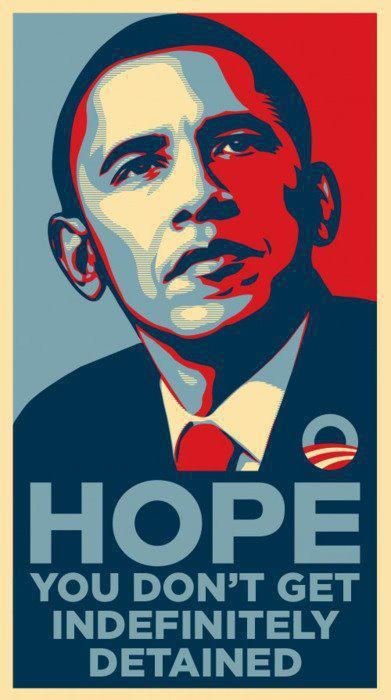
How Barack Obama lost my vote on New Year's, 2012

In 2008 I wrote here that the determining factor for choosing to cast my vote for Barack Obama in the Tennessee Democratic primary over Hillary Clinton was the extent to which he could shift away from repeating the conservative talking point that people were angry exclusively at politicians. All I needed was for him to acknowledge the populist point that corporations also deserved blame for the national anguish. I eventually voted for Obama in the primary (and then in the general election) because I heard him start to touch on the powers ordinary people were up against both inside and outside of government.

I knew he had his limitations. He still emphasized working with Republicans after America threw the bums out. His campaign contributions came from finance industry giants who dropped us into the recession. He wasn't the perfect candidate, and I did not expect him to be.

But 4 years ago I did not expect him to do what he did this weekend. In 2008 I never would have predicted that he would become more like George W. Bush on human rights than I had imagined he could. Jonathan Turley, a highly regarded constitutional legal scholar, sizes up the presidential damage:

President Barack Obama rang in the New Year by signing the [National Defense Authorization Act] ... with its provision allowing him to indefinitely detain citizens. It was a symbolic moment to say the least. With Americans distracted with drinking and celebrating, Obama signed one of the greatest rollbacks of civil liberties in the history of our country ....

Ironically, in addition to breaking his promise not to sign the law, Obama broke his promise on signing statements and attached a statement that he really does not want to detain citizens indefinitely.

Obama insisted that he signed the bill simply to keep funding for the troops. It was a continuation of the dishonest treatment of the issue by the White House since the law first came to light ....

You do not “support our troops” by denying the principles for which they are fighting. They are not fighting to consolidate authoritarian powers in the President. The “American way of life” is defined by our Constitution and specifically the Bill of Rights. Moreover, the insistence that you do not intend to use authoritarian powers does not alter the fact that you just signed an authoritarian measure.

In signing the NDAA, Obama crossed a line too far for me to consider voting for him again. I won't be voting Republican, but I won't be voting for Obama. Otherwise, I'm not sure what I'll do come the election, but I cannot ignore in the Obama Presidency what I could not tolerate about Dubya's. Obama chose Bush's Orwellian world over his constitutional obligation to defend our basic rights, to preserve the Bill of Rights. In the parlance of civil religion, NDAA is the unforgivable sin.

The irony here is that what I first responded so critically to--that Obama defined the national problem as exclusively that of the actions of politicians--is in 2012 the problem with the re-election of Barack Obama. It took a president to sign NDAA and fundamentally unravel our right not to be detained for speaking our minds, for nonviolent assembly, for social protest, for any reason at all. It took a president to make indefinite detainment without expectation of due process the law of the land. As he used to say in 2008, the politicians have become the problem. He is a self-fulfilling prophecy in 2012.