Monday, May 03, 2010

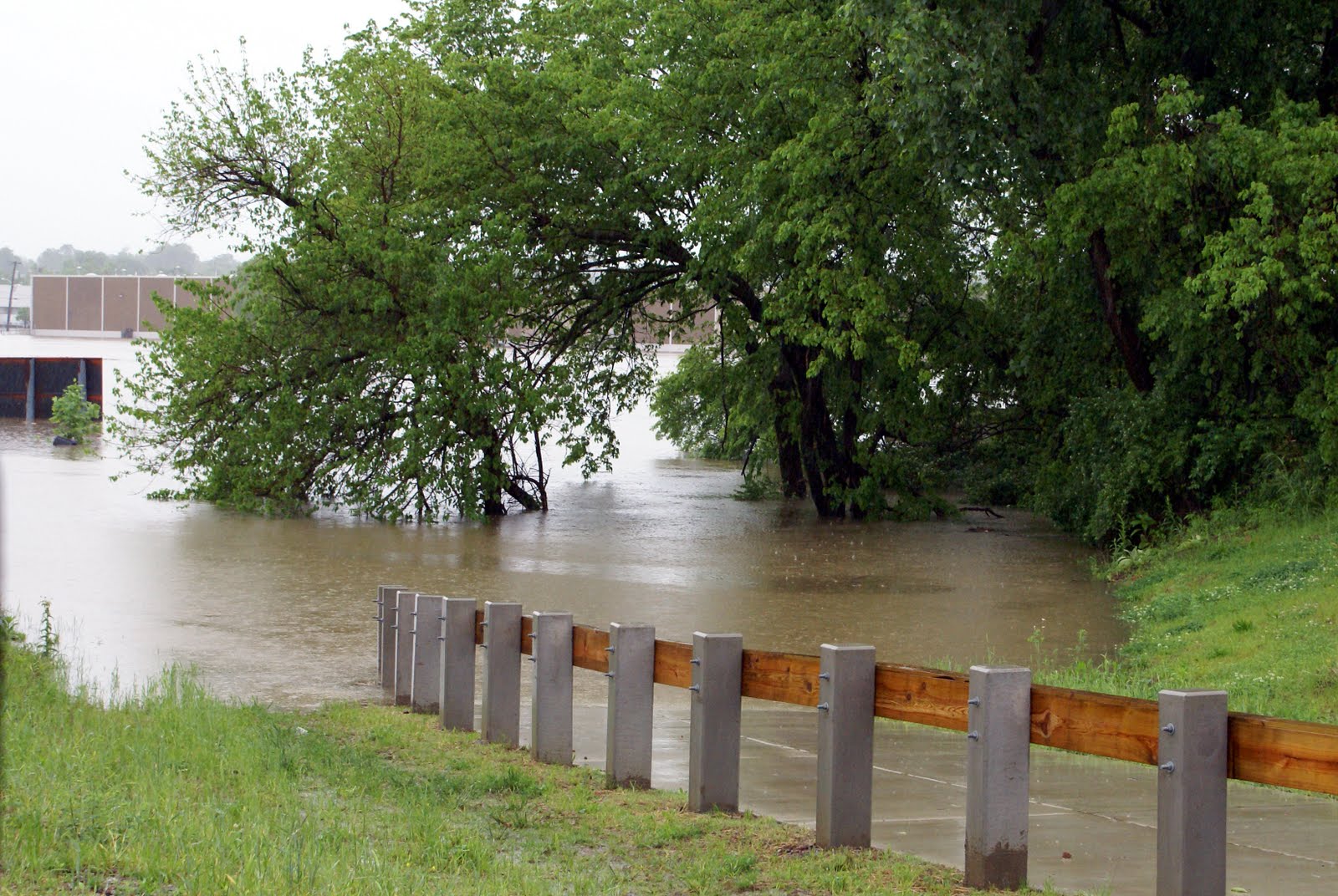
Photo: despite Cumberland River flood Metro Water's chlorine gas tanks sandbagged and dry, for now


I took this photo at 7:30 this morning on Cement Plant Road as the Cumberland River continued to rise behind me. The hazardous chlorine gas Metro Water Services uses to treat Downtown area water are exposed as usual, but they have been sandbagged against rising flood waters about 4' away from them. Local news media report that river levels are expected to continue to rise through the day.

Sunday, May 02, 2010

2010 Nashville flood: Salemtown resident observes attempts to protect Metro Water Service chlorine tankers from rising Cumberland River

The following disturbing e-mail was sent to the Salemtown Neighbors list from a local resident attempting to monitor the rising Cumberland River flood waters near the Central Wastewater Treatment Plant:
I'm at 2nd Ave and Cement Plant Rd (by metro water). They've blocked the road because they are doing some major opperation to contain the Chlorine storage area that is flooded (or in danger of it).

Their head of security, Mr. Jobe, got in my farce and very aggressive. When I asked him if we were in any danger. he refused to answer and told me to leave. I'm now parked on the (public) road where he can't be a dick. Nasty smells are over here though. Pass the news along and alert the press. We could have a problem.
Last fall, I blogged on the risk of Metro storing chlorine tankers in an open, exposed area. I'm not aware of any media coverage of this risk or measures taken to protect the community from a chlorine spill, but this is an alarming situation.

Photos of 2010 Nashville flood, Cumberland River, Central Wastewater Treatment Plant

Before sundown I took one more trip 5 blocks east to check out the Cumberland River's rise. The difference since this morning is dramatic. Usually the river is some 200-225' down the embankment from Cement Plant Road (old 2nd Avenue), which stands between the river & the Central Wastewater Treatment Plant.

This evening, as shown in the photos below, the water is a few feet from topping the embankment and spilling on to the road. As I write it may already be there. I don't know. But I did see a number of Metro Water Service employees on the road waiting for something. Not a sand bag in sight. You should be able to see the roofs of a couple of submerged sheds clearly below the road.


FEBRUARY 23, 2019 UPDATE: today's rain amount made this the wettest February in Nashville on record since 1880 (by the way, the wettest month on record in Nashville was May 2010). For the sake of comparison, look at photos from this afternoon in basically the same places along the Cumberland River Greenway.


Photos of 2010 Nashville flood, Farmers' Market, Bicentennial Mall, Rosa Parks Boulevard (8th Avenue)

Flood scenes around the foot of Capitol Hill (Tennessee Capitol Building). I took all of these photos this afternoon.


Photos of 2010 Nashville flood, more from Hope Gardens


10th Avenue, North toward Downtown Nashville


Locklayer toward Nashville Farmers' Market

Photos of 2010 Nashville flood in MetroCenter and Buena Vista Heights


A MetroCenter building owner told me that both area lakes had topped their banks causing flooding of the roadways.

Photos of 2010 Nashville flood on Cumberland River greenway


Part of the Downtown section of the Cumberland River greenway near Salemtown. Trees, bench, trash can are completely submerged. If I had taken these pictures from the same spot I stood this morning (compare here) I would have been in the water.

Video of 2010 Nashville flood at Farmer's Market

Photos of 2010 Nashville flood in Hope Gardens

Flooding on 9th Ave N in front of Row 8.9 in Hope Gardens, Na... on Twitpic


This is 9th Avenue, North near Nashville Farmer's Market (via Marlaink)

Photos of 2010 Nashville flood around the North End


Cumberland River inundates part of the Downtown section of the Cumberland River Greenway during 2010 flood this morning.


Closed Rosa Parks Boulevard flooded by 4 feet of water near Row 8.9 townhouses.


Flooded Nashville Farmers' Market on Rosa Parks Boulevard.

Monday, April 26, 2010

2010 Country Music Marathon photos

Unfortunately, I did not get to take as many images of the Country Music Marathon to blog as I have in past years because I had to be out of town the afternoon of the race. In a typical race year I drift from Werthan Lofts to Farmers Market to Downtown to MetroCenter snapping photos. During the hour I spent watching the elite men and women racers followed by the leading average runners, these are some I was able to take around Werthan, Salemtown, and Jefferson Street. Enjoy.


Sunday, April 25, 2010

North Nashville leader believes Metro can do more to prevent crime

From his vantage around 10th Av., North and Coffee St., professor Sekou Franklin believes that Metro law enforcement should strive beyond suppressing crime and be more proactive in engaging the community in prevention:

As a social scientist, I have examined various crime reduction strategies. As a resident who has been afforded more opportunities than most of my neighbors, I have observed Nashville's approach to remedying violent crime. Suppression alone will not solve violent crime in inner-city neighborhoods already traumatized by violence and neglect. The police department's zero-tolerance approach, emblematic in its Operation Safer Street initiative, leads to over-policing, distrust and racial profiling.

An alternative to suppression that Nashville may want to consider replicating is the Measure Y initiative (www.measurey.org) in Oakland, Calif. The $20 million annual program offers a holistic approach to crime reduction. This includes the hiring of six dozen police officers, many of whom belong to specialized units dedicated to community policing and school safety instead of suppression. Additional money is allocated for fire safety, emergency service, school-based conflict resolution counselors and community interventionists (respected community activists with ties to gangs and at-risk youth) who canvass high-crime neighborhoods in order to prevent retaliation killings in the aftermath of violence.

2010 Country Music Marathon elite men's race produces first non-African winner


Columbian William Naranjo won the men's side of the 2010 Country Music Marathon after keeping pace with the leaders through Germantown. In the photos above Naranjo (#10) is in the middle of the pack at the 12 mile marker and hangs in second place approaching the 19th mile.

Saturday, April 24, 2010

2010 Country Music Marathon has its first American winner


While she trailed Ethiopian runner Serkalem Abrha (left-F1) at the 18 1/2 mile in Germantown during the women's marathon, Ilsa Paulson (right-F2) rallied to become the first American, man or woman, to win this race.

Friday, April 23, 2010

An eye opener!

I'm getting a little lesson on just how unmonitored and unsupervised municipal bond issues--like those backing the new convention center--are over at CM Emily Evans twitter stream. Jump over and see what a wild, wild west it is. My Twitter stream is available here in the right-hand column in the black box.


UPDATE: The most salient point in CM Evans' twitter stream concerns the governing body that Congress appointed to regulate and protect municipalities on bond issues, the Municipal Securities Rulemaking Board (MSRB), whose appointees are a small group of finance industry insiders from banks like JPMorgan:


We have to ask at this point, if it is rigged, was it rigged against Metro Nashville when Mayor Karl Dean went to Wall Street last week and lauded the market for "validating" his convention center plan?

Thursday, April 22, 2010

Comment away -- sorry for the delay

Sorry to those of you who left comments the past couple of weeks. They were sitting in my queue without approval because of an error I made with e-mail notifications. After getting a heads up today, I went in an approved them all. I also fixed the e-mail notification problem.

I appreciate the positive response to my return to blogging, and particularly enjoyed the digs at the local news media. Thanks for being patient with the technical problems.

Local union alleges that public schools director met for months w/private contractors and relied on their projections before proposing to privatize

From SEIU Local 205, the union that represents Metro service workers:
SEIU Local 205 released a series of internal emails that reveal that administrators at Metro Nashville Public Schools have been working behind closed doors to push forward a plan to privatize custodians and groundskeepers as far back as November, 2009. The union also found that Dr. Register’s statements of a $5 million dollar cost savings to the district were based on a claim made by one of the contractors who is bidding on the project, not through a scientific cost-benefit analysis or impact study (see page 1 of Attachment, Item #3).

As a result of an information request from MNPS, union officials discovered that school administrators have been contacting and meeting in secret with representatives of GCA Services Group, based in Knoxville, with regards to outsourcing as far back as November 18, 2009, though even those emails indicate that there had been previous communications before that. Register had not mentioned any interest or inclination in privatizing these two departments until he released his budget on March 11. “Register has said that the reason he wants to outsource 700 custodial workers’ jobs is because of the economy, but he was negotiating with a contractor months before anyone even knew what the city’s revenue was,” said Doug Collier, President of SEIU Local 205, who represents support staff in Metro Schools. “Keep in mind that Register has privatized custodial services in his previous positions in Chattanooga and in North Carolina. He didn’t use the economy as his excuse then because he couldn’t. Now he could, and he has.”

Largely because of assurances by Dr. Register and School Board member Steve Glover that a savings would be seen, the Board narrowly voted to accept the budget by a vote of 5-4. “Dr. Register has not been a straight shooter with the School Board who hired him or with the public,” says Teresa West, a food service employee at MNPS. “He is claiming some kind of dire economic emergency, but now we know that he was just out to privatize our jobs.” West says that the $5 million savings that Register claims will happen from the privatization will have to be paid by taxpayers anyway since many custodians will have to go on public assistance once they lose their jobs or see their pay and benefits cut. “Because of his drive for privatization, Register has opened the district up to lawsuits since 88% of the workers affected are minorities and because GCA may have been given an unfair advantage in the bidding process.”

GCA Services, the company that school administrators were in contact with, is expected to bid on the custodial and groundskeeping contracts since their representatives were present at a March 26 question and answer session for prospective contractors. The bidding period on the contracts close this Friday.

Mayor Dean has yet to present his schools budget to the Metro Council and he has not taken a position on whether or not he will support the School Board’s proposal to outsource nearly 700 custodians and groundskeepers. He has until May 1 to present his version of the budget to the Council.

Wednesday, April 21, 2010

Nashville's new convention center debt a "leap of faith"

From last week's Music City Center piece by Bloomberg, overlooked because the local media focused strictly on some anonymous Courthouse grumbling about CM Emily Evans' quotes in the piece:
With convention center attendance down nationwide -- a 30 percent decline in Las Vegas and 28 percent in Orlando, Florida, two of the largest convention markets in the U.S. -- Nashville’s taxpayers may wind up paying part of the cost if use of the new center falls short, said Heywood Sanders, professor of public administration at the University of Texas in San Antonio, who has studied convention centers.

“It’s quite a leap of faith,” said Sanders, who’s writing a book on convention center financing. “It’s a pretty large chunk of debt.”

The city is selling in four parts, with about $605 million as taxable Build America Bonds, which come with a 35 percent subsidy from the U.S. government under economic stimulus legislation passed last year by Congress.

The average yield on Build America securities fell 6 basis points to a three-week low of 6.17 percent yesterday, according to the Wells Fargo Build America Bond Index. A basis point is 0.01 percentage point.

What happens to our rights in public-private parks?

I had the opportunity to chat face-to-face with former CM Lynn Williams at an online news conference a couple of weeks ago. Our chatter involved local politics, guns in bars, smartphones, and private parks.

It was the latter topic that especially sparked my curiosity. During a conference session on legal issues in recording news events on smartphones, the legality of shooting footage on public vs. private space came up. That spurred the following tweet from Lynn:


At the end of the session we met up, and she elaborated on her point. She had in mind Harding Academy's acquisition of private property to build a public park for its own athletics program. Since the "public" park is actually privately-owned, would someone recording a news event there have to get consent from the school to share that footage? A chronicler or reporter can legally record news on public property without permission, but when s/he sets foot on private property, consent must be attained. Thus, if I videotaped a Harding parent assaulting another parent's kid on Harding's ballfield, consent seems a murky issue, even with public park permits.

I replied to Lynn that the same problem arises with Belmont University's lease of Metro Nashville's Rose Park to build its baseball, softball, and soccer fields over the heads of neighborhood protests. While the hyper-locals are concerned about traffic, zoning, and open meetings, another problem that arises is the question of consent to record news events in Rose Park while Belmont is exercising its lease rights. Metro may be so cash strapped that it has to offer public park space to high bidders, but the question of whether we can video- or audio-record events that unfold on privately reserved land without Belmont's consent becomes more murky (granted, I'm not a lawyer).

The underlying squeeze here is the often vaunted, infrequently examined notion of public-private partnerships. While that amalgam may provide new opportunities to pool resources and reduce replication of services, it seems to become a sticky mishmash of legal problems for free individuals who intend to exercise their rights of expression in public space while respecting privacy rights. Those who try to document and record events that unfold in their communities must become more attuned to the obstacles erected by public-private partnerships. We ignore them at our own peril.