Over the past few days I have met dozens of really nice people from the television soap-opera series "Nashville".
About a week ago we gave permission to "Music City Productions, Inc. 'Nashville - The First Season'" to occupy, stage, and film a short scene (maybe 30 seconds?) in an upcoming episode (16) at our home in Salemtown. I can confess that we were a bit nervous having people in and out and having one of our walls altered to fit the scene. However, I encountered people from most of the segments of the production -- location, construction, design, lighting, sound, make-up, director, producers, actors, etc -- and I found them to be gracious and easy to host.
As I told their location manager (who followed up after everyone was gone to make sure that we were completely satisfied), we were so pleased with how the experience turned out that we would welcome them back if they needed to re-shoot something anytime. And I would recommend them to any fellow Nashvillians who were considering sharing their homes as sets. The production company even responded favorably when I asked them to make a $500 donation to the Salemtown neighborhood association as an expression of good will for the disruption of closing the street to film.
Even for an introverted homebody like me there actually were fun experiences across the past few days. Listening to construction people talk about working on other film projects (like the upcoming bio on Jackie Robinson, "42"). Observing designers at their craft. Sitting next to Callie Khouri, wrapped in awe, while she studied the action on a video monitor. Listening to Michael Waxman describe how New York City is different than when he grew up there and how his daughter stops for kolaches on her way back to his Austin ranch from college. Hearing Chip Esten (a.k.a., "Deacon") laugh at our 8-year-old's notes tacked to a kitchen cabinet as he ate breakfast over our stove. Watching another actor, who plays Deacon's romantic-interest-of-the-moment, romping around our backyard with our dog between takes. It seemed all surreal, but entertaining without the show.
As fun as the ride was, it did not change my opinion that Metro government should not subsidize the network TV series. My opposition to giving the production company public money by no means indicates a lack of support for Nashville's film industry. I would like to see many more films and series made here, employing lots of people. However, Nashville the municipality still has budget obligations to the needs of its citizens first, and until the Mayor can fully fund those obligations, production companies should have to make it on their own (and they seem to me to have the resources to do so).
After our positive experience of the past week, I wish I could support subsidizing a TV series. I might have been so inclined if we had a Mayor who consistently put spending for the benefit of the masses ahead of special treatment for the few. I hardly believe that the dozens of hard-working, but considerate folks we met were undeserving of the support.
Showing posts with label Entertainment. Show all posts
Showing posts with label Entertainment. Show all posts
Wednesday, March 06, 2013


Tuesday, November 20, 2012
Government subsidized soap opera
You cannot pay for this kind of advertising for Nashville, but it looks like we are going to any way:
"Discovered a lot of costs ... compared to other common film venues"? In one of the country's most affordable cities? And what other common film venues could possibly be cheaper than Nashville, which perpetually brands itself as a relatively low-cost alternative?
Maybe Cleveland? After all, there is some indication that producers might not require the "authentic environment" of Nashville. That claim could be a canard, a head fake that allows wealthy people to skip on meeting their civic obligations beyond fuzzy "economic impact". Producers of the motion picture The Avengers set their film in New York City, but replicated NYC with green screens and on location in Cleveland, Ohio:
Likewise, ABC producers could easily mimic Nashville's environment with CGI or sets. And there is no guarantee that if state and Metro officials cave to their demands and subsidize the soap opera, that producers would not locate another city that offered bigger subsidies where they could easily replicate Nashville's environment. Once state and local government starts down the road of subsidizing TV and film projects, there is nothing to stop competitive bidding and secondary markets to lure bottom-line producers away from "authentic environments".
And the true risk of this subsidy is worse. As if the fuzziness of economic impact were not significantly discouraging enough, there does not seem to be clear evidence that "investing" tax dollars itself guarantees returns:
Hence, the producers--always hell bent on cutting costs to free up revenues to put somewhere else--can generate their enterprise without tax incentives. As dire as they make their situation sound, as much as they beg poverty (a farce when one looks at the high-price marketing that goes into the production) they likely do not need the money. They likely sense that Tennessee and Nashville give cash away to people who already have huge amounts of it. They may just want a piece of the action. They sure as hell do not need our tax dollars as much as we do to pay for our schools, sidewalks, and parks.
For his part, Hizzoner seems to be straddling the fence:
But if he lives up to his past habit of passing out corporate welfare with reckless disregard for the future delivery of Metro services, then ABC's "Nashville" producers are going to get what they want, whether it is good enough or not. The show should be called "Cashville".
producers say “Nashville” will need additional state and local incentives to justify the cost of filming in its namesake over other areas. They’ve estimated $44 million in direct spending in Tennessee and say costs continue to crop up.
Music City welfare queens
“We’ve already spent a lot of money on the infrastructure here,” the show’s producer, Loucas George, said, adding that he’s “discovered a lot of costs since coming here” compared to other common film venues.
The basic issue: Music City offers an authentic environment and musical talent that’s key to the show, producers said, but it doesn’t have a market of other film-related professionals, businesses and infrastructure to be a natural long-term fit — or enough government tax incentives to offset such costs.

"Discovered a lot of costs ... compared to other common film venues"? In one of the country's most affordable cities? And what other common film venues could possibly be cheaper than Nashville, which perpetually brands itself as a relatively low-cost alternative?
Maybe Cleveland? After all, there is some indication that producers might not require the "authentic environment" of Nashville. That claim could be a canard, a head fake that allows wealthy people to skip on meeting their civic obligations beyond fuzzy "economic impact". Producers of the motion picture The Avengers set their film in New York City, but replicated NYC with green screens and on location in Cleveland, Ohio:
For some of the character close-ups, they recreated the signature Big Apple bridgeway in front of a giant green screen inside an abandoned train station in Albuquerque. For the bulk of the street scenes, they relocated to a city not commonly mistaken for America’s most prominent metropolis: Cleveland.
Cleveland, a struggling Midwestern city with a population that has steadily declined from more than 500,000 in 1990 to 393,000 in 2011, got the once-in-a-lifetime chance to act as a body double for Manhattan, central borough of the city that never sleeps, population 8.24 million and rising. But not without a makeover: The movie’s production designers imported New York taxis, building facades, and street signs—along with a healthy supply of premade rubble—in order to replicate the look and feel of an invaded midtown Manhattan.
Why Cleveland? The decision to film in the Forest City can be explained in two words: tax subsidies.
Likewise, ABC producers could easily mimic Nashville's environment with CGI or sets. And there is no guarantee that if state and Metro officials cave to their demands and subsidize the soap opera, that producers would not locate another city that offered bigger subsidies where they could easily replicate Nashville's environment. Once state and local government starts down the road of subsidizing TV and film projects, there is nothing to stop competitive bidding and secondary markets to lure bottom-line producers away from "authentic environments".
And the true risk of this subsidy is worse. As if the fuzziness of economic impact were not significantly discouraging enough, there does not seem to be clear evidence that "investing" tax dollars itself guarantees returns:
But state-based film tax credits are a big idea without a big payoff. Currently 43 states offer the subsidies, which are worth a total of $1.5 billion. Multiple government reviews of those credits in states such as Michigan and Massachusetts have concluded that the subsidies typically fail to pay for themselves. Instead, states end up losing money paying for film productions that in many cases would have happened with or without the tax incentives.
Hence, the producers--always hell bent on cutting costs to free up revenues to put somewhere else--can generate their enterprise without tax incentives. As dire as they make their situation sound, as much as they beg poverty (a farce when one looks at the high-price marketing that goes into the production) they likely do not need the money. They likely sense that Tennessee and Nashville give cash away to people who already have huge amounts of it. They may just want a piece of the action. They sure as hell do not need our tax dollars as much as we do to pay for our schools, sidewalks, and parks.
For his part, Hizzoner seems to be straddling the fence:
The state has already extended $7.5 million to the show by reimbursing expenses. Metro Government has yet to offer tax breaks or cash grants. Mayor Karl Dean says he’s happy to talk about it.
“’Nashville’ – the show – you can’t buy that, you can’t get that for our city. I mean, we’re a city that is getting a lot of attention nationally, and ‘Nashville’ is a big part of it. I’m not commenting either way if we’re going to be a part of any sort of economic incentives. I’m just saying it is a big plus and a positive for Nashville.”
But if he lives up to his past habit of passing out corporate welfare with reckless disregard for the future delivery of Metro services, then ABC's "Nashville" producers are going to get what they want, whether it is good enough or not. The show should be called "Cashville".
Sunday, March 11, 2012
Dean's deal for Dolly joins list of corporate welfare arrangements
Last year Mayor Karl Dean announced a sweetheart giveaway for the LifePoint company: zero property taxes the first 4 years, markedly less than half of property taxes the 7 year after that, and only 75% of property taxes until year 15 of their lease. Last week Hizzoner announced another round of tax breaks for Dolly Parton's corporation and Gaylord Entertainment, that leaves me wondering how Nashville is going to fund our services with the tax dollars going out to big business:
And I'm sure that, once the park is finished, the State of Tennessee under the influence of entertainment industry lobbyists will break the promise of the millions coming back to Nashville by funneling those revenues back to entertainment industry interests on the hush-hush like they did with the Nashville Predators. However, right now the Mayor wants to sell this project for public support, so I'm sure he swears on all that is holy that Nashville is not going to lose any trickle-down sales tax revenue on this one.
When Dolly Parton builds her new water and snow park in Nashville, she's set to receive a pretty big thank-you gift in return ....
Friday, Nashville Mayor Karl Dean filed legislation [at the Metro Council] that would give Parton's company and Gaylord a 60 percent break on their property taxes for up to 12 years.
Nashville wants to offer that kind of deal because number released Friday show the park is expected to generate more than 1,900 direct and indirect jobs during construction, and 1,800 once the park is open. It's also expected to host 500,000 visitors a year.
It will generate $1.6 million in annual sales tax revenue for Nashville and the state.
And I'm sure that, once the park is finished, the State of Tennessee under the influence of entertainment industry lobbyists will break the promise of the millions coming back to Nashville by funneling those revenues back to entertainment industry interests on the hush-hush like they did with the Nashville Predators. However, right now the Mayor wants to sell this project for public support, so I'm sure he swears on all that is holy that Nashville is not going to lose any trickle-down sales tax revenue on this one.
Monday, April 25, 2011
Charter schools: emblematic of our zero-sum culture
A relevant exchange between father and daughter in last season's HBO series "Treme," set in post-Katrina New Orleans:
Part of the reason why I am so appalled by Democrats' support of charter schools is that it is pompous, yet poorly disguised social Darwinism that helps a fraction of the children that require help. It's a zero-sum equation packaged and branded as an opportunity for a disadvantaged generation.
Yet, because of government subsidies, a lot of Democrats (let alone Republicans) stand to make a lot of money off the charter "movement," which exploits the desperation that many parent feel about public schools. I don't know which is more despicable: Republicans, who celebrate the zero-sum game, or Democrats, who participate in under the guise of helping a tiny sliver of the truly disadvantaged for the empty symbolism and the economic opportunities.
Sophia: Where'm I gonna to go to school?
Creighton: Tulane's working on something for faculty kids. Lusher.
Sophia: Lusher's not a high school, Daddy.
Creighton: They're adding high school.
Sophia: Plus it's public.
Creighton: Not anymore, it's charter.
Sophia: Where are they going to put the high school?
Creighton: They're taking over Fortier.
Sophia: What about the Fortier kids? Where are they going to go?
Creighton: Somewhere else, I guess.
Sophia: That's not fair.
Creighton: Probably not. That's where we're at now. You want to go to school in New Orleans? So this is how it works. It's a zero-sum world, honey. Somebody wins. Somebody loses.
Part of the reason why I am so appalled by Democrats' support of charter schools is that it is pompous, yet poorly disguised social Darwinism that helps a fraction of the children that require help. It's a zero-sum equation packaged and branded as an opportunity for a disadvantaged generation.
Yet, because of government subsidies, a lot of Democrats (let alone Republicans) stand to make a lot of money off the charter "movement," which exploits the desperation that many parent feel about public schools. I don't know which is more despicable: Republicans, who celebrate the zero-sum game, or Democrats, who participate in under the guise of helping a tiny sliver of the truly disadvantaged for the empty symbolism and the economic opportunities.
Sunday, November 08, 2009
Where life imitates art, except for the part where department heads engage in the timeless art of dysfunctional seduction at lunch
The Tennessean's Michael Cass finds remarkable parallels between his courthouse beat and last week's episode of NBC's Parks and Recreation:
Here's the entire episode:
Here in Metro government, the parks department got $664,000 less than it wanted for 2007-08 when the council decided to give that money to the Nashville Public Library so it could maintain its operating hours. Parks wanted to use those funds to staff several new nature and history centers, but it got outflanked in a struggle for money.
Here's the entire episode:
Thursday, April 30, 2009
Irresponsible College Athletics
In these times of cutbacks, belts-tightening, and downsizing, the mutant growth of college sports is inexcusable.
Thursday, December 25, 2008
CBS Shows Up in East Tennessee to Report on Sludge Slide
UPDATE: Amy Gehran asks CNN's Rick Sanchez directly why he referred to the news of the TVA disaster as "just in" 48 hours after it took place.
Monday, December 01, 2008
And What Happens if the Recession Ripples out to Erode Tourism Dollars?
Richard Lawson exposes the public price tag of landing the 2014 NCAA Women's Final Four: $1.75 million from hotel tax revenues (a percentage of the hotel tax already subsidizes the Music City Bowl and the CMA events), which currently is not guaranteed. Oh, and Nashville must have a convention center in place for the 2014 sporting event. And if the stars don't align, will we see some alternative funding scheme along the lines of funding the Titans' stadium by diverting Metro Water System revenues? Call me a stick-in-the-mud, but is this challenging economic moment really the time for a city of our size to be chasing more sporting events than we currently have or can afford?
UPDATE: The hotel tax funding plan for the Final Four, as reported, also seems to ignore contingencies like one last year in which Metro covered $4.8 million of the $5.6 million in Nashville Predators' operating loss out of the hotel taxes on tourists. The fact that Metro had to dip into hotel tax revenues (a move opposed by convention center proponents) suggests to me that major sports events do not amount to the goose that lays golden eggs. The projections about increases in local revenues are wishful thinking until they are booked, and there is still profound risk involved that often gets glossed over in the marketing of these events to taxpayers. It also indicates to me that major sports events, whether they be professional hockey, Titans football, or the Women's Final Four are competitors for an increasingly shrinking part of the tourist tax pie. Maybe CMA should step up themselves and make some sacrifice of their own part of the hotel taxes for the good of our community. I doubt they will.
UPDATE: A June audit of collection and distribution of occupancy tax found that, for FY 2008 through March, Metro collected $27,744,320 in hotel occupancy taxes. According to that audit, those revenues go to a new convention center, existing Nashville Convention Center, Gaylord Opryland tourist development zone, Sommet Center subsidy, and tourism and arts promotions. The revenues seem to be earmarked for more than the bowl game and CMA. That audit also found that Metro did not properly allocate hotel tax revenues and did not provide effective internal controls on the allocation process.
It's clear to me why the Sports Council wants to lay claim on the occupancy tax: actual revenues have been increasing since 2004 and running ahead of budget projections since 2005. But is increasing tourism just another economic bubble that is bound to burst eventually? And if it does, where will they turn next for money?
UPDATE: The hotel tax funding plan for the Final Four, as reported, also seems to ignore contingencies like one last year in which Metro covered $4.8 million of the $5.6 million in Nashville Predators' operating loss out of the hotel taxes on tourists. The fact that Metro had to dip into hotel tax revenues (a move opposed by convention center proponents) suggests to me that major sports events do not amount to the goose that lays golden eggs. The projections about increases in local revenues are wishful thinking until they are booked, and there is still profound risk involved that often gets glossed over in the marketing of these events to taxpayers. It also indicates to me that major sports events, whether they be professional hockey, Titans football, or the Women's Final Four are competitors for an increasingly shrinking part of the tourist tax pie. Maybe CMA should step up themselves and make some sacrifice of their own part of the hotel taxes for the good of our community. I doubt they will.
UPDATE: A June audit of collection and distribution of occupancy tax found that, for FY 2008 through March, Metro collected $27,744,320 in hotel occupancy taxes. According to that audit, those revenues go to a new convention center, existing Nashville Convention Center, Gaylord Opryland tourist development zone, Sommet Center subsidy, and tourism and arts promotions. The revenues seem to be earmarked for more than the bowl game and CMA. That audit also found that Metro did not properly allocate hotel tax revenues and did not provide effective internal controls on the allocation process.
It's clear to me why the Sports Council wants to lay claim on the occupancy tax: actual revenues have been increasing since 2004 and running ahead of budget projections since 2005. But is increasing tourism just another economic bubble that is bound to burst eventually? And if it does, where will they turn next for money?
Sunday, November 23, 2008
They can't be suffering very much
For others a football jersey and a logo haircut are enough respite from the recession. No long food lines or interest rate relief needed. Economic crisis? Forget about it. All you need is some wins and an image consultant.
Tuesday, October 28, 2008
They Hold These Decibels to Be Self-Evident
That all acoustic thresholds are created equal and endowed by their amplifier with certain unalienable heights ...
Aunt B:
Now I can respect that you do not see yourself as a libertarian, and I should have distinguished between you and P.J. Tobia, who was clearly embracing libertarianism to impugn a proposed ordinance that would be more liberal than some cities and consistent with music-oriented Austin. But even if I was directing my final comments to Tobia, you have to admit that your reply to his post would fit right in with many civil libertarians (with whom I myself identify). Other than that I'm not even sure what you mean by "real libertarian." Are there any left post-Bush's economic crash?
Who demanded your sympathy on this noise issue? I certainly did not. I also did not demand your sympathy when I moved into a high crime neighborhood and chose to help start a crime watch rather than roll over and enjoy the violation. It's a rather peculiar end to which your logic leads: if one moves some place one must be willing to accept rather than change the impositions. If I move into the city I should be prepared to accept litter. Playing the victim rather than changing the system is the city dweller's lot as goes the logic; so then, she should commit say an act of larceny herself to get into the spirit? If a drunk vomits on her stoop, she can just go vomit on her neighbor's. Stop trying to transform bad urban schools, simply dumb down a kid you know. But otherwise none of us should protest. If we don't choose a hyper-real urban adventure like every other wine-tasting suburban wayfarer or bar-hopping weekend warrior, then we should sit down and shut up.
It's ironic that these Downtowners you asperse would have to hear the loudest music of any American city absent this ordinance, but proponents of becoming the loudest American city don't expect to have to listen to "urban pioneers'" criticism of extreme noise. By the way, maybe you didn't get the memo: many of us who live in the city are critical of the term "urban pioneer." I find it offensive, like you probably find certain labels directed at you or your pit bull objectionable, so please don't throw the term at me. But if it helps you actually address my real world point that each major entertainmentopolis in America has noise ordinances either more conservative than or the same as Nashville's proposed ordinance, then by all means pretend with your mind's eye that I am an "urban pioneer." Just don't call me one.
And, finally, I say fine to your point that we're not talking about the art of seduction but about entertainment commerce. I never meant for this to be about lap dances. You're the one trying to link stripping and loud music for the purposes of sneaking in charges of "Victorianism" and heaping them on proponents of a reasonable and conventional noise ordinance. And, while I am tempted to wax Foucaultian about the production of sexuality in Victorian strictures, instead I would merely suggest that if you don't want to be charged with projection (which can be connected to repression) then don't charge balance-seekers with Victorianism and repression based on no evidence other than your contrived stripper/higher-decibel linkage.
Oh, and about Aristotle: all I did was indicate that one may appeal to balance from a tradition outside of Victorianism. I didn't argue that we should exclude women as Aristotle believed (just like voting for Democrats now is not an endorsement of the Democratic Party's historic opposition to desegregation). I merely linked to his position that we should find a mean between extremes (for boys and girls equally!) rather than moving to extremes just because we can. But if you don't like any Aristotle because of some of his views then take his teacher Plato (who acknowledged women as philosophers): his view of justice as people relating to one another rather than acting strictly as individuals is just as relevant and non-Victorian. The point is not whether you choose one over the other. The point is that I am not being Victorian or repressed because I support a noise ordinance.
Sincerely,
Mike
P.S. You would probably lose the donut bet that this bill has anything to do with the Adelicia or any other place in Midtown. On the one hand, the old law that governed the noise violations in Midtown (which is not Downtown, although it may seem that way to some surburbanites) restricted amplified music to 50 decibels (unless otherwise zoned). On the other hand, a new law was passed a few weeks ago that now covers neighborhoods like Midtown; that ordinance maintains that any noise that is "plainly audible" from the adjoining property line is prohibited. Sound meters are no longer needed outside of Downtown proper. So, Downtown's proposed ordinance is exponentially more liberal (as I expect it should be) than Midtown's and has absolutely nothing to do with the drama over at South Street.
LATER UPDATE: Here is part of the council lawyer's analysis of the proposed bill to limit decibel levels Downtown:
In fact, one Downtown member of the Nashville Charrette describes her participation with Mike Jameson in the information gathering process (which sounds anything but unreasonable):
And let's not be naive in thinking that Nashville ever acts without comparing itself to peers. To suggest that the city should go its own way on music when it compares other codes it applies to any other human behavior is just silly. There's nothing that should make amplified music more exceptional than blinking, animated LED billboards, for example. It is pretty obvious from the council lawyer's analysis of the bill that comparing Nashville to places like New York, Las Vegas, and Austin matters or it wouldn't merit discussion. Peer comparisons are as legitimate as any other data influencing this decision.
Aunt B:
Now I can respect that you do not see yourself as a libertarian, and I should have distinguished between you and P.J. Tobia, who was clearly embracing libertarianism to impugn a proposed ordinance that would be more liberal than some cities and consistent with music-oriented Austin. But even if I was directing my final comments to Tobia, you have to admit that your reply to his post would fit right in with many civil libertarians (with whom I myself identify). Other than that I'm not even sure what you mean by "real libertarian." Are there any left post-Bush's economic crash?
Who demanded your sympathy on this noise issue? I certainly did not. I also did not demand your sympathy when I moved into a high crime neighborhood and chose to help start a crime watch rather than roll over and enjoy the violation. It's a rather peculiar end to which your logic leads: if one moves some place one must be willing to accept rather than change the impositions. If I move into the city I should be prepared to accept litter. Playing the victim rather than changing the system is the city dweller's lot as goes the logic; so then, she should commit say an act of larceny herself to get into the spirit? If a drunk vomits on her stoop, she can just go vomit on her neighbor's. Stop trying to transform bad urban schools, simply dumb down a kid you know. But otherwise none of us should protest. If we don't choose a hyper-real urban adventure like every other wine-tasting suburban wayfarer or bar-hopping weekend warrior, then we should sit down and shut up.
It's ironic that these Downtowners you asperse would have to hear the loudest music of any American city absent this ordinance, but proponents of becoming the loudest American city don't expect to have to listen to "urban pioneers'" criticism of extreme noise. By the way, maybe you didn't get the memo: many of us who live in the city are critical of the term "urban pioneer." I find it offensive, like you probably find certain labels directed at you or your pit bull objectionable, so please don't throw the term at me. But if it helps you actually address my real world point that each major entertainmentopolis in America has noise ordinances either more conservative than or the same as Nashville's proposed ordinance, then by all means pretend with your mind's eye that I am an "urban pioneer." Just don't call me one.
And, finally, I say fine to your point that we're not talking about the art of seduction but about entertainment commerce. I never meant for this to be about lap dances. You're the one trying to link stripping and loud music for the purposes of sneaking in charges of "Victorianism" and heaping them on proponents of a reasonable and conventional noise ordinance. And, while I am tempted to wax Foucaultian about the production of sexuality in Victorian strictures, instead I would merely suggest that if you don't want to be charged with projection (which can be connected to repression) then don't charge balance-seekers with Victorianism and repression based on no evidence other than your contrived stripper/higher-decibel linkage.
Oh, and about Aristotle: all I did was indicate that one may appeal to balance from a tradition outside of Victorianism. I didn't argue that we should exclude women as Aristotle believed (just like voting for Democrats now is not an endorsement of the Democratic Party's historic opposition to desegregation). I merely linked to his position that we should find a mean between extremes (for boys and girls equally!) rather than moving to extremes just because we can. But if you don't like any Aristotle because of some of his views then take his teacher Plato (who acknowledged women as philosophers): his view of justice as people relating to one another rather than acting strictly as individuals is just as relevant and non-Victorian. The point is not whether you choose one over the other. The point is that I am not being Victorian or repressed because I support a noise ordinance.
Sincerely,
Mike
P.S. You would probably lose the donut bet that this bill has anything to do with the Adelicia or any other place in Midtown. On the one hand, the old law that governed the noise violations in Midtown (which is not Downtown, although it may seem that way to some surburbanites) restricted amplified music to 50 decibels (unless otherwise zoned). On the other hand, a new law was passed a few weeks ago that now covers neighborhoods like Midtown; that ordinance maintains that any noise that is "plainly audible" from the adjoining property line is prohibited. Sound meters are no longer needed outside of Downtown proper. So, Downtown's proposed ordinance is exponentially more liberal (as I expect it should be) than Midtown's and has absolutely nothing to do with the drama over at South Street.
LATER UPDATE: Here is part of the council lawyer's analysis of the proposed bill to limit decibel levels Downtown:
The noise ordinance was amended by Ordinance No. BL2008-259 in September 2008 to add a “plainly audible” standard for determining violations and adding certain restrictions pertaining to motor vehicle noise. However, Ordinance No. BL2008-259 retained the exemption for the downtown area from the noise ordinance restrictions.It is clear from this analysis that a group of Downtown residents started exploring this problem 2 years ago before ground was ever broken for the Adelicia. I can find no evidence to support Aunt B.'s speculation that the Adelicia residents prompted this bill. And if that were true, why wouldn't those residents go to their own council member, Erica Gilmore, for bill sponsorship? Mike Jameson and Robert Duvall are sponsoring the 85 decibel bill.
This ordinance [NO. BL2008-306] would basically set a maximum decibel of 85 Db(A) for downtown properties, with certain exceptions. For condominium and apartment units, the decibel measurement would be taken from the interior of another residential unit in the same complex (if the sound is coming from a residential unit), or from the boundary line of the nearest residentially-occupied property at street level (for noise from bars, nightclubs, etc.). The ordinance would not apply to special events in the downtown area for which a permit has been issued, or to any outdoor entertainment facilities owned by Metro (LP Field and Riverfront Park). The ordinance would also prohibit amplified sound from businesses to attract customers greater than 85 Db(A) from any point within the boundary line of the nearest residentially-occupied property.
This ordinance is the result of a task force made up of downtown residents that began looking at this issue in September 2006. The task force toured downtown at night and took noise measurements at various locations. The 85 decibel limitation is greater than the noise ordinance in Las Vegas and New York City, and is in line with the noise ordinance in Austin, Texas, which is comparable to downtown Nashville as it pertains to the mixture of live music venues and residential living.
In fact, one Downtown member of the Nashville Charrette describes her participation with Mike Jameson in the information gathering process (which sounds anything but unreasonable):
I actually walked around the District with Councilman Jameson and a group of merchants and residents last year on a weekend night. We carried some noise meters and found that most of the clubs on 2nd Ave and Broadway do a good job of keeping the sound within acceptable levels. There are just a few clubs that are creating problems. They are mainly the karaoke bars with outdoor speakers. They even kept blasting during Battle of the Bands on 2nd Avenue over New Years. It is too bad that a few create problems for all, but that is usually the case ....There is acknowledgement that most clubs are doing fine and wouldn't have to worry about the new ordinance, which like most Metro Codes are intended to reign in the few who would otherwise act the total asshole. There also seems to have been a deliberative, inclusive discussion involving the impact on the Downtown neighborhoods behind this bill ignored by P.J. Tobia. Aunt B. may not believe excessive noise to be a problem Downtown, but a number do and nobody is threatening anyone's basic rights in asking that some limits be placed around certain behavior consistent with entertainment districts elsewhere.
Currently, there are no noise ordinance rules on the books for Jameson's district. Jameson asked for more time for the residents and the merchants to come to an agreement and we just about have, however, the Convention and Visitors Bureau strongly resists any restrictions of any kind.
And let's not be naive in thinking that Nashville ever acts without comparing itself to peers. To suggest that the city should go its own way on music when it compares other codes it applies to any other human behavior is just silly. There's nothing that should make amplified music more exceptional than blinking, animated LED billboards, for example. It is pretty obvious from the council lawyer's analysis of the bill that comparing Nashville to places like New York, Las Vegas, and Austin matters or it wouldn't merit discussion. Peer comparisons are as legitimate as any other data influencing this decision.
Tuesday, May 13, 2008
Battlestar Galactica: On "Faith"
The spiritual dimensions of BG zoomed past cliche to profoundly theological last weekend in the episode called "Faith," which has Starbuck's rendezvous with the Cylons and President Laura Roslin's gripping confrontation with mortality via the speeches of Gaius Baltar.
The religious imagery was much more rich than typically portrayed on TV. The mix of machine and living tissue on the ships of the Cylon battle fleet conveys incarnation in its most ambiguous sense. The scene where one of the dying Cylon"Sixes" "Eights"--shot by a centurion while trying to disconnect a "hybrid" from the basestar--bleeds into the hybrid's immersion tank seemingly making the latter give a profound revelation to Starbuck ("the missing Three will give you the Five who come from the home of the Thirteenth") reminds me of baptism and blood atonement. It also reminds me of the end of Pan's Labyrinth where a dying Ofelia bleeds onto the cave altar, which opens up either a portal to the underworld and her reunion with her family or her fantasy that she has done so.
That BG writers called this episode "Faith" fits. Faith isn't an unadulterated certainty, but incarnated, which means that it is both the windshield and the bug: it is often crushed but unbowed, and it beyond on the petty, arbitrary fickleness of the everyday to matters of life and death. Faith, both the episode and the existence, is finally about life and death. And according to the hybrid, Starbuck is the "harbinger of death." When we find out what that means I doubt it will be either absolutely bad or absolutely good, because faith inevitably comes mingled in both.
The religious imagery was much more rich than typically portrayed on TV. The mix of machine and living tissue on the ships of the Cylon battle fleet conveys incarnation in its most ambiguous sense. The scene where one of the dying Cylon
That BG writers called this episode "Faith" fits. Faith isn't an unadulterated certainty, but incarnated, which means that it is both the windshield and the bug: it is often crushed but unbowed, and it beyond on the petty, arbitrary fickleness of the everyday to matters of life and death. Faith, both the episode and the existence, is finally about life and death. And according to the hybrid, Starbuck is the "harbinger of death." When we find out what that means I doubt it will be either absolutely bad or absolutely good, because faith inevitably comes mingled in both.
Monday, April 28, 2008
Commuter Sports
If the move by the Dodgers to Chavez Ravine 50 years ago heralded the dramatic shift of baseball away from subway sports in neighborhoods (Ebbetts Field in Brooklyn) to attracting suburban fans to commute (Los Angeles is the hub of freeway culture), then the proposed $500 million looks like the self-conscious celebration of the auto-commuter lifestyle:
Though the stadium sits near the geographical center of the city, its spirit is wholly suburban. Even more than at other ballparks from the same era, Praeger's design makes it possible for fans to drive right up to the stadium edge, leave their cars and walk directly to their seats.
There is no main entrance -- that would require fans to use their legs more than strictly necessary. You simply slip through one entry portal or another and -- wham -- there is the green field in front of you, with the hillsides beyond. At the end of the game -- or in the seventh inning, depending on the score and the state of traffic on the freeways down below -- you leave your section and hop back into your car.
Tuesday, January 22, 2008
And We Know Flippers Live in World Full of Plunder Blunder
So, S-townWife and I are watching one of these flipper shows you see on HGTV or TLC when I openly wonder how much longer these shows are going to last given that I'm reading in different places that the housing market collapse has rendered house flippers an extinct species. She points out that the show producers are now consistently starting their broadcasts with intros like, "Watch as this flipper takes on more than he can handle or afford."
So, have these shows--for the sake of money--shifted from attracting potential flippers to a once popular trend to affirming non-flippers for staying away as the trend ends? In a declining housing market, catharsis would seem to be the most marketable product.
So, have these shows--for the sake of money--shifted from attracting potential flippers to a once popular trend to affirming non-flippers for staying away as the trend ends? In a declining housing market, catharsis would seem to be the most marketable product.
Wednesday, January 16, 2008
Cavalcade of Capitalists: Financing TV Pioneers Without People of Color
This evening we watched PBS's "Pioneers of Television" segment on variety shows (from the 1950s to the 1970s). I was once again struck by the vacuum of morals, the sheer moral relativism of financial relationships.
Case in point: the unwillingness of financial sponsors in the 1950s to buy commercial time on variety shows that included African American guests or hosts. The most dramatic case in point was Nat King Cole's 1957 variety show, which sponsors refused to finance for fear of alienating southern audiences. NBC refused to bow to the market and financed the show itself all the while losing money. After one year, the show was cancelled for lack of advertising money. The market ruled African Americans out-of-place and money forced them out of TV variety shows.
It would not be until 1970, when Flip Wilson hosted variety show "Flip" and after more than 10 years of government enforced promotion and protection of civil rights for all that the market would come around to financing shows promoting black entertainers. Segregating advertising was a sad episode in TV history and it further sustains the argument that markets require government to move it toward a higher moral plane.
Case in point: the unwillingness of financial sponsors in the 1950s to buy commercial time on variety shows that included African American guests or hosts. The most dramatic case in point was Nat King Cole's 1957 variety show, which sponsors refused to finance for fear of alienating southern audiences. NBC refused to bow to the market and financed the show itself all the while losing money. After one year, the show was cancelled for lack of advertising money. The market ruled African Americans out-of-place and money forced them out of TV variety shows.
It would not be until 1970, when Flip Wilson hosted variety show "Flip" and after more than 10 years of government enforced promotion and protection of civil rights for all that the market would come around to financing shows promoting black entertainers. Segregating advertising was a sad episode in TV history and it further sustains the argument that markets require government to move it toward a higher moral plane.
Monday, January 07, 2008
See What Regulation Has Wrought
Comcast gives in to regulatory pressure to drop closed, proprietary approach and provide "open architecture that will work across cable companies." Amazing how the cable industry finds a way with a little nudge.
Sunday, June 18, 2006
HGTV Comes to Salemtown
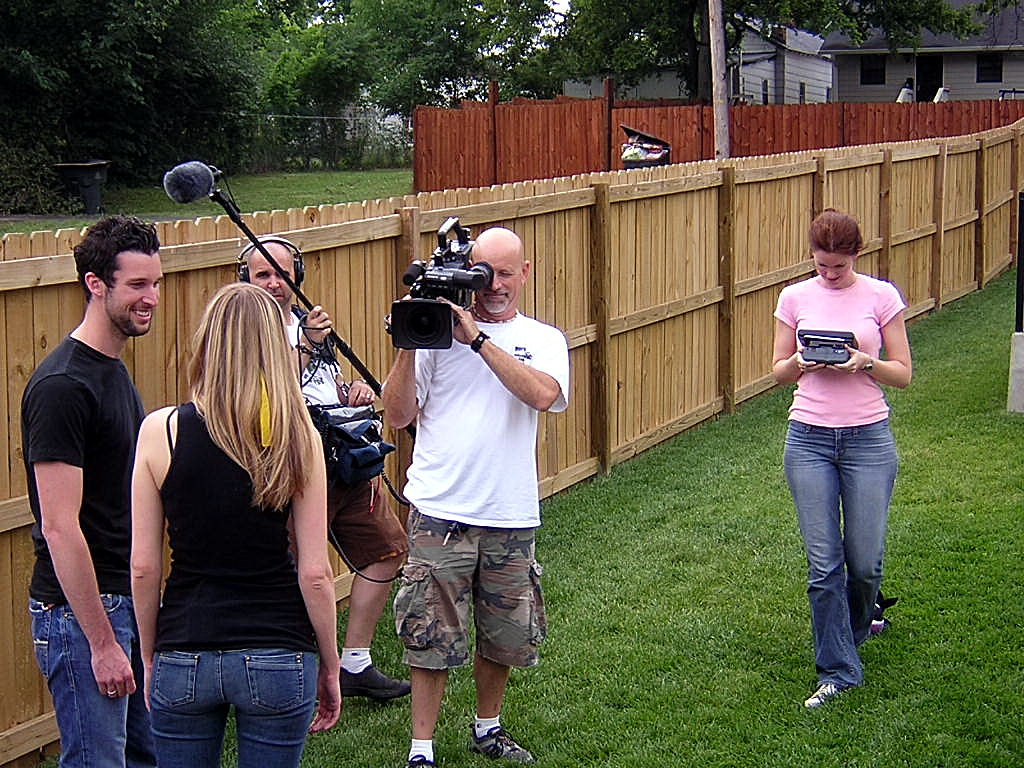 Two of my relatively new neighbors, Jeff and Morgan, found their house in Salemtown with the help of HGTV's production, House Hunters, so they've been spending time lately with film crews. They invited us to a house warming party, which was being filmed for the last segment in their episode, (to air at some undisclosed date later in the year). Did you know that HGTV was based in Knoxville? I just found that out today.
 I wasn't jealous at all of Jeff and Morgan getting the air time. They are a vibrant couple who look good in pictures. I was completely jealous of how great their grass looked. I couldn't find a single weed.
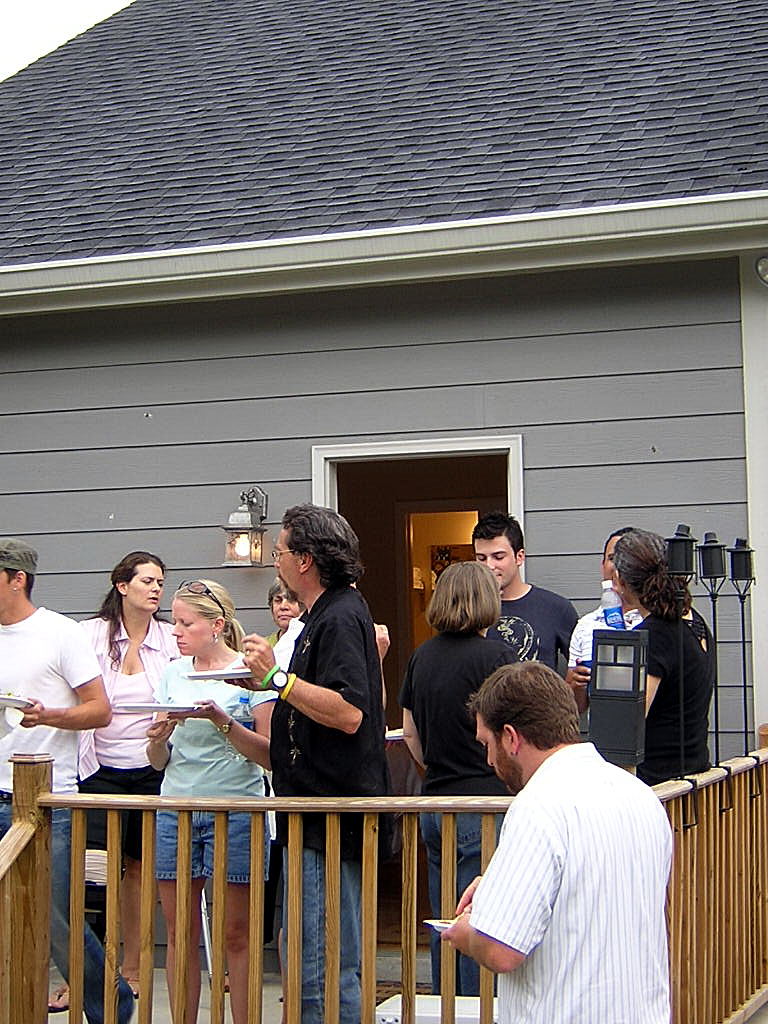 The guests were well-fed and well-behaved. The man in black at the deck rail is the renowned John H. of the blog Salem's Lots.
I was amazed that the rain held off for the filming.
It must have been meant to be; apparently, there are no accidents on HGTV.
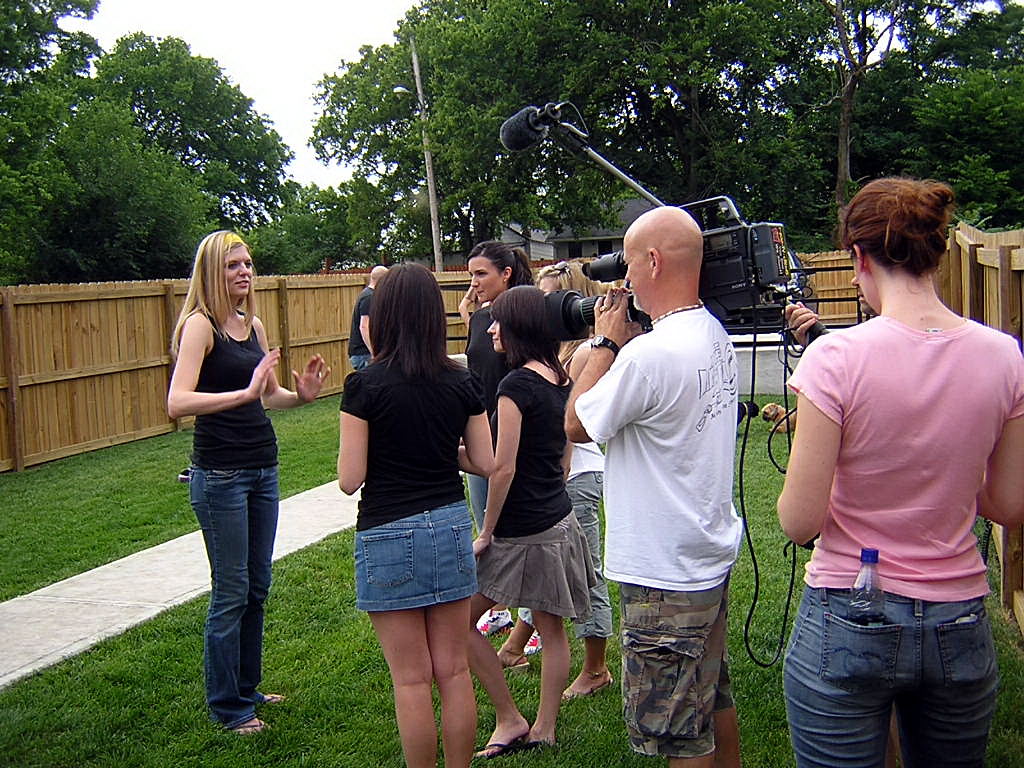 Morgan chats it up with her captivated audience in real time and for broadcast time. I think that their dog, Stinky, stole the show.
Thursday, February 02, 2006
"Christian" Hypocrisy Gores Someone Else's Sacred Cow While Shielding Its Own Golden Calves
Some have a lot of nerve. There's been a lot of whining about how Jesus and a priest were portrayed in the television show, Book of Daniel (which NBC cancelled in response to complaints and low ratings), joined with plaintive cries to portray Christians in a "positive" light. You'd think that conservative Christians would be sympathetic and circumspect when other religious zealots complain about outside depictions of their sacred cows. But no more than a few days after they moaned about their mistreatment, some of the more vocal conservative Christians express nothing but support for caricatures of the Prophet Mohammed despite the sacrilege that is for some Muslims.
And yet the "faithful" complain about being portrayed as hypocrites. Sakes alive.
And yet the "faithful" complain about being portrayed as hypocrites. Sakes alive.
Sunday, January 08, 2006
Book of Daniel
I did not watch the premiere of NBC's controversial Book of Daniel this week because I was too busy reading the Gospel of Mary. However, local blogger A. C. Kleinheider saw all of the evangelical hubbub as a tempest in a tea pot, while he took some swings at Anglicanism in general.
Wednesday, October 26, 2005
Is HGTV Tragedy-Pimping?
HGTV is one of those channels you are mostly likely to find blaring on our TV any time you walk into our house. It's probably that way for a lot of home owners. I generally enjoy their programming--when I have time to watch TV--but I was a bit jarred by this week's episode of "Dream House" ("Dream House" documents the stories of various people who set out to build their--you guessed it--"dream house.")
Well, this week they were in Katrina-ravaged New Orleans to document the damage and destruction to a family's "dream house," which was in the construction process before the hurricane hit. The Lower 9th Ward has not even dried out yet, and HGTV is rushing into the Big Easy to make big bucks off of other people's tragedy, but it's a middle class tragedy; that's pretty much the bulk of HGTV's audience share. The producers are virtual pimps, converting middle-class distress to dollars. We feel their pain and pay for it.
As much as this is tragedy-pimping, it is also evidence of how quickly the national debate on the plight of the American lower class and underclass has all but died. That discussion ramped up right after we saw the pictures of the immediate aftermath, but it didn't seem to survive but a couple of weeks at the most. Rather than dissipating, Katrina has been transformed into entertainment value, which gives it a part of a market share for networks, and makes the audience forget about the displaced and the impoverished. Now we're either focused on something else or training our eyes on middle class families who wonder how they can rebuild their dream home even as many New Orleaneans in the background can't even dream of a home.
Chris Wage, taking a different tack, isn't one to let the debate die. He asks why at this late date FEMA has only spent 1/4 of the congressionally allotted Katrina relief on New Orleans. Good question.
Well, this week they were in Katrina-ravaged New Orleans to document the damage and destruction to a family's "dream house," which was in the construction process before the hurricane hit. The Lower 9th Ward has not even dried out yet, and HGTV is rushing into the Big Easy to make big bucks off of other people's tragedy, but it's a middle class tragedy; that's pretty much the bulk of HGTV's audience share. The producers are virtual pimps, converting middle-class distress to dollars. We feel their pain and pay for it.
As much as this is tragedy-pimping, it is also evidence of how quickly the national debate on the plight of the American lower class and underclass has all but died. That discussion ramped up right after we saw the pictures of the immediate aftermath, but it didn't seem to survive but a couple of weeks at the most. Rather than dissipating, Katrina has been transformed into entertainment value, which gives it a part of a market share for networks, and makes the audience forget about the displaced and the impoverished. Now we're either focused on something else or training our eyes on middle class families who wonder how they can rebuild their dream home even as many New Orleaneans in the background can't even dream of a home.
Chris Wage, taking a different tack, isn't one to let the debate die. He asks why at this late date FEMA has only spent 1/4 of the congressionally allotted Katrina relief on New Orleans. Good question.
Subscribe to:
Posts (Atom)