Tuesday, November 17, 2009

Metro Finance talking points against Parks derailed

The attempts at the courthouse and in the mainstream media to make Metro Parks and Recreation a pariah, in spite of the fact that budget overages occur in other Metro departments, look like they are coming apart at the seams. One does not have to be a fan of the way Director Roy Wilson has run the Parks to acknowledge the dishonesty of Metro Finance holding his department to a stricter budget standard than they do other agencies.

And Rich Riebeling's rationale that Parks' problem was not that they were over budget, but that that they did not keep his office apprised of the overages was contradicted by a Tennessean story yesterday:
Wilson said Mayor Karl Dean's administration knew about his budget problems months ago and even directed him to keep open the park facilities that contributed to the overages ....

E-mail records obtained by The Tennessean show that officials in Dean's administration knew about the department's budget issues in April, when a Parks staffer expressed the need for an emergency appropriation to make ends meet ....

In a series of e-mails April 1 and 2, Parks Assistant Director James Gray told the Finance Department that Parks needed a supplemental appropriation of $501,000 to balance its budget.

The Finance Department responded by demanding an explanation for why Parks not only missed its savings target, but also needed an emergency appropriation.

That appeared to contradict an assertion made earlier by Metro Finance Director Rich Riebeling who has indicated there was a lack of communication between Wilson and the Finance Department about the overrun.

So, Riebeling could have dealt with this last April instead of waiting until October to make a spectacle of problems that could cost Nashvillians park programming.

Between you and me, I wonder if this whole sorry episode of tying Wilson to the courthouse whipping post for sins that other department heads commit was orchestrated to take attention away from months of criticism that Metro Finance was getting over budget overages and fiscal challenges of the proposed convention center. If that was the case, it seems to have backfired with a late-breaking press finally excavating damning correspondence, instead of letting Gail Kerr frame the debate for the Mayor's Office.

Here's the Tennessean's video coverage of the council committee meeting last night on Parks overages. You're in for a treat at the end, as Roy Wilson finally gets his chance to go toe-to-toe publicly with Rich Riebeling, who seems both smug and rattled by the charge that his department once approved what they now question:


UPDATE: The embedded video above was a Gannett production, and as with most things in the Tennessean (except advertising and those annoying "free" Wednesday paper deliveries) it seems to have either gone behind their pay wall or been wiped from the website all together.

Monday, November 16, 2009

Sheriff Daron Hall once again embroiled in charges of cavorting with prejudice

Aunt B has deeply-held concerns about the company the Sheriff's Office is seeking to keep with news of his latest anti-immigration faux pas concerning the controversial Center for Immigration Studies:
This marks the second time that Hall was scheduled to speak to white supremacist groups (the first being his lovely trip to the CCC) ....

But let’s bear in mind that, if he had not been called on it, our sheriff was ready to fly to Washington D.C. and speak about 287(g) on a panel in which he was the only non-CIS participant (Steven Camarota, Director of Research, Center for Immigration Studies, and Jessica Vaughan, Director of Policy Studies, Center for Immigration Studies, were scheduled to be the other two panelists and Mark Krikorian, Executive Director, Center for Immigration Studies was to moderate). His participation gave that panel legitimacy and a hook that would have brought the media. And he would have been sitting there talking about the wonders of 287(g) while Camarota and Vaughan were prepared to speak about how studies may show that there’s less criminal behavior among immigrants than there is the general population, but really, immigrants (of all stripes) “have relatively high rates of criminality.” (Quote directly from the press release touting Hall’s appearance.) ....

That old stereotype set off NO warning bells in the Sheriff’s office?

This is exactly how CIS is designed to work–to mainstream noxious ideas.

You knew somebody from the Mayor's staff would wear the white hat and save the day for beleaguered Parks staff

Here Rich Riebeling comes to save the day:
The board approved a plan that will layoff off five Parks workers, while also asking Metro Council for an emergency appropriation of $850,000. More workers could face layoffs in the near future, as the Board will decide in the coming weeks how to cut $200,000 from its recreational and cultural wellness programs.

Most of the cuts approved by the Board are administrative and lead to no layoffs or service reductions to the public. In fact the plan, presented by Metro Finance Director Rich Riebeling, one of Dean’s top aides, will lead to no service reductions at parks facilities.

A parks board member kindly sent me the details on staff cuts as well as some rather cryptic references to line item cuts that make me wonder how programming at the community level will be affected. It's great to hear that park-level staffers are not going to lose their jobs, but are the patrons of our parks going to lose community center hours and programming options because of this schedule of budget cuts?


It's only fair to ask, did the Mayor's office put this much effort into convention center budget line item cuts when MDHA allowed the intangible public relations budget to run hundreds of thousands of dollars overbudget?

Sunday, November 15, 2009

Mayor's Office takes near north Nashville out of TDZ

Originally the state and Metro Council approved a Tourist Development Zone to capture extra sales taxes for the proposed convention center with a northern boundary of Jefferson Street, like so:


This made no sense to me, since convention goers wouldn't be likely to stray too far north of Downtown. It's not like Farmers' Market is a tourist destination; it's mainly for the locals.

However, the Mayor's Office has recently proposed to shorten the northern reach and extend the western reach of the TDZ to pay for the Music City Center:
The seven-member building commission Thursday approved new boundaries unveiled by Metro Finance Director Richard Riebeling that exclude these areas, establishing the Cumberland River as the eastern border, Charlotte Avenue as the northern boundary and the Interstate loop as the southern edge.

The zone’s western border, meanwhile, has moved approximately two miles down active West End Avenue, as project leaders aim to collect revenue from the numerous hotels that dot the corridor. Collectively, the territory now encompasses 2.8 miles, but it exempts car dealerships and other businesses that clearly don't cater to tourists.

Seattle news site gives up advertising for non-profit journalism

Inevitable in many discussions I have about local journalism are quizzical responses to my suggestion that an untried model for sustaining good reporting pioneered at a few places elsewhere is 501-c-3. Last month Seattle's local news site Crosscut.com announced its conversion to non-profit status and enumerated the benefits:
In the summer of 2008, I began to suspect that an advertising-only model for revenue was not going to support high-quality journalism. The migration of advertising to the Web had slowed and the rates were staying low. The board weighed further investment against other models, notably the public-broadcast, member-supported model. We engaged Mike Crystal, my longtime colleague as publisher of Seattle Weekly, to look into the nonprofit model, noting encouraging examples in other cities .... Late last year, the board and owners voted to shift to this new model, and the owners of Crosscut LLC generously donated all assets of the company to the newly formed Washington state nonprofit corporation, Crosscut Public Media.

Setting all this in motion has taken some time as we assembled a new board, the case statements, budgets, and business plans, as well as securing our tax-exempt status and lining up early seed funding. Last November, we had to furlough much of the staff while we regrouped. Our contributing writers, now about 40 strong, continued to produce fine stories, and you readers have stayed with us and helped the site to grow. Another factor during the past year has been the very unsettled media landscape, particularly after the Post-Intelligencer stopped its print edition and many journalists were cut adrift by layoffs at other publications.

That landscape is still tossing about and discovering new fault lines, but I do think that one clear model (among several) that has emerged is the Crosscut model: serious about quality journalism, independent, nonpartisan, broad in its range of topics as well as geography and demography, and dedicated to "journalism in the public interest" as a mission-driven, community-supported nonprofit. This model has greater stability from three sources of income: annual memberships, grants and major gifts, and advertising and sponsorships. (No government funding, though; a difference from public broadcast.) Diverse sources of revenue translate into greater sustainability and flexibility. Community ownership means mission-driven and not tempted to be sold to other owners or out-of-town companies.

As an editor, I love the new framework for picking stories and writers and focusing coverage. In the commercial context, particularly in Web journalism, there is great pressure to run stories that get a lot of hits (gossip about Sarah Palin, for example), and also to do stories that reinforce a niche that advertisers covet (technology breakthroughs, for instance). Now those pressures are reduced, and we can think primarily of running stories that the public needs to know, including somewhat longer and therefore more nuanced stories that lead people out of their comfort zones.
Nashville really has a limited number of alternatives to the traditionally funded media. The Tennessean still operates on the wilting advertisement and subscription model of news gathering. So, does its competitor SouthComm, which also may be leaning on the state to infuse its source of venture capitalism in the near future.

We don't have a non-profit alternative news source here in middle Tennessee but there are plenty of models for founding one:
There are similar efforts around the country. The closest parallels are Minnpost in Minnesota; VoiceofSanDiego in San Diego; the St. Louis Beacon; the New Haven Independent; NewWest in Missoula and other Rocky Mountain cities; TheTyee in Vancouver, B.C.; and Chi-Town Daily News in Chicago. The general definition of these sites is: all-local, Web-only, locally owned, news-oriented (as opposed to ideological sites), publishing daily, and broad range of topics.

Friday, November 13, 2009

Private investors won't assume the risk of the new convention center, so why should Metro government when it doesn't directly serve Nashvillians?

Blogging CM Emily Evans cuts through the finance jargon and gets down to economic brass tacks on the undue risk Nashvillians will have to assume with a new convention center:
Goldman Sachs preliminary financing structures clearly articulate how much risk professional investors are willing to take. They seem to think that the hotel and tourism revenues will only support about $200 million in debt. For the rest of the purchase price - about $400 million - risk must be transferred to someone else. In the case of the convention center, the someone else is the Metro general fund.

The hotel "best and final offer" demonstrates a similar amount of risk aversion .... they are reducing their risk to a level they find business-worthy and are not willing to assume full responsibility for the profit and loss of the enterprise. With the hotel manager/developer unwilling to take risk, someone must be found to whom we can transfer it ....

A convention center and a hotel are now for the most part deemed too risky for professional investors. They are unwilling to invest because they see the possibility that they may lose all or some of their money. The reason they would lose all or some of their investment is because the project will not produce the necessary revenues to support operations and debt service without some sort of external support .... The fact that a project like this cannot support itself makes it, by definition, not feasible.

3 votes ahead and tweeting like its 300

Council District 5 challenger Jamie Hollin finished last night unofficially 3 votes ahead of Pam Murray (542-539), but he responded to the news that there are still 4 provisional votes remaining to be counted today with some misplaced swagger:


As unethical and presumptuous as incumbent Pam Murray has been over her tenure, I took note of her measured and circumspect response to the Tennessean overnight, which stands in marked contrast to Hollin's overconfidence:
It's close, and I'm thankful to all my neighbors, and I'm just waiting for the outcome.
Even if Murray's attitude is staged, she still presents herself with more grace in possibly losing her long time seat than Jamie Hollin does in possibly taking it from her.

Whose votes are they again, Mr. Hollin? Yours? We'll see when votes are certified and we get past any possibility of legal challenge. And even then, doesn't your service on the council actually belong to all of your constituents in District 5?

Thursday, November 12, 2009

NewsChannel5 rushes to judgment on District 5 race?

NewsChannel5 seems guilty of declaring the District 5 race when only 3 votes separate Jamie Hollin and Pam Murray with possible provisional ballots left to count. Just throwing "unofficial" in the headline doesn't change the misleading message that CM Murray has "lost her seat," when she's 4 provisional votes, a recount, or a court challenge away from keeping it:


The news channel refers to provisional ballots in the text of the story, but the headline is over-the-top and irresponsible.


UPDATE: NewsChannel5 should take some journalistic accuracy pointers from WSMV, which declared the District 5 race most accurately as "too close to call," and wrote a headline consistent with those results:

CP tweaks rush-to-judgment headline with 3 votes determining District 5 unofficial results

SouthComm reporter Joey Garrison appeared to be the first reporter to call the District 5 results even though only 3 votes separate challenger Jamie Hollin from recalled incumbent CM Pam Murray. I called the Metro Election Commission around 8:40 p.m. and asked them if the unofficial results (542-539, Hollin) broadcast on Metro Channel 3 represented all the votes cast. The official who answered the phone told me that the results were unofficial because there still might be uncounted provisional ballots yet to be received. So, it appears that the City Paper's initial headline was more of a rush to break the news first without consideration of possible provisional ballots:


After the question of the rush-to-judgment was raised on Twitter, the CP lords quickly tweaked the headline to be less a projection that Hollin had won:


This looks like the election is going be a long drawn out process to me, and we may not know who wins for some time with a 3-vote-margin preliminary result and possible ballots still uncounted.

Why blog about council members anonymously?

The polls closed in the Nashville's first recall election several minutes ago, and we're waiting to see the results of the challenge to Pam Murray's tenure on Metro Council. In the meantime, consider the Districtfive blog, which is dedicated to addressing Murray's foibles and vices. The latest post answers questions on why its authors prefer to remain anonymous:
if you have been paying attention, you will note that there have been allegations of harassment against Ms. Murray, even prior to the beginning of this recall election. CM Karen Bennett had concerns for her safety after she stepped up to assist District 5 residents that were not getting adequate representation from Ms. Murray and filed a police report. Additionally, as tempers flared during the rezoning debate about Cleveland Street, a rash of cars parked in and around the condominiums where her opponent lives came up with broken windows. Meeting participants that challenge Ms. Murray have found R-rated comments written in the dust on their vehicles when they exited to the parking lot. As juvenile as this seems, it does send a profound message about the personal level to which Ms. Murray takes disagreements and raises concerns about how rational future responses may or may not be.

Ms. Murray has, of course, filed counter claims. One of her claims is that a constituent called her employer in Detroit about her. Nevermind that a constituent has little other option than to call Detroit if they want to try to reach Ms. Murray.

Interestingly, Ms. Murray has actually engaged in the very behavior she accused others of. One constituent reports that both the boss and the Board of Directors at that individual’s employer have been contacted by Ms. Murray to discourage the constituent from speaking out against the Council Member.

These intimidation tactics can be effective. It is our hope that anonymous blogging can be, too.


BONUS: An Enclave retrospective of coverage of Pam Murray's tenure on Metro Council.

Beaman Park: Gateway to Danger

Betsy Phillips does what neither the mainstream press nor CM Sam Coleman seems willing to do: look at the crime statistics at a park where Mr. Coleman says guns need to be permitted as deterrents to hypothetical crimes. Not only does she find little to substantiate CM Coleman's incitement to violence, but she finds that the crime stats in the community surrounding the park are so low as to make his knee-jerk fear mongering over rural areas a rude joke.

A girl can spend her lunch hour looking at the police crime statistic map and discover that apparently not one violent crime was committed against anyone in these parks last month. Not one. (Though woe to the person trying to get to the park at the end of Neely's Bend! Bring a gun to the park, for sure, but don't worry about needing it once you get there.)

But you know, maybe all of the residents in these areas (who are just poised to pounce on park visitors at any moment) were busy in October. So I looked at the crime stats--again, available from the police department, and again, available to anyone with a lunch hour. And while they're not broken down to park level, I discovered that, in all of 2008, there were a grand total of three violent crimes committed in Beaman Park's zip code.

The whole zip code. Three violent crimes.

Well, I can see why we need to carry guns in Beaman Park. You're lucky to get out of there with your life.

Compare & Contrast: Rich Riebeling vs. David Manning on Planning Capital Projects

Why is Dean Finance Director Rich Riebeling prone to spend Metro money before planning for new Metro facilities, given the previous Finance Director's common sense explanation in 2007 that thoughtful planning should always precede spending capital revenues on big ticket items?


Now consider this dispatch from a neighborhood leader who attended Tuesday night's community meeting with Rich Riebeling regarding the Finance Director's intention to shell out $14 million to purchase a former car dealership to house the West Nashville police precinct with no planning:
Mr. Reibeling, the Metro finance director, answered [neighbors' questions]:
  1. There were no detailed drawings or site plans for the Frensley property and that he didn't want to spend any more money on planning. That they had already spent money on planning the Horizon Building and that those plans would basically serve to PLAN the Frensley property.
  2. He didn't know how much money was available for planning.
  3. He didn't know how much we had spent on planning for the Horizon location already (we've heard around $50,000 has been spent on planning for the Horizon Building and that council has approved a total planning budget for the project of $500,000).
  4. Basically he had no intention of spending any more money on planning the Frensley site before it went to council for a vote, that he "knew" it would come in under the $14 million that was appropriated.
One of the reasons the last council loathed David Manning was because he demanded careful planning before authorizing spending as Charlie Tygard put it for a "3, 4, 5, or 6 millon dollar crime lab" while resisting attempts to dicker with council over $500,000 to plan for the multi-million dollar projects. It seems to me spending $500,000 to help avoid paying an extra $3 million would be a good thing, although old school politicians like Tygard seemed to disagree. The current courthouse finance crowd seems ready to spend big development and construction dollars without a lick of planning on the new West Nashville police precinct. That should satisfy development-happy patrons like Mr. Tygard, but it is not good for the community around Richland Creek.

Tiny Cat Pants determined not to lose park services to Metro Council budget cuts

Aunt B. is furious over this season's Metro war on Parks & Recreation:
I knew that there had been some ridiculous overages in the Parks department, because it was oh, so important to have golf all winter long.

But until today, I didn’t get that the people who would be let go as a result of this fiasco were not the idiots who let this happen, but people like the awesome guy who came out after we’d completed our walk [at Bells Bend Park] to check on us and ask us how things went. He’s in charge of the park programing and he would get laid off, and his boss would have to cover Bell’s Bend and Beaman Park, which would basically give her enough time to be a glorified janitor at both places.

This really sucks, and not just because Bell’s Bend Park is my favorite park in the system.

It sucks because it’s unfair to ordinary people. It’s unfair to the ordinary people who work for the parks, who couldn’t control or have any say in whether things were properly reported to Metro, but it’s also unfair to those of us ordinary people who enjoy the parks. Because the golfers got to golf all winter, we don’t get to have enough staff?

And seriously, at what point do the big wigs fall on their swords and lay themselves off rather than always looking for the people lower down who can be cut?

Anyway, call or write your council members.

Wednesday, November 11, 2009

Well at least they seem to like each other, for whatever that's worth

I received word from a reliable source this afternoon that perhaps I was not getting attention from Mayor's Office of Neighborhoods Director Brady Banks for a vexing Salemtown concern because Mr. Banks had left the post of MOON Director. I tweeted a query to see if anyone else could confirm. Tennessean reporter Michael Cass followed up on my tweet with phone calls to Banks' office, and then finally to the Mayor's communications office, which confirmed that the MOON Director had indeed moved on.

The coda I would write to Mr. Banks' tenure is that not much happened in the last two years at MOON that stands out as remarkable for the benefit of neighborhoods. I'm not going to sit here and blame the MOON Director for that knowing that Mayor Karl Dean has not put neighborhood issues on his short priority list in the last two years. Either way, MOON has not been the force it was under the previous executive.

But the comments of Banks and Dean since the news broke about the amicable divorce are telling to me in how conspicuously devoid they are of any reference to accomplishments at the neighborhood level of the Mayor's Office of Neighborhoods. First, Mayor Dean:
Brady is a great guy. I appreciate all of his work both during the campaign and here in the office. I believe he has a meaningful role to play in public service here in Nashville. I wish him the best.
I cannot fathom whether the Mayor's statement is so bland, general, and unceremonious because he's not exactly sure what his own Office of Neighborhoods is supposed to be doing or because he cannot figure out what particular contributions Mr. Banks made as Director. If it is the former, I must say that neighborhood associations are going to have a tough time the next few years regardless of whether Mayor Dean hires a replacement, regardless of whom he hires. Honestly, the Mayor could probably close the office and we wouldn't know the difference.

Now, Mr. Banks:
I have enjoyed my time in Mayor Dean’s office, and I believe in what he is doing for Nashville.
That's just as vague and indirect a response as Mayor Dean's. Why can't either one of these leaders put Brady Banks' service of the last 2 years in the context of the work he was hired to perform with neighborhoods (assuming that's why the Mayor hired him)? Is there no actual context to put him in or is it simply being ignored because of the indifferent tone toward neighborhoods in this administration?

I don't have answers to those questions, but I am still looking for reasons to vote for either one of these two probable candidates for office in the future, other than they're great guys who enjoy one another.

Deja vu: Metro Public Works drags feet again on Salemtown streetscape at nearly the same time they did in 2008

Remember I reported a while back that one of the most frustrating delays in 2008 to the federally-funded community-development streetscape project in Salemtown was due to Metro Public Works literally misplacing MDHA's application for improvements from October to December? Well, it looks like Metro Public Works is reprising their inept role in November 2009.

The project finally got back on track with construction starting in August 2009 and scheduled for completion at the end of October. Signs and lamposts went in and sidewalks were demolished to bury electric lines. However, construction ground to a halt in mid-October with confusion over whether the demolished sidewalks were going to be restored. The Sessions Paving company has not been seen in Salemtown in weeks. Half of our lamposts are unlit at night and there are still long, shallow, dirt and rock filled trenches gouged out where sidewalks used to be. Confusion has reigned at MDHA, which has been unclear about whether the sidewalks would be repoured. They finally agreed that the sidewalks would be repoured last week and asked Metro Public Works for approval.

And that is where we stand. In limbo, waiting once again for Metro Public Works to approve and follow through to completion on this project, including the replacement of our sidewalks. Lots of beautiful, construction-friendly days have been wasted since October, when this project could have been finished. But we're waiting on Metro bureaucrats to put our sidewalks back the way they were.

And despite the fact that we have been communicating our concerns to both our council member, Erica Gilmore, and Mayor's Office of Neighborhoods boss, Brady Banks, they have not expressed any support that I am aware of. In fact, they seem to be unresponsive all together to our concerns.

All of these government services deserve nomination for worst service delivery of 2009, because I don't even want to think about how much money these delays and the general lack of responsiveness (the project was originally intended to be finished in 2008) are costing Metro taxpayers. It's enough that I have to live with the costs to our quality of life in Salemtown.

Hyper-local blogger reports that Pam Murray's campaign accepts money from absentee landlords with checkered police histories

The anonymous Districtfive blog digs into CM Pam Murray's latest campaign donor report--which was allegedly filed late at the Election Commission--and reports some troubling information about the company Ms. Murray keeps at election time:
It turns out, many of her supporters are owners of businesses that have a less than stellar record when it comes to maintaining a safe neighborhood. For each property, we took a look at the calls for service to the East Precinct police for the period of her tenure, 2003 to now.

Here is a sample:

Donor Address: 701 Dickerson Rd.
Amount Given: $500 (She also got an additional $500 from the FORMER owner of 701 Dickerson Rd).
Calls for Service: 1,477

Donor Address: 803 Dickerson Rd.
Amount Given: $250
Calls for Service: 1,984

Donor Address: 2202 Dickerson Rd.
Amount Given: $250
Calls for Service: 578

Meanwhile, how’s she doing on grassroots support? Out of the $3075 she reported in campaign contributions this period, only one donor gave less than or equal to $100. The rest of her contributors are all from gas station and hotel owners that don’t live in the district (except the $475 Ms. Murray gave herself). Her competitor reports $2720 in contributions that were $100 or less.

Which candidate do you think is more focused on supporting the actual constituents in District 5, the constituents that are improving this community?

Tuesday, November 10, 2009

The list of smacks of shame

Betsy Phillips takes Antioch CM Sam Coleman to the woodshed for effectively black-listing rural parks and the good rural communities that dwell around them:
in a climate where the Parks budget faces a severe shortfall and people are losing their jobs, the insinuation that rural parks are so dangerous that people need to come armed has real implications beyond Coleman's "But I love guns" agenda. It could affect how council members who have never been to those parks feel about them, and when they're looking at ways to trim the park budgets, it's not hard to imagine how "oh those rural parks are so unsafe" might affect their decisions ....

Anyway, our parks are beautiful, our rural neighbors are not about to ambush you in them--and maybe Antioch needs to take a long hard look in the mirror before it starts talking smack about where people might need to carry a gun in order to feel safe.

Cutting off Parks' nose to spite its face

Via the Salemtown Neighbors e-list, Liberadio's Freddie O'Connell conveys his disappointment to courthouse leaders at hearing that Parks & Recreation center and program hours are on the chopping block without so much as a second thought:
I have been following closely the situation that has arisen with the Metro Parks budget this year, and while the overall problem is of great concern to me, so are the proposed cuts as I understand them. I haven't been able to determine whether all community centers will be automatically affected in terms of proposed cuts to hours, but I'm disappointed that there is a strong likelihood that centers will be forced to consider trimming hours, possibly closing one day per week mirroring the tragedy that befell the Main Library as a result of this year's budget.

I live within a few blocks of the Morgan Park Community Center, which has benefited recently from the addition of a new outdoor playground and near which a recently dedicated greenway spur was just just extended. The center is the hub of activity for at-risk and low-income youth in Nashville's North End. Many of my neighbors have been clamoring for extending the hours of the center to the weekend, as well as to stop the summer practice of abbreviating hours when school is not in session because of the heavy usage of the center when it is open.

Michael Smith, who directs the center, has a great rapport with the kids who use the center and provides excellent and innovative programming. I just volunteered at the center's annual Halloween celebration, which kept kids of all ages thoroughly engaged for hours before sundown on the eve of Halloween. Curtailing hours at the center would certainly send a message to the kids who use the center that opportunities for them are at the wrong end of the spectrum of the city's priorities.

I hope that the Parks Board and the Finance Director can work with Metro Council to discover a solution that would have a less dramatic impact on Nashville's neighborhoods and the kids who live in them in a time when economic duress is likely affording them even fewer opportunities for productive activities and fun than ordinary.
More details on closures and cuts in Metro parks after the jump.

West Nashville communities hold meeting with questions on Rich Riebeling's decision to purchase car dealership building for police station

I intended to post this earlier today, but got sidetracked. Via a member of the Nashville Neighborhoods e-list, the meeting of concerned citizens was held Belle Meade Methodist Church earlier this evening and it was planned to touch on several controversial notes about Metro Finance:
[Tuesday night there was] a meeting organized by Hillwood and Charlotte Park Neighborhood Associations to further dialog about the relocation of the West Nashville Police Precinct.

Highlights of this issue:

1. Undoubtedly, everyone in Nashville would support a new police building for the West Precinct. Right now, they are crammed into a small, old run down building and a portable.

2. the issue here is PROCESS and LOCATION
  • Until this September, all of us on this side of town were led to believe that it would be relocated near where it has been for decades.
  • Analysis and cost had been done on the Horizon building down to the light fixtures.
  • Suddenly, with no warning, Rich Riebling was requesting permission of the council to spend budgeted $14 Million to purchase property that had been Frensley Ford/Performance Ford beyond the intersection of WBR and Charlotte Pike. Cost of this land/building $4.2 Million. NO sketches/detail of this has been done TO DATE.
CONCERN:
Several of us over here have expressed concern that the Horizon building is over $1 Million less in cost. Additionally, other land closer to Bellevue is available for less though that is land only.

Additionally, the Frensley property is in the 100 year old flood plain and the area backs up to Richland Creek.

It is unknown what the clean up costs will be at a site that has house gas, oil, fluids for years before environmental rules became tighter.

A meeting was organized by CM Baker last week. He has been advocating the Frensley site though it is OUT OF HIS DISTRICT and takes the precinct building further away from the area it serves (the West Precinct goes through Bellevue down to the Williamson County Line, Many questions were asked last week. Few were answered. A financial "analysis" was presented.

NOTE: We have been asking since Sept. 1 in writing and in calls to get financial information. It arrived the day OF the meeting...Nov. 5. Basically, it was reputed to compare the Frensley site with the Horizon building but no actual site drawings or comparisons have even been done for the Frensley site as of yet.Without that, there is no valid comparison.

Still, this project was APPROVED by the Council Budget and Finance Committee (though with no budget and no financial statements). It was then ultimately delayed by council until Nov. 17 "to get more information."

To us, this is a matter if taxpayer dollars and how they are spent.

No true analysis has been done. Maybe we need to spend the $14 million budgeted....maybe we do not.

Monday, November 09, 2009

Metro Council only cares about Parks when it comes to permitting guns or not

This council debate on guns-in-parks just won't die. CM Sam Coleman is bound and determined to permit park-goers to holster up somewhere in the county on public property (but not the Council chambers!). So, he's asked Metro Parks to provide him with a list of rural or isolated parks and greenways.

Wait a minute. How come Sam Coleman doesn't already know on the basis of his own research, constituent feedback, or actual experience the rural or isolated parks or greenways that might dictate carrying a gun? He's just indiscriminately requesting permission to carry in every single rural or isolated park without reference to actual crime reports or statistics, but merely because they are rural or isolated?

And take note that Bells Bend Park is on the list of Parks given to CM Coleman. For several months I've been encouraging people I know to visit there. Yet, in one fell swoop, Sam Coleman is going to black-list Bells Bend Park as among those so unsafe that visitors should pack heat to drive off the criminal element. Is he really that intent on sabotaging some beautiful back country based on uninformed decisions and his own ignorance of the actual conditions outside of an arbitrary list?

But is the unstated purpose of raising Saturday parking fees to pay for a new convention center and hotel?

The knowledge now that Goldman Sachs has recommended that non-tax fees and fines that go into the General Fund be used to pay for future convention center/hotel construction debt has me casting a skeptical gaze now whenever I hear that Metro fees and fines are increasing, even when Metro officials give contrary reasons for the increases.

So, when the News 2 blogger, Christian Grantham passed on a newsdesk blurb that the Metro Parking Board voted to collect fees on Saturdays, I immediately tweeted Christian to ask him whether the fees would be going into the same General Fund that could be the Music City Center/Marriott Hotel's construction safety net. He did not know, so I turned to someone who seems to be one of the most knowledgeable people in Nashville on the proposed convention center outside of its cheerleaders, CM Emily Evans.

She steered me in the direction of a 2004 Sports Authority prospectus that seems to open the door to using parking meter fees via the General Fund to pay off MCCC obligations:
"Non-Tax Revenues" shall mean all income and revenues of the Metropolitan Government which, according to generally accepted accounting principles promulgated by the Governmental Accounting Standards Board and normal and customary accounting practices of the Metropolitan Government, are deposited to and become assets of the General Fund of the Metropolitan Government derived from any source other than income and revenues derived from the exercise by the Metropolitan Government of its powers to levy and collect taxes of any kind.
The term "all revenue and income" outside of taxes includes meter fees, and increases in Saturday meter fees.

Goldman Sachs seems to be advising Metro that it is going to need as much of the General Fund as it can muster to pay off the debt on the convention center/hotel construction. So, raising parking fees at least has a double effect that includes providing a hedge against MCCC overages. Even if the Mayor's Office won't admit it, they have been moving like a single-minded, irresistible machine on the convention center issue, and raising meter fees may be a way of staying ahead in this game without having to admit, "We raised fees on Nashville drivers in order to pay for our dream of a convention center/hotel in uncertain times and even if those funds don't benefit Nashvillians directly (as in the case of keeping parks and libraries open)."

And a child shall lead them, if by "child" you mean WKRN's Jamey Tucker

More than either of the other two local news television stations, News 2 has tended to have a culture war edge to it, especially in the reporting of Jamey Tucker. And we can perennially bet that Tucker will ramp up the theo-con angles (or is than "angels"?) on his reportage the deeper we move into the year-end holiday season.

Tucker is starting early this year with a story on an LED billboard, which is controversial enough with many neighborhoods. However, he is seemingly not interested in the quality-of-life impact of bright, streaming, distracting Vegas-style billboards. Instead he hones in on one particularly innocent message like a duck on a June bug and he wrings his own meaning from it.


As I said, Tucker's biased reporting is typical of his history of covering faith-based issues. His comment that the sign advertises the belief that there is no God seems to be designed to incite drama where there may not be any. His bias is probably going to end up as an unintentional fundraising catalyst for a project that otherwise would have had less.


UPDATE: I just found out that Jamey Tucker has a ministry outside of his work at WKRN. There is nothing wrong with having a moonlighting ministry. There is something wrong if Tucker allows that ministry to bias his journalism. And I see strong consistencies between the slant of spin against WKRN report subjects who are not evangelical, and his overtly evangelical ministry reportage like this:

Sunday, November 08, 2009

Metro's General Fund as proposed safety net for the new convention center

Blogging CM Emily Evans explains how Metro funds are likely to be used when convention center construction goes over budget:
Since state law prohibits the direct use of property taxes and the administration has promised not to use sales taxes, the part of the general fund being targeted [by Goldman Sachs in a proposal to back up the convention center budget] are what we call "non-tax revenues."

Non-tax revenues make up about 9% of total revenue for Metro. It is collected from builders and developers in the form of permit fees. From homeowners in the form of alarm registration fees and fines levied for all sorts of stuff. We use the money for general government operations like fire, police, codes, zoning, etc ....

If all the existing and prospective taxes are going to pay for the convention center, how will the hotel be funded? At the meeting in September, Goldman all but ruled out private capital. The most skin Marriott/Phelps Portman appears willing to put in the game is about $10 million in "key money." Is the plan to get Nashville pregnant with a convention center so we have to approved a hotel that is supported mostly or entirely by the general fund? That was the plan in Knoxville. Voters caught on and took it to a referendum and won. But the prospective revenues presume a 1,000 room HQ hotel. Who will buy the convention center bonds with such a big missing piece?....

Because there is likely to be a general fund pledge for the majority of this project, the professional bond investors are not going to care what the projections are. They know Nashville's credit is good and they will look to that to pay them if the project hits the skids. So, the projections are really more a political tool than a financing tool. The projections are to make elected officials feel like they can vote for the project because the professionals have assured them everything will be fine. If it turns out everything is not fine, elected officials can then blame the professionals for their poor projections.

Without a general fund pledge, the checks and balances of the market work much better. The professional bond investors would then carefully scrutinize the projections, do their own analysis and decide if the investment was sound.

Where life imitates art, except for the part where department heads engage in the timeless art of dysfunctional seduction at lunch

The Tennessean's Michael Cass finds remarkable parallels between his courthouse beat and last week's episode of NBC's Parks and Recreation:
Here in Metro government, the parks department got $664,000 less than it wanted for 2007-08 when the council decided to give that money to the Nashville Public Library so it could maintain its operating hours. Parks wanted to use those funds to staff several new nature and history centers, but it got outflanked in a struggle for money.


Here's the entire episode:

Friday, November 06, 2009

Employing workers directly through federal public works programs would be cheaper than shunting tax money to private business

I give you the wisdom of Paul Krugman:
You can make a pretty good case that just employing a lot of people directly would be a lot more cost-effective; the WPA and CCC cost surprisingly little given the number of people put to work. Think of it as the stimulus equivalent of getting the middlemen out of the student loan program.

So why aren’t we doing this? Politics, of course: government is the problem, not the solution, even when it is, you know, the solution, and cheaper than running things through the private sector.

Still, it might be worth discussing whether we shouldn’t try to include an, um, public option in stimulus, too.
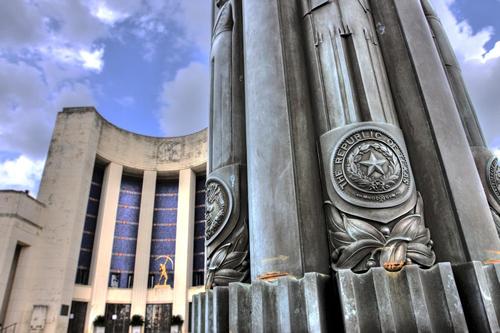
We could probably more easily solve local conundrums like what to do with the Nashville fairgrounds with a federally-funded work force of architects, engineers and construction teams that could renovate that public space and build something on the scale of Fair Park in Dallas (which was mostly built by WPA and CCC workers before 1936 and includes one of the most extensive collections of existing historic art deco buildings anywhere) with of course a local and up-to-date posture.

Creditworthy? Bredesen has Tennessee buying now to pay later

According to this morning's Tennessean, the state continues to give money away to corporations while hoping for future returns via TNInvestco:
A stretched state budget won't upset those plans because there are no up-front costs to issuing tax credits ... and the state won't have to forego those revenues for another three years because of the way the program is set up.

The timing of the state initiative comes as credit markets remain tight and there's been a reduction in the amount of funds raised nationally by venture capital firms ....

Venture capital funding plummeted more than 80 percent during the third quarter, and U.S. firms raised just $1.6 billion, the lowest amount since 2003, according to the National Venture Capital Association ....

TNInvestco will last 10 years, during which time the state expects to recoup its $120 million investment, although there is no guarantee. Any additional profits due to the state will go to the Tennessee Rural Opportunity Fund, which provides loans and technical assistance to small, disadvantaged and early-stage businesses in rural parts of the state.
What a kicker. No funds for disadvantaged and early-stage businesses in urban parts of the state. TNInvestco is state money going into private corporations and if those corporations succeed the money will be put into smaller private businesses outside of cities. And besides hoped for rivulets of future benefits that might eventually trickle down if and when the economy turns around, how does TNInvestco help most Tennesseans more than it helps commercial interests?

By the way, the Tennessean also reports that the main investor behind media giant SouthComm, which includes the Nashville Scene and the City Paper, is likely to be one of two beneficiaries of $40 million in TNInvestco tax credits next year. That would be a shot in the arm to SouthComm's investors and present a batch of ethical dilemmas on whether the foundering mainstream media should be rescued, even if indirectly, by state government revenues. Whether TNInvestco goes to pay reporter salaries or not, the flush of our money will take pressure off media investors to make funding of the same old flawed journalism models easier.

Thursday, November 05, 2009

Al Gore on Colbert

The Colbert ReportMon - Thurs 11:30pm / 10:30c
Formidable Opponent - Global Warming With Al Gore
www.colbertnation.com
Colbert Report Full EpisodesPolitical HumorU.S. Speedskating

Deconstructing Woody

Larry Woody may not grasp that the same criticism he levels at neighborhoods (they knew what they were getting into by staying next to the fairgrounds) can be applied to the fairgrounds overseers (they knew what they were getting into staying on public property in a growing city).

Disclaimer: if I have any dog in this fight it's that something balanced that suits the fairgrounds patrons and surrounding neighborhoods would be the best option. I look at places like Fair Park in Dallas and I wonder why Larry Woody can't aspire to something somewhat higher and more mutual that still meets the "bread-and-circuses" baseline.

Wednesday, November 04, 2009

Is "Web 2.0" a replication of "Web 1.0" services?

Tim Berners-Lee rejects any talk of the sociality of "Web 2.0" as a misunderstanding of the web itself:
Web 1.0 was all about connecting people. It was an interactive space, and I think Web 2.0 is, of course, a piece of jargon, nobody even knows what it means. If Web 2.0 for you is blogs and wikis, then that is people to people. But that was what the Web was supposed to be all along.
When I survey current discussions about social media, I am struck by the romanticism and idealism based on assumptions that new forms of communication are fundamentally different than old ones. Berners-Lee reminds us that the web itself is a social medium rather than merely a network of computers containing social media.

Even though Metro budget overages seem to be multiple, they're back to singling out Parks

Once again the Tennessean is heeling to the Metro Finance Director's latest criticism of Metro Parks' budget overages. A few days ago it was made clear that Parks was not the only department to overspend their budget, but that their transgression was failing to notify pit boss Rich Riebeling so that he could give them the "supplemental funds" he was giving other overspending departments. Apparently the "failure-to-communicate" criticism has no traction because both the Dean Administration and the mainstream press are back to focusing strictly on Parks' overages. Oh, the humanity!

The Tennessean's video clip of the Parks employees' lay-off fall-out:

Tuesday, November 03, 2009

Metro Nashville Public Schools not doing much to help security

I took a picture this morning of the key pad into which my 5-year-old daughter will be expected to enter a PIN to access lunch money that we have prepaid. I hope that the photo makes evident that there is very little security at the "point-of-sale" itself. Keying in the code will be observable from almost any angle; so, in the event that someone else wants to watch our daughter enter the PIN and use it for themselves, the MNPS food service managers are enabling such theft with this open system of entry. To paraphrase someone else's tweet this morning, some software company must have done some sucking up to get such a vulnerable system adopted by the Bransford Avenue set.

Sticking it to Belmont

Universities that seek to expand into neighborhoods take note of the substantial costs to Belmont University of picking on the wrong sports writer (via writer/blogger Jan Duke):
I don't think any one case created more turmoil than that of the local sports writer Margaret Lindsley Warden. Ms. Warden was not only a very popular equestrian writer, she was also a part of one of Nashville's oldest & most prestigious families that dated back to long time relationships to the McGavock, Jackson, and Grundy families in the early 1800's.

It has been said that she fought so hard to remain in her home on Belmont Circle that Belmont University eventually built her a replica home on another piece of Belmont land located on Acklen Avenue. We think that just maybe Margaret got a bit of sweet revenge because she donated her equestrian collection, one of the nation's largest known individual equestrian collections, to MTSU in 1998 and some of her Lindsley Family Collection to the TSLA.

But the last laugh actually came after her death, at the age of 103, when the remainder of her estate was auctioned off in 2008. This incredible collection included everything from war letters written in 1812 to an exceptional copy of an 1887 edition of Goodspeed's "History of Tennessee." If the folks of Belmont & Nashville Government (the MHDA in particular) had treated her just a tad bit better, then just maybe, many of these priceless historical items would've been donated locally to some of Nashville's Historical Organizations instead of finding their way to an auction block.

Hillsboro-West End shows us how win-win SP zoning is supposed to be done

CM Kristine LaLonde's SP rezoning ordinance sailed through Metro Council public hearing tonight with no protest or debate, even though SP proposals have come to be lightning rods for some communities. In her comments CM LaLonde thanked the Hillsboro-West End neighborhood association and the developer for working together to agree on a plan that would avoid replacing an old church building with ubiquitous high-density condos, which would be out of place next to the large public park named for the local activist who fought Vanderbilt expansion. LaLonde said that an event hall is the plan for the church building.

Public Housing in the North End was once relief from slums

A 2001 Scene article by Bill Carey provides some interesting historical context for Cheatham Place, which sits near Werthan Lofts and Salemtown:
In 1937, Congress passed a national housing act, authorizing millions of federal dollars for public housing projects across the country. Within a year, the Public Works Administration was building two projects in Nashville. One, for whites, was called Cheatham Place and was built in a North Nashville slum previously known as Cab Hollow [blog aside: as I have heard told, Cab Hollow was the former name for Salemtown]. The other, for blacks, was built adjacent to Fisk University. The city named it Andrew Jackson Courts.

With public housing projects now synonymous with high crime, broken families, and illicit drug use, it’s hard to imagine that they were ever viewed differently. But when public housing was new to Nashville, it was touted as a cure for society’s ills. “Like a breath of spring...a new and clean little town within Nashville is bustling toward completion to house people who formerly existed in dilapidated and unsanitary slums,” one Tennessean reporter wrote in 1937. “The spot will resemble a cozy English village covering approximately 22 acres...situated in a flourishing site flooded with green lawns, flower and vegetable gardens, parks, paved sidewalks, and an air of freshness and healthfulness.”

This positive perception of public housing would remain common until about the early 1960s. Decades after public housing came to Nashville, the family of 14-year-old Leo Waters left a run-down house in North Nashville to move into Cheatham Place. “Our house had no indoor bathtub, and the projects seemed safe, clean, and modern by comparison,” says Waters, now an at-large Metro Council member. “We didn’t really feel poor or deprived. We used to jokingly tell people that we lived in the biggest brick house in Nashville.”

There is some poetic justice in this

Kindred spirits, you know.

The Tennessee Titans front office is allowed to raid Metro Water Services each year for millions to pay for team expenses. New convention center bosses will eventually raid other Metro services to cover their debts.

It's a match made on the Cumberland.

Deep Thought

If there is absolutely one thing that MNPS food services has to get right is it implementing time-efficient business models for food delivery or is it insuring that little kids get healthy and balanced meals when they are at school?

Monday, November 02, 2009

Who are the wizards in Metro Nashville Public Schools food service department who came up with this one?

Today our Kindergartener brings home a note from her school with her new "personal identification number" to obtain her lunch, which we have already prepaid. And here are the instructions that I am to somehow translate for her while helping her memorize her PIN before they go live on Wednesday:
The cafeterias in our school system have recently been converted to a new Point of Sale system. To access your meal account, you need an identification number. You will enter this number in the keypad on the cafeteria lie when you receive school meals.

Please remember this number and DO NOT share it with anyone.
Keep in mind my kid is 5-years-old. She is supposed to be able to remember a PIN, "access her meal account," and not share the PIN with anyone. Are these expectations realistic or age appropriate?

A second memo from MNPS says that she will keep the same PIN through graduation. I have less than two days to help my kid memorize a PIN to access a computer meal account while introducing her to the complexities of identity theft, and MNPS expects us to release food service from its cares by securing that PIN while letting her use it for the next 12 years? I would have had an easier time helping her deal with bullies stealing her milk money.

Why journos be hatin'

Now we can see why blogging and the Net matter so greatly in political journalism. In the age of mass media, the press was able to define the sphere of legitimate debate with relative ease because the people on the receiving end were atomized— meaning they were connected “up” to Big Media but not across to each other. But today one of the biggest factors changing our world is the falling cost for like-minded people to locate each other, share information, trade impressions and realize their number. Among the first things they may do is establish that the “sphere of legitimate debate” as defined by journalists doesn’t match up with their own definition.

Obama's Recovery Act continues to sell off public services to private companies

Some researchers matched the Recovery.gov list of contractors to the membership list of the Professional Services Council, the trade association for the federal outsourcing industry, to see if the Obama administration continues to promote past tendencies toward privatization. While they didn't find Bush-preferred private contractors Kellogg, Brown, & Root (of Halliburton infamy) or Blackwater (now renamed Xe Services), they did find CACI along with many others. Their latest tally is 470 privatizing contracts worth about $3.5 billion.

I guess change has come and gone.

Knoxville Codes Division intends to be "proactive" with neighborhood sweeps

R. Neal reports that local government is planning its first big neighborhood codes violation sweep for Wednesday:
The City of Knoxville launching a Neighborhood Sweep Program involving "intensive single day problem-solving" operations in neighborhoods across the city. The purpose is to identify code violations and assist owners with solutions. City officials will also make owners and tenants aware of city and other resources that may be available to help.

The first neighborhood sweep will be in the Parkridge community on Nov. 4th from 9AM to 2:30PM, in partnership with the Parkridge Community Organization [website] ....

The Neighborhood Codes Enforcement Division is managed by Robert Moyers who also serves as a liaison with the City’s Community Development Department, the Knoxville Police Department and Zoning Enforcement when dealing with neighborhood problems.

The neighborhood visits are part of an effort to change the way codes enforcement has been conducting its mission.

"I want us to transition from doing reactive enforcement to being more proactive," Brace said. "Before people call about a problem I want it to be in the system. What we’d really like to do is address problems before citizens call them in."
More details after the jump.

And local television coverage via the Parkridge Community website:

Not so fast, Michael Cass

The Tennessean's long-time Metro beat reporter Michael Cass veered overboard today describing the connection between a church's will-to-commerce and Charlie Tygard's will-to-power. Here's how Cass retells the history of the LED signage controversy:
The issue has pitted commercial interests and some community organizations against neighborhood groups for more than 18 months, raising questions of effective advertising, "visual clutter" and enforcement. After Tygard postponed a 2008 bill inspired by a Bellevue church's plea for a more visible way to market themselves along a heavily commercial stretch of Highway 100, the council put together a task force to come up with another plan.
Is there a double standard using romantic concepts like inspiration to describe the drive to light neighborhoods with LEDs while descriptions of neighborhoods seek to protect their quality of life against LEDs are described more neutrally or negatively? And then there is the issue of what these congregations want to be in chasing after commercial-style amenities as "community organizations." One member of the Nashville neighborhood list responded with the following letter to the Tennessean challenging the "inspired" theory of faith-based commercial signage in residential neighborhoods:
To the Editor:

An article in The Tennessean on [Nov] 2 said that a proposed Metro Council bill on permitting commercial-type, brilliant, LED electronic signs for churches and schools in residential neighborhoods is being delayed. The article said the bill was "inspired by a Bellevue church's plea for a more visible way to market themselves."

How inspiring is that? A tax-free church that believes commercial-type, outdoor, electronic signs is their route to salvation.

I believe that churches that behave like businesses and rely upon business-type outdoor advertising along the roads are churches that have lost their way.

Pete Horton, Nashville 37204
Amen, brother.

Sunday, November 01, 2009

Voter irregularity allegations against Pam Murray's campaign in District 5 special council election

The anonymous hyper-local blog started to watchdog CM Pam Murray and her campaign in the November 12 recall election states that a church bus is being used by the campaign for get-out-the-vote efforts during early voting. Reportedly, GOTV seems to dictate using that bus to ship in non-constituents from Sumner County to pose as District 5 voters. Also, one Murray supporter allegedly gave 3 different false addresses to Election Commission workers before being asked to leave the polling place.

"Huge bullies" like Lamar Advertising

Southern Beale is not pleased with the appearance of a LED billboard in her Green Hills community:
when it first appeared (in place of an old-fashioned non-electronic kind) it raised a huge outcry among neighborhood folks who don’t like the increasing prevalence of these electronic thingamajigs. They are quite controversial irrespective of their advertising content, mainly because they are too bright, too loud, and too obnoxious for anyplace not Times Square ....

This one shows us the weather report and sports headlines in addition to advertisements. Personally, if I want to know the weather forecast I'm not looking at a freaking billboard. Thank you for turning what is a quiet retail/residential area into something that resembles downtown Tokyo. How sensitive to the neighborhood. Not.

This particular one, as I recall, doesn’t meet the existing code for where electronic billboards can be located. It was snuck in under the dead of night under the outdoor advertising industry’s favorite “let’s do what we want now and deal with the consequences later” ploy. Outdoor advertising companies like Lamar are huge bullies, in my opinion.

As I recall, Councilman Sean McGuire was supposedly working to get it removed, though that was a few months ago and I never heard any more about it.

No correction of Tennessean reporter's erroneous coverage of Metro Parks controversy

Ten days ago City Paper expatriate Nate Rau reported from his new post at the Tennessean that the Metro Parks department was unique from every other Metro office in one unflattering way, and he reported it as fact:
In a year when nearly every department in Metro faced budget cuts of 10 percent or more, Parks & Recreation was the only one to come in over budget, and it has continued to run a deficit for the first two months of this budget year.
This morning, Tennessee editorial page editor Dwight Lewis passed on information about the Metro budget vastly different than that with which Rau ran, and he reported it as fact:
[Parks Director Roy] Wilson is in hot water because the Parks Department went over budget by $704,000 for the fiscal year 2009, which ended in June.

After a Parks Department board meeting Wednesday, Metro Finance Director Rich Riebeling told a reporter for this newspaper [Rau] that his primary concern was that Wilson did not alert the administration that his department had run over budget, especially when most other agencies stuck to budget reductions of at least 10 percent for the year.

If you check the records, though, you will see that the Parks Department wasn't the only one to go over budget. Other departments, however, alerted the Finance Department about the problems and sought supplemental revenue.
I've maintained before that Nate Rau uncritically transmits Dean administration spin, and I wonder once again if on October 22 Rau simply ran with what the Finance Director or someone else told him instead of delving beyond the spin.

In a couple of other stories on Parks in the last ten days, Rau did mention down-the-page that a council member and the Finance Director pointed out that other departments went over budget. However, there are two problems with the original story. First, he wrote that it was only Parks that went over as if he were reporting fact rather than hearsay. Second, no correction was made to the original story online. It still conveys beyond any doubt that Parks was the only department to go over budget. In fact, the political news aggregator at rival SouthComm posted Rau's reportage as fact with no corrections and no questions, thus reiterating and spreading the error.

So, now that dust is settling after the horror that Parks had overages, now that we are finding out that overages are closer to a norm that the Dean administration treats with supplemental revenues, what are we left with? We're left the story that drama was really that Roy Wilson did not tell Metro Finance about the overages. That's it. And that's got Council Member at-Large Ronnie Steine calling out the hounds to hunt Wilson down? That's got Gail Kerr wistfully pondering the chance that state parks commissioner Jim Fyke might come back (so, that golf course overages might be appropriately reported to Finance under a new director)?

Look, I'm not happy with what Mr. Wilson did, but the overages were not worth all of the sensationalism. While proper procedure may not have been followed, it sounds like there are some egos involved, too, as well as tactical moves to discredit a department that could be on the council blacklist come next spring-summer budget season when the fight for money begins all over again. Or maybe an upper echelon just wants Wilson out. Ronnie Steine's letter to Roy Wilson looks high-hat now. Is council's Grand Inquisitor going to call every department that had overages before his budget committee with sternly-worded letters showcased in the press?

Beyond the $185,000 inappropriately allotted so that some guys could play winter golf, this whole thing is starting to stink, from county executives above Parks to reporters and columnists who transmit spin and participate in the cloak-and-dagger games. It is hard for me to see how any good suited to regular Nashvillians can come from any of the mess.

Knoxville neighborhoods take aim at vacant, blighted properties

According to Knoxviews, two nationally know experts will be in Knoxville on Thursday evening to speak with community leaders about dealing with vacant buildings and blight:
Their visit to Knoxville is part of a joint city-county-neighborhood effort to identify the scope of vacant, blighted properties in the city and county, and to consider strategies to reduce the number of such properties, thereby improving neighborhoods and commercial districts, as well as stabilizing property values.

“Abandoned properties pose significant fire and safety hazards, lower nearby property values, attract vandalism and criminal activity, and generate increased demands for government services such as codes enforcement, police, and fire,” said Madeline Rogero, director of the City’s Community Development Department. “Dan [Kildee] and Amy [Hovey] have worked with cities and counties across the country to develop strategies that work” ....

“Abandoned property is a burden on neighborhoods and local government,” says Grant Rosenberg, director of Knox County Neighborhoods and Community Development Department. “We look forward to this joint effort reviewing our current programs and policies and studying best practices across the country in order to develop more effective local strategies.”

The farce that is affordable housing

Sounds simple, doesn't it? In spurring real estate development in downtown Nashville, Metro has a public interest in stimulating an economically diverse rather than exclusively wealthy community. So, the Metropolitan Development and Housing Authority provides developers tax breaks to build units for residents who must prove that they make 80% or less of the median income.

Then the simplicity is ruined because we start hearing stories of wealthy firms that pay their employees relatively low salaries to qualify for the affordable housing rate, but provide a luxurious condo close to work as part of the incentive package. And now comes this morning's Tennessean piece on affordable housing that seems to confirm the rumors we hear on the street:
Some units have sold for more than $150,000, raising questions about who can afford the downtown condos, especially on a salary of less than $40,000 a year.

"My concern is how can someone manage to afford a $160,000 condo on a $35,000 income?" said Robert Turner, an attorney and vice president of the Viridian Homeowners Association. "The math doesn't seem to work out. Maybe they have other assets or family who is able to help them."

It seems cynical for MDHA to attach a tax increment financing plan to the name "affordable housing," when the primary goal is not to insure that modest income couples and families will have a chance at the new dwellings flying up around downtown. One wonders how frequently these units are going to investors to turn tax breaks into quick capital like at Werthan Lofts in the North End:
Ryan Heath Carver has bought three condos downtown in the past few years, two of them affordable condos. In all three cases, lenders lent him 100 percent of the purchase price, according to records with the Davidson County Register of Deeds ....

Carver said he rehabbed a condo at the Lofts at Werthan Mills but didn't make money when he sold it because of the expense of the rehab. He has since sold two of the condos.

"They are not really affordable," he said. "The developers can get around that, like not providing parking. The taxes went up."

Carver was not the only real estate investor buying affordable condos.

It is hard not to distrust MDHA's all-to-powerful role as government real estate investor, broker, and developer, but when their development director tells the Tennessean that they would rather regulate lowly homemakers than mighty lenders, it's time to don the pitchforks and torches of populist frustration:
MDHA's rules don't specifically prohibit people with assets from buying the condos, and the condo prices aren't regulated by the agency.

"The market would dictate that," Joe Cain said. "A mortgage lender is going to lend you what you can afford to purchase. We were not trying to regulate the lending market."
Because goodness knows the implosion of the lending market during the past three years proves that lenders don't require any local regulation, do they? Is Joe Cain trying to be Nashville's version of pre-melt-down Alan Greenspan? And after the real estate bubble has burst so epically, so appallingly, how does reporter Naomi Snyder get away without asking the critical follow-up: "Mr. Cain, is faith in this lending market misplaced and naive"?

When we see the economic collapse of lending in need of government stimulus, how can anyone familiar with the industry claim with a straight face that the market can fix the debacle the market created? No need to regulate the lending market? Sounds to me like a certain development and housing agency is too enthralled cheek-to-cheek with lenders. Sounds like MDHA needs to be regulated.

And one final irony about MDHA. While they don't believe they should regulate the market, Mr. Cain tells the Tennessean that they believe that they can engineer its stimulation. Doesn't that violate the principle of "with great power comes great responsibility"? It's at least bad faith and and quite possibly artificial manipulation. MDHA shouldn't be allowed to have it both ways. If they're going to be in bed with industry interests, they should exercise some control for the sake the the public interest, too.